

Be the first to join. Keep the badge forever.
The first members of this community earn permanent Founding Member status. It shows on your profile and your dog's profile for as long as you're here.
- ✓Founding Member badge on your profile
- ✓Your dog featured first
- ✓First Dog of the Month nomination
- ✓Always free
⭐ Founding Member spots open
First to join gets the badge
🐕 Be the first dog registered
Add your Lab to the community
📷 Add the first photo
Start the photo wall
8
Discussions
0 members
8 discussions
About the Gordon Setter
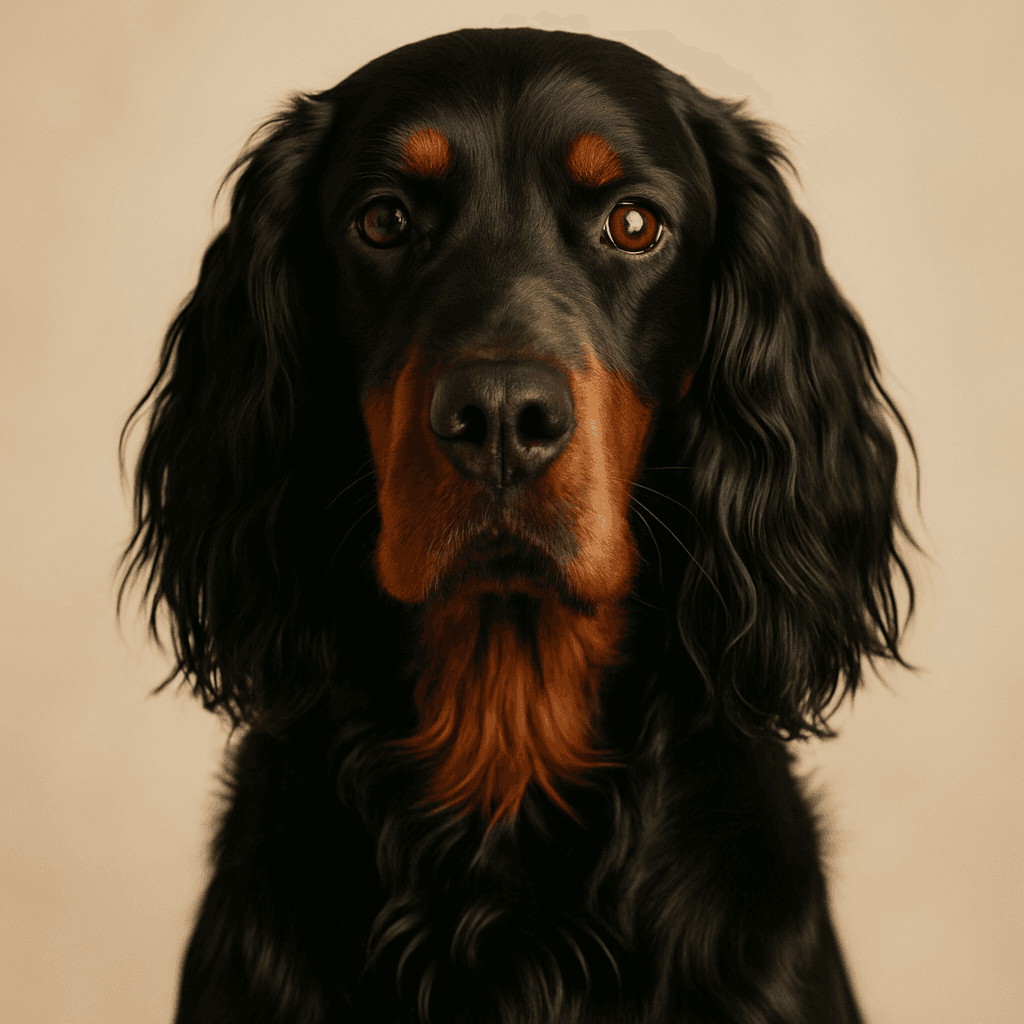
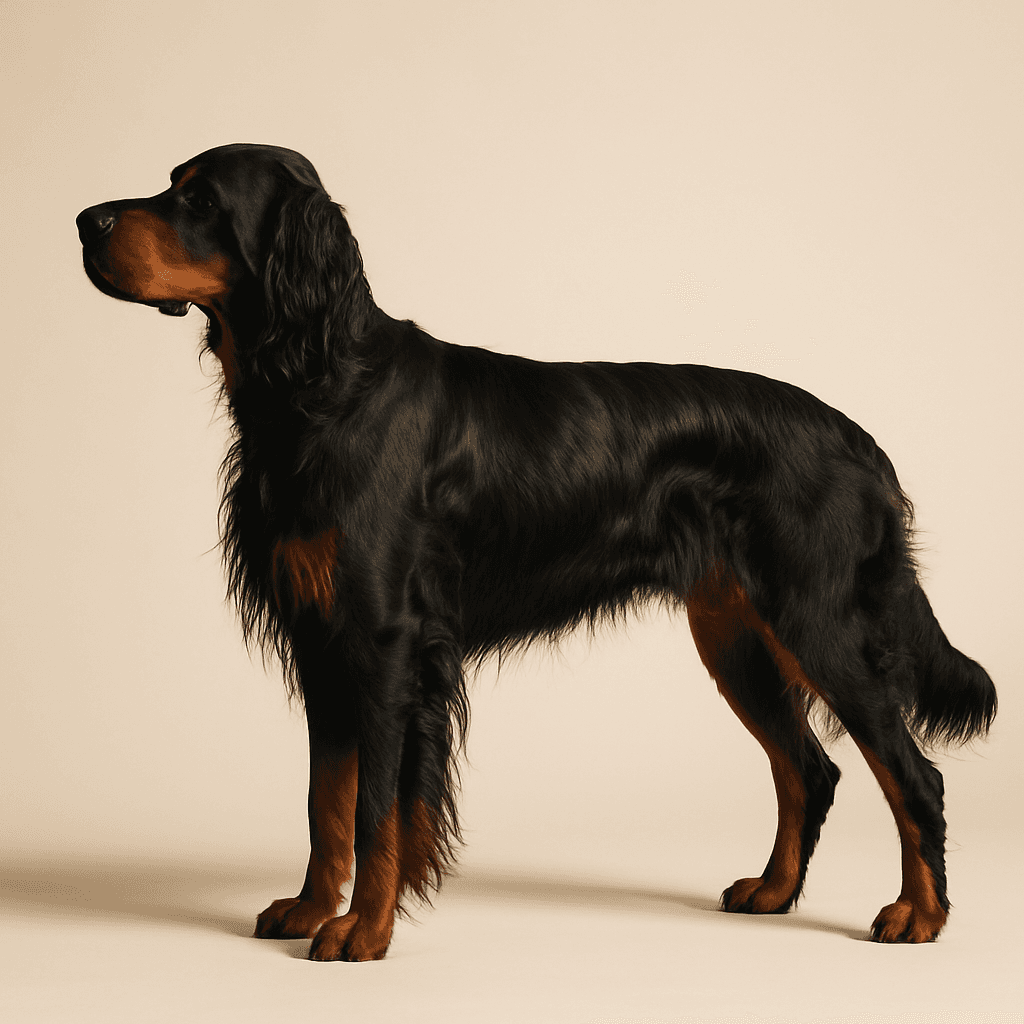
The Gordon Setter is Scotland's only native setter breed and the heaviest and most powerful of the three setter breeds, developed in the Scottish Highlands principally through the work of the fourth Duke of Gordon at Gordon Castle in Banffshire during the late eighteenth and early nineteenth centuries. Bred to work the rugged, demanding terrain of the Scottish hills - quartering moorland for grouse and other gamebirds in conditions of cold, wind and steep ground - the Gordon Setter was developed for stamina, durability and the ability to work all day in challenging weather rather than for the blazing speed and range of the lighter setter breeds. Registered by the Kennel Club in the Gundog Group, it is one of Britain's most distinguished sporting breeds. The Gordon Setter is immediately distinguishable by its striking black and tan colouring - a rich, deep black coat with specific tan markings above the eyes, on the muzzle, throat, chest, legs and under the tail. The overall impression is of a handsome, substantial dog with the long, silky setter coat bearing characteristic feathering on the ears, chest, belly, legs and tail. Adults typically stand 62 to 66 centimetres at the shoulder and weigh 25 to 36 kilograms - noticeably heavier than the English or Irish Setter. The character reflects the breed's working purpose. The Gordon Setter is loyal, dependable and somewhat more serious in temperament than the other setter breeds - a steadier, more reserved character that suits experienced dog owners who want a substantial working companion rather than an exuberant, gregarious socialiser. With its own family the Gordon is deeply devoted, excellent with children, and generally good with other dogs. It tends toward initial reserve with strangers rather than instant friendliness, which is a breed characteristic rather than aggression. Exercise needs are substantial. The Gordon Setter was built for sustained work across difficult terrain and retains the stamina and endurance of its heritage. It needs 1.5 to 2 hours of daily exercise with the opportunity for free running in open countryside. Urban life without access to open ground is not suited to this breed. Hip and elbow dysplasia are the primary health concerns and both parents should be tested. PRA testing is also advisable. Purchase prices from KC-registered, health-tested breeders range from £800 to £1,500. Monthly running costs average £130 to £200. The Gordon Setter Club is the primary resource for breed information, health testing, responsible breeders and rescue contact.
Quick facts
Meet Our Gordon Setters
Register your dog on My Dog and it will appear here automatically.
Gordon Setter Photos
No photos yet. Be the first to share yours.
Add a photoActivity Feed
How much exercise does your Gordon Setter really need each day?
The honest answer is a lot. Mine needs at least 90 minutes daily, and genuinely thrives on closer to two hours when we can manage it. Gordons were bred to work the Scottish hills from dawn to dusk, and that stamina is very much still in them. Off-lead running across open countryside is what suits this breed best. A lead walk around the park is not going to cut it as the primary exercise. The breed loves open ground, and once mine has had a proper run across open land he settles beautifully at home. As with all large breeds, puppies need restricted exercise during the growth phase to protect developing joints. But once fully grown, a Gordon that isn't adequately exercised will be restless and difficult indoors.
30 June 2026
Any health issues to watch for with Gordon Setters?
Hip dysplasia is the one I'd flag most urgently to anyone looking at the breed. It's common in Gordons and both parents should be BVA/KC Hip Scored before breeding. Elbow dysplasia also occurs and elbow scoring matters. Progressive retinal atrophy has been documented in the breed and DNA testing of the Poodle parent is something to ask about. Hypothyroidism is seen in some Gordons and is worth being aware of as a possibility if your dog becomes lethargic or gains weight without obvious cause. The Gordon Setter Club maintains health testing recommendations and is the right starting point for anyone doing their research. Lifespan is typically 10 to 12 years. The breed is less common than the Irish Setter so finding a vet with specific experience may take a little effort.
30 June 2026
What's the one thing you wish you'd known before getting a Gordon Setter?
That recall is not something you can train reliably when there's a scent involved. Gordons are scenthounds at heart and once a nose goes down and a scent is interesting, the connection to you diminishes rapidly. I spent months working on recall and it is solid in a lot of contexts, but I am realistic about its limits in open countryside when there's something exciting in the air. Secure, enclosed exercise areas have become part of our routine. The other thing that surprised me was the temperament. Gordons have a reputation as the most serious and reserved of the setters, and that's true. Mine is devoted and affectionate with family but takes his time with strangers. Positive reinforcement is absolutely the right approach with this breed. Any harshness makes them shut down.
30 June 2026
What do you feed your Gordon Setter, and why?
A high-quality large breed complete dry food, split across two meals. Mine is an active working-type dog and gets around 450 to 500g a day, adjusted depending on how much exercise we've had that week. I always monitor body condition rather than rigidly following package guidelines, which tend to be on the generous side. Fresh water is available at all times, which sounds obvious but matters more than people think with active sporting breeds. I haven't used supplements beyond what the food provides, but I'd discuss joint support with a vet as the dog ages, given the hip dysplasia prevalence in the breed. The feeding costs for a Gordon are meaningful but not extreme compared to some larger breeds.
30 June 2026
Gordon Setter of the Month
🏆 September 2026 -- Be the first nominee
Could be your dog.
The first dog registered in this community earns the first Dog of the Month nomination automatically.
Register your dogUpcoming Gordon Setter Meetups
No meetups planned yet. Be the first to organise one.
Sign in to organise a meetupCommunity Members
Be the first to join and become the Gordon Setter Founding Member.
Join Club