Be the first to join. Keep the badge forever.
The first members of this community earn permanent Founding Member status. It shows on your profile and your dog's profile for as long as you're here.
- ✓Founding Member badge on your profile
- ✓Your dog featured first
- ✓First Dog of the Month nomination
- ✓Always free
⭐ Founding Member spots open
First to join gets the badge
🐕 Be the first dog registered
Add your Lab to the community
📷 Add the first photo
Start the photo wall
8
Discussions

0 members
8 discussions
About the Great Swiss Mountain Dog
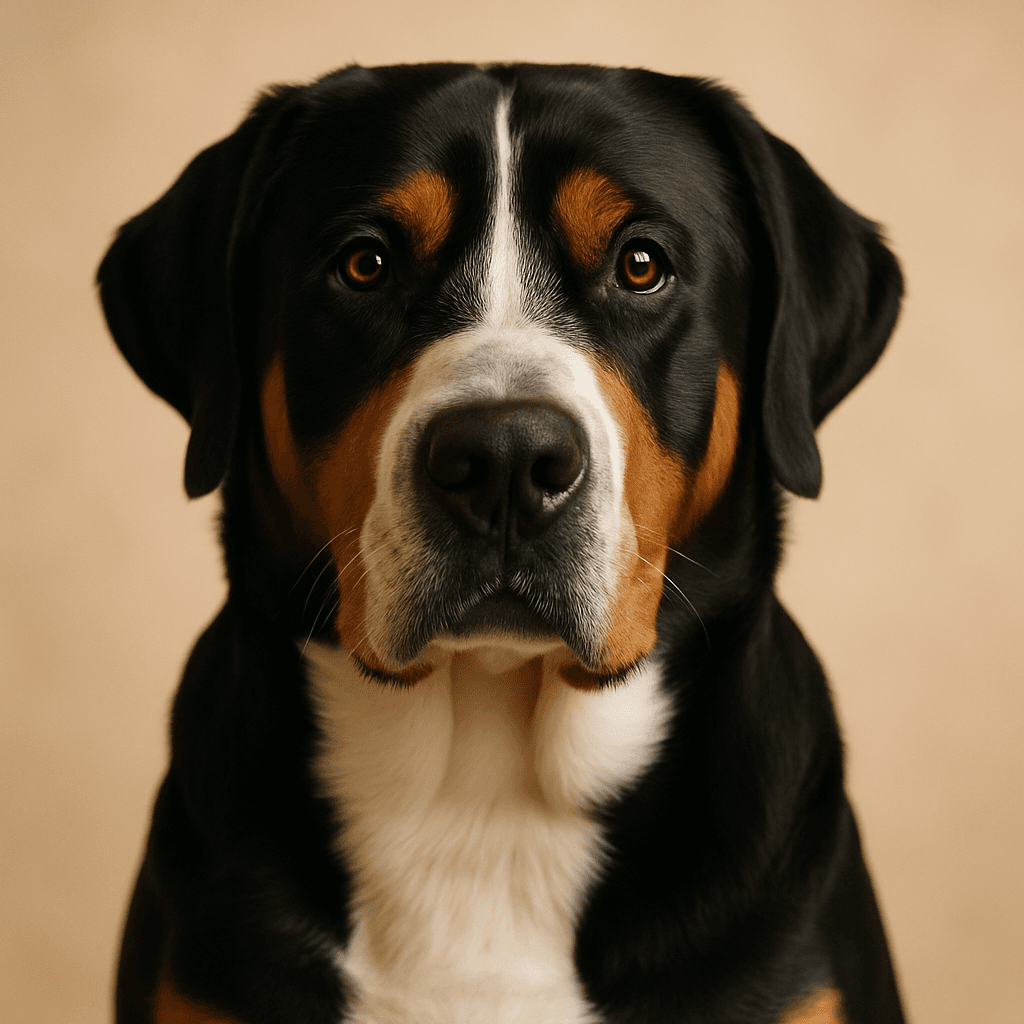
The Great Swiss Mountain Dog, known in its homeland as the Grosser Schweizer Sennenhund, is the largest of the four Swiss mountain breeds and one of the most physically powerful of all working dog breeds, a draught and farm dog of considerable strength, substance and calm reliability that was developed in the Swiss Alps to serve as a multipurpose working companion on the mountain farms and dairies of the region. Together with the Bernese Mountain Dog, Appenzeller Sennenhund and Entlebucher Mountain Dog, it forms the group of four traditional Swiss mountain and farm dogs, all sharing the characteristic tricolour colouring of black, white and rust. Registered by the Kennel Club in the Working Group, it is an uncommon breed in the United Kingdom with a small but dedicated following. The Great Swiss Mountain Dog is a large, heavily boned and powerfully muscled dog with the characteristic Swiss mountain dog tricolour pattern - a base of black with rust tan markings and white markings on the muzzle, blaze, chest, paws and tail tip. The coat is short and dense with a thick undercoat suited to mountain conditions. Adults typically stand 60 to 72 centimetres at the shoulder and weigh 36 to 60 kilograms, making this one of the heavier working breeds available. The overall impression is of substantial power and solidity combined with a calm, steady expression. The character is that of a calm, loyal and devoted farm dog: steady, reliable and good-natured in the home, with genuine devotion to its own family and a tolerant, settled approach to daily life that makes it a surprisingly manageable companion given its size. The breed is good with children and generally good-natured with other dogs. It is reserved rather than openly aggressive with strangers. It is not a high-energy or excitable breed, but it is large, strong and needs experienced owners who can handle its size and provide consistent direction. Exercise needs are moderate for such a large breed - 1 to 1.5 hours daily is appropriate - reflecting the breed's background as a steady draught dog rather than a fast-moving herder or hunter. The Great Swiss Mountain Dog is not built for speed but has considerable endurance and enjoys steady, purposeful activity including long walks and outdoor work. Hip and elbow dysplasia are significant health concerns in the breed and both parents should be tested before any breeding programme. Eye conditions have also been documented and eye testing is advisable. Bloat is a risk in all deep-chested large breeds and owners should be familiar with the signs. Purchase prices from KC-registered, health-tested breeders range from £1,200 to £2,500. Monthly running costs average £160 to £240. Swiss Mountain Dog breed clubs and the relevant KC breed registrations are the primary resources for breed information, health testing, responsible breeders and rescue contact.
Quick facts
Meet Our Great Swiss Mountain Dogs
Register your dog on My Dog and it will appear here automatically.
Great Swiss Mountain Dog Photos
No photos yet. Be the first to share yours.
Add a photoActivity Feed
How much exercise does your Great Swiss Mountain Dog really need each day?
Around 60 to 75 minutes a day for a healthy adult, and the character of the exercise matters more than the quantity. This is a draught breed built for sustained, steady effort rather than speed. My dog thrives on long walks across varied terrain. He's not a sprinter and doesn't want to be. What suits him is a purposeful walk with time to explore. The puppy phase requires careful management because Great Swiss Mountain Dogs have a long growth phase, and big breeds carry real joint risk from over-exercise early on. I restricted exercise substantially in the first 18 months and I don't regret it. As an adult he's sound and confident on his feet. Mental stimulation matters too. A large, intelligent working breed left without purpose will find its own solutions, usually to your disadvantage.
30 June 2026
Any health issues to watch for with Great Swiss Mountain Dogs?
Hip and elbow dysplasia are the primary concerns with this breed and both parents absolutely should be scored before breeding. Ask for the certificates and don't take a breeder's word for it. Hereditary cataract has been documented and eye testing of parents is advisable. Bloat is a risk in deep-chested large breeds generally and the Swissy is no exception. Knowing the signs of gastric dilatation-volvulus, unproductive retching, distended abdomen, rapid deterioration, and treating it as an emergency is important. The breed has a relatively short lifespan, which is worth knowing going in. They are not a common breed in the UK so finding a vet with specific experience may require some effort. I'd recommend connecting with the breed club for the most current health guidance and testing recommendations.
30 June 2026
What do you wish you'd known before getting a Great Swiss Mountain Dog?
That the combination of size, strength and independent thinking requires confident, consistent handling from day one. This is not a difficult breed in terms of aggression or reactivity, but a Swissy that has not been properly trained from puppyhood is a very large, strong animal that does not respond to requests it hasn't been taught to take seriously. Professional guidance from someone experienced with large working breeds is genuinely worth the investment at the start. The breed is calm and devoted with family, which can create a false sense of ease early on. The warmth and dependability of their character is real and wonderful, but it doesn't substitute for proper early training and socialisation. I also wish I'd been more prepared for the feeding costs. A dog this size eats a lot.
30 June 2026
What do you feed your Great Swiss Mountain Dog, and why?
A high-quality large breed complete dry food, split across two meals, and I'm consistent about monitoring body condition rather than just following the bag guidelines. Obesity in this breed is a genuine problem because the additional weight directly worsens hip and elbow dysplasia, both of which the breed is prone to. I aim to maintain a lean, healthy build where I can feel but not prominently see the ribs. Mine gets around 550g a day but I adjust based on how active we've been. Fresh water is always available. I haven't supplemented beyond the food in younger years but as he ages I'll discuss joint support with my vet. The feeding costs are meaningful for a dog this size and worth factoring into your budget alongside insurance costs before you commit to the breed.
30 June 2026
Great Swiss Mountain Dog of the Month
🏆 September 2026 -- Be the first nominee
Could be your dog.
The first dog registered in this community earns the first Dog of the Month nomination automatically.
Register your dogUpcoming Great Swiss Mountain Dog Meetups
No meetups planned yet. Be the first to organise one.
Sign in to organise a meetupCommunity Members
Be the first to join and become the Great Swiss Mountain Dog Founding Member.
Join Club