
Be the first to join. Keep the badge forever.
The first members of this community earn permanent Founding Member status. It shows on your profile and your dog's profile for as long as you're here.
- ✓Founding Member badge on your profile
- ✓Your dog featured first
- ✓First Dog of the Month nomination
- ✓Always free
⭐ Founding Member spots open
First to join gets the badge
🐕 Be the first dog registered
Add your Lab to the community
📷 Add the first photo
Start the photo wall
8
Discussions
0 members
8 discussions
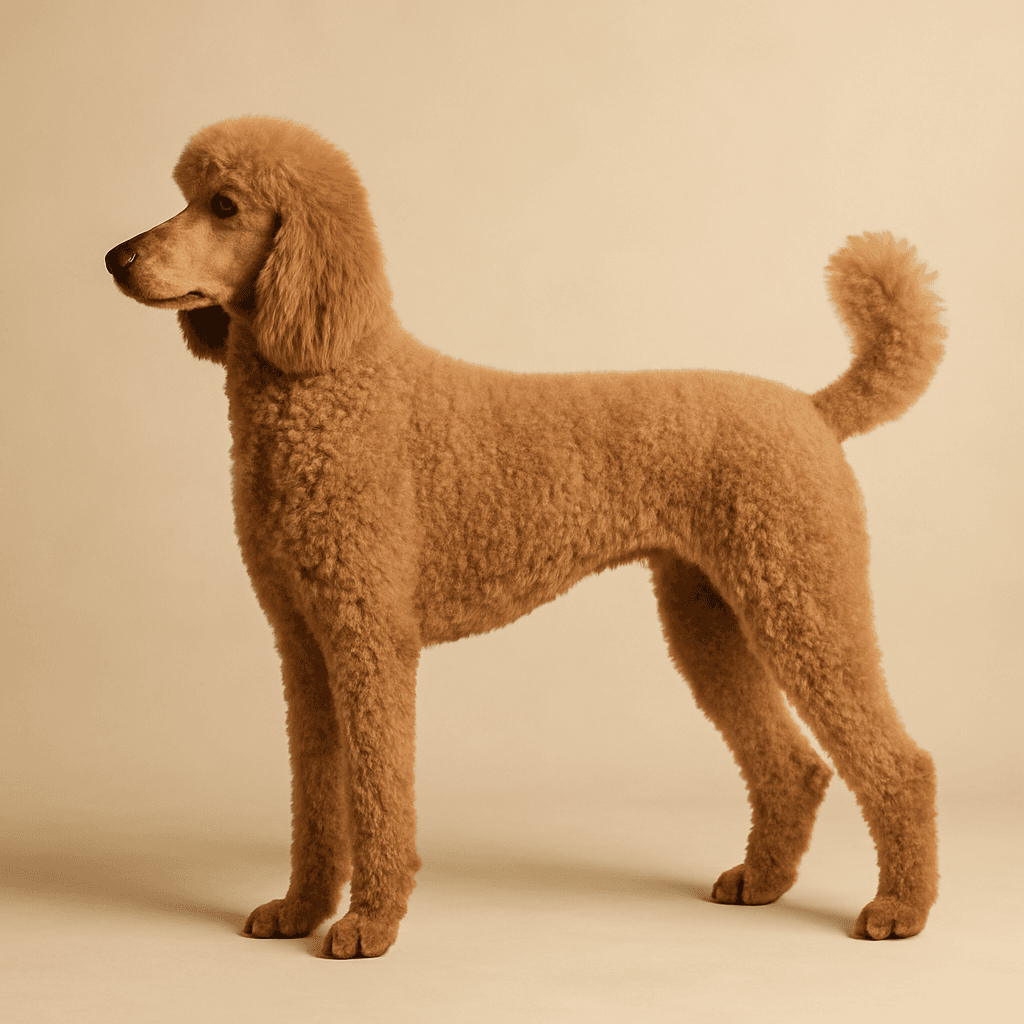
About the Poodle (Standard)
The Standard Poodle is one of the most intelligent, versatile and elegant breeds in the world, registered by the Kennel Club in the Utility Group. Despite its association with elaborate show clips and ornamental presentation, the Standard Poodle is fundamentally a working retriever developed in Germany for waterfowl hunting. Its athletic build, intelligence and trainability reflect a breed designed for demanding field work, not purely ornamental purposes. Standard Poodles are large dogs: typically 20 to 32kg, standing over 38cm at the shoulder. They are active, curious and highly mentally engaged. An under-stimulated Standard Poodle will express its boredom in creative and often destructive ways. The breed demands daily exercise, consistent mental engagement and ongoing training to be the relaxed, companionable dog it is capable of being. Intelligence is the Standard Poodle's most notable characteristic. They learn rapidly, remember what they have learned, and can become bored by repetitive training. They thrive with varied, positive reinforcement-based training and excel in obedience, agility, tracking and most other dog sports. Their responsiveness to training also means they are one of the most successfully trained assistance dog breeds. Health-wise, Standard Poodles are one of the longer-lived large breeds, with a typical lifespan of 12 to 15 years. This longevity does not come without conditions to be aware of. Addison's disease (hypoadrenocorticism), a condition in which the adrenal glands fail to produce sufficient cortisol and aldosterone, occurs at significantly higher rates in Standard Poodles than in most other breeds. It can present as episodic weakness, vomiting, lethargy and in severe cases an Addisonian crisis, which is a life-threatening emergency. Once diagnosed it is manageable with daily medication, but diagnosis can take time because the symptoms are non-specific. Gastric dilatation-volvulus (bloat) is a significant risk in deep-chested breeds. This is a life-threatening emergency in which the stomach fills with gas and rotates, cutting off blood supply. Signs include unproductive retching, distended abdomen and rapid deterioration. Any suspected bloat is an immediate veterinary emergency. Hip dysplasia and Progressive Retinal Atrophy are monitored through KC health schemes. Sebaceous adenitis, an inflammatory skin condition, occurs in some lines. Purchase prices from KC-registered, health-tested breeders typically range from £1,500 to £2,500. Monthly insurance costs £40 to £80. Professional grooming every six to eight weeks is a non-negotiable commitment. For owners who match the breed's intelligence and energy, the Standard Poodle is an exceptional companion. Their longevity, trainability and affectionate nature make them one of the most rewarding large breeds in the UK.
Quick facts
Meet Our Poodle (Standard)s
Register your dog on My Dog and it will appear here automatically.
Poodle (Standard) Photos
No photos yet. Be the first to share yours.
Add a photoActivity Feed
How much exercise does your Standard Poodle really need each day?
Two hours a day, minimum, and that is on a straightforward day. Standard Poodles are genuinely athletic dogs. Mine is a strong runner, a natural swimmer, and she would do agility every day if I let her. The swimming is particularly worth mentioning: the breed was developed as a water retriever and most of them take to it instinctively. It is excellent low-impact exercise for a large dog and mine adores it. The one non-negotiable rule I follow is no vigorous exercise for at least an hour before or after meals. Bloat is a serious risk in this breed and a deep-chested, energetic dog exercised too close to feeding time is a risk I am not willing to take. I built up her exercise gradually during puppyhood, five minutes per month of age, twice daily, and moved to adult levels around 12 to 18 months. If you are not ready to commit to real, substantive daily exercise, a Standard Poodle is probably not the right match.
30 June 2026
Any health issues to watch for with Standard Poodles?
Addison's Disease is the one I raise with every prospective Standard Poodle owner because it is not widely known outside the breed but it is genuinely overrepresented here. The adrenal glands fail to produce cortisol and aldosterone, and the tricky thing is that symptoms, weakness, vomiting, lethargy, can be intermittent and easy to dismiss. An Addisonian crisis triggered by stress or illness is a cardiovascular emergency. Once diagnosed it is manageable with monthly injections and oral medication, but you need to know the signs. Bloat is the other urgent one: unproductive retching, a visibly swollen abdomen, rapid deterioration. Any suspected bloat is a same-day emergency, not a wait-and-see situation. Some vets offer prophylactic gastropexy to prevent the dangerous rotation component. PRA has a DNA test available and both parents should be tested. Hip scores from both parents via the KC/BVA scheme are important. Budget £40 to £80 monthly for comprehensive insurance.
30 June 2026
What's the one thing you wish you'd known before getting a Standard Poodle?
That the intelligence is both the best thing about them and the thing that demands the most from you. I knew Standard Poodles were trainable. I did not fully appreciate that an under-stimulated Standard Poodle will fill that gap itself, and its solutions are creative in ways you will not enjoy. The foundation I built in the first year shaped everything that came after. The obedience classes I invested in early paid back many times over. What I wish I had done differently was build independence more deliberately from puppyhood. Standard Poodles are deeply people-oriented and that closeness is genuinely one of the breed's best qualities, but it tips into separation anxiety if you do not actively build comfort with alone time early on. Crate training done positively, short absences built gradually from week one: it takes effort at the start but prevents real difficulty later. Do not skip that step because the puppy is soft and endearing and you cannot bear to leave her.
30 June 2026
What do you feed your Standard Poodle, and why?
A high-quality complete diet for large, active breeds, fed in two smaller meals rather than one big one. The bloat risk is the driver behind that decision. One large daily meal in a deep-chested, energetic dog is a risk I am not comfortable with. I also do not use a raised bowl, as the evidence on raised bowls and bloat is genuinely mixed, and I use a slow-feeder bowl because she eats fast when she is hungry. Fresh water is always available. I check her body condition regularly: you should feel the ribs without pressing but not see them prominently. The Addison's Disease risk is in the back of my mind too. Any episodes of vomiting, unusual lethargy or weakness that you cannot easily explain are worth investigating rather than waiting out, because early adrenal insufficiency can look vague and easily dismissed before it becomes serious.
30 June 2026
Poodle (Standard) of the Month
🏆 September 2026 -- Be the first nominee
Could be your dog.
The first dog registered in this community earns the first Dog of the Month nomination automatically.
Register your dogUpcoming Poodle (Standard) Meetups
No meetups planned yet. Be the first to organise one.
Sign in to organise a meetupCommunity Members
Be the first to join and become the Poodle (Standard) Founding Member.
Join Club