
Be the first to join. Keep the badge forever.
The first members of this community earn permanent Founding Member status. It shows on your profile and your dog's profile for as long as you're here.
- ✓Founding Member badge on your profile
- ✓Your dog featured first
- ✓First Dog of the Month nomination
- ✓Always free
⭐ Founding Member spots open
First to join gets the badge
🐕 Be the first dog registered
Add your Lab to the community
📷 Add the first photo
Start the photo wall
8
Discussions
0 members
8 discussions
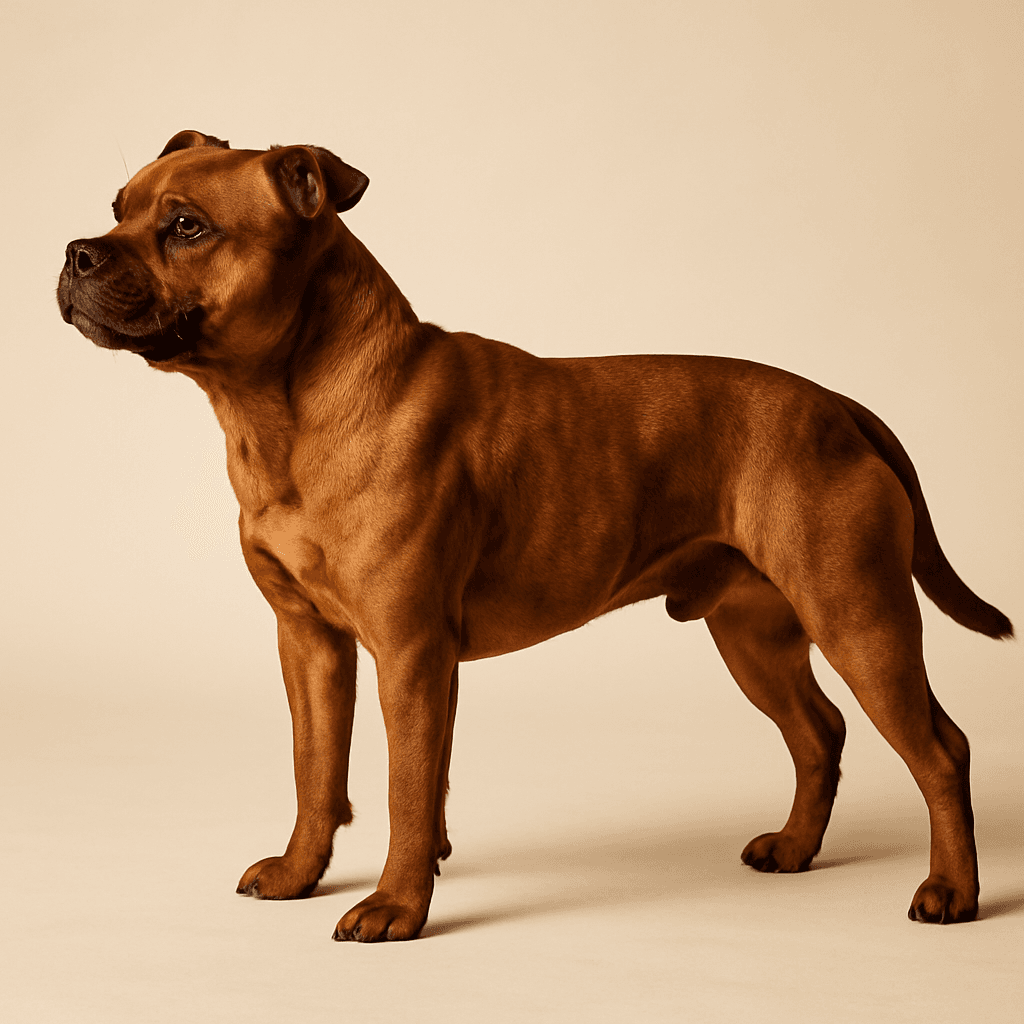
About the Staffordshire Bull Terrier
The Staffordshire Bull Terrier is not a banned breed in the United Kingdom. This is worth stating plainly because confusion about the Dangerous Dogs Act 1991 remains widespread. That Act prohibits four specific types: the Pit Bull Terrier, Japanese Tosa, Dogo Argentino and Fila Brasileiro. The Staffordshire Bull Terrier is not on that list and is a fully legal, Kennel Club-recognised breed in the Terrier Group, with a long and legitimate history as a British companion dog. Staffies are affectionate, loyal and demonstrably good with people, particularly children they know. The breed's historical reputation as a family dog is well-founded: they are tolerant, playful and form strong bonds with their household. They are also courageous, muscular and energetic, which means they need an owner who provides consistent training, adequate exercise and clear boundaries from the start. The most significant fact about Staffordshire Bull Terriers in the UK context is their rescue numbers. The Staffie consistently holds the highest number of any breed in UK rescue centres, year after year. This is not a reflection of the breed's character: it is a reflection of impulse buying, unrealistic expectations, and insufficient training. The dogs surrendered are overwhelmingly the same warm, people-oriented animals that make excellent pets in the right hands. Staffies are sociable with people but can be selective with other dogs, particularly of the same sex. Early socialisation is important, and owners should be prepared to manage introductions carefully. With well-matched dogs and proper introduction, many Staffies live happily alongside other pets. They are a breed that thrives on human contact and should not be left alone for extended periods. Separation anxiety is a known issue in under-occupied or isolated Staffies. Mental stimulation, training, and regular physical activity keep them settled and content. Health-wise, Staffies are a relatively robust breed compared to many, but they do have hereditary conditions to be aware of, including L-2-Hydroxyglutaric Aciduria (L-2HGA) and Hereditary Cataracts (HC-HSF4), both of which have DNA tests available through the Kennel Club scheme. Responsible breeders test for both. Purchase prices from health-tested KC-registered breeders typically range from £500 to £1,500. Alternatively, given the enormous numbers in rescue, adopting a Staffie is one of the most practical and straightforward rescue decisions you can make in the UK. Lifespan is typically 12 to 14 years. For owners who do their research and commit to training and socialisation, the Staffordshire Bull Terrier rewards that investment generously. They are among the most devoted, people-focused dogs in the UK, and in the right home they thrive. The breed's rescue numbers are a challenge to address collectively, not a reflection of any inherent fault in the dogs themselves.
Quick facts
Meet Our Staffordshire Bull Terriers
Register your dog on My Dog and it will appear here automatically.
Staffordshire Bull Terrier Photos
No photos yet. Be the first to share yours.
Add a photoWhat Staffordshire Bull Terrier Owners Need to Know About Health
Staffordshire Bull Terriers are generally a hardy breed with fewer breed-specific health conditions than many other popular dogs, but there are hereditary conditions that responsible breeders screen for. **L-2-Hydroxyglutaric Aciduria (L-2HGA)** is a metabolic condition affecting the brain that is specific to the Staffordshire Bull Terrier. It causes neurological symptoms including seizures, behavioural change, ataxia (unsteady movement) and in severe cases dementia-like episodes. A DNA test is available through the Kennel Club scheme. Dogs are tested as Clear, Carrier or Affected. Responsible breeders should only breed from Clear or Carrier dogs paired with Clear dogs, ensuring no Affected puppies are produced. Ask to see the L-2HGA test results for both parents. **Hereditary Cataracts (HC-HSF4)** is an eye condition that can cause vision impairment and eventually blindness. A DNA test is available and all responsible Staffie breeders should test for this. The condition is manageable in mild cases but can significantly affect quality of life in severely affected dogs. **Hip dysplasia** is present in the breed and assessed through the KC/BVA Hip Scoring scheme. Buyers should ask for hip scores on both parents. Management of hip dysplasia typically involves weight control, appropriate exercise, and in severe cases surgical intervention costing several thousand pounds. **Skin conditions** including demodectic mange and skin allergies occur in some lines. These are manageable but can require ongoing veterinary treatment. Monthly insurance for a Staffordshire Bull Terrier typically costs £30 to £55 for comprehensive lifetime cover. Staffies are generally at the more affordable end of the insurance market compared to brachycephalic or giant breeds. The PDSA notes that Staffies are one of the more commonly treated breeds in their practices due to their high population numbers. Typical lifespan is 12 to 14 years. Staffies are not prone to the respiratory or skeletal conditions that affect many other popular breeds, which contributes to their relative longevity and lower average veterinary costs.
Staffordshire Bull Terriers are one of the breeds where pet insurance is strongly recommended from day one. Compare Staffordshire Bull Terrier insurance
Activity Feed
Any health issues to watch for with Staffordshire Bull Terriers?
The two things every Staffie buyer must check are L-2HGA and hereditary cataracts. L-2HGA is a metabolic brain condition specific to the breed that causes seizures and neurological problems. There's a DNA test for it, and both parents should be tested Clear before a litter is bred. HC-HSF4, the hereditary cataract gene, also has a DNA test available. Ask the breeder to show you results for both before you hand over any money. Beyond that, hip scoring is worth checking and some lines carry skin sensitivities. The good news is that Staffies are generally one of the hardier popular breeds. Insurance typically runs £30 to £55 a month for lifetime cover, which is reasonable compared to many others. They tend to live 12 to 14 years.
1 July 2026
What do you wish you'd known before getting a Staffordshire Bull Terrier?
I wish I'd understood quite how strong she would become, and how quickly. She was a manageable, bouncy puppy who jumped up and pulled slightly on the lead, and because she was small it didn't feel urgent. Then she was eight months old and I was being dragged down the road by a compact muscle dog. Staffies are not huge but they are dense and powerful for their size, and any habits you allow in puppyhood become serious management issues in the adult dog. Loose lead training from week one, and consistent calm greetings from day one. She is also intensely people-oriented and needs to be part of family life. Hours alone is not something she handles gracefully. If you work long hours, factor that in from the start.
1 July 2026
How much exercise does your Staffordshire Bull Terrier really need each day?
My Staffie needs between an hour and an hour and a half of proper exercise every day, and I mean genuine exercise, not a slow amble around the block. She wants to run, chase a ball and have a good rough-and-tumble. What I've found is that she plays absolutely flat out and then switches off completely for hours afterwards, which makes her surprisingly adaptable. The physical side is only half of it, though. If I skip her puzzle feeder or a training session, she starts redecorating the furniture. Mental stimulation is non-negotiable. When she was a puppy I stuck rigidly to five minutes per month of age, twice a day, to protect her joints. It felt like nothing, but it was the right call. She's three now and in excellent shape.
1 July 2026
What do you feed your Staffordshire Bull Terrier, and why?
I feed her a good quality dry complete food twice a day with strict portion control, because Staffies will eat whatever you put in front of them and then look at you as though you've been starving them. You should be able to feel the ribs easily without pressing, and see a waist from above. My girl developed a skin sensitivity at around two years old, persistent itching and some digestive upset, and we eventually identified chicken as the trigger. We switched to a limited-ingredient food without chicken or wheat and the difference was significant. If your Staffie is scratching or has recurring skin issues, it's worth investigating diet before assuming it's environmental. Treats count towards the daily calorie total. She doesn't know that, but I do.
1 July 2026
Staffordshire Bull Terrier of the Month
🏆 September 2026 -- Be the first nominee
Could be your dog.
The first dog registered in this community earns the first Dog of the Month nomination automatically.
Register your dogUpcoming Staffordshire Bull Terrier Meetups
No meetups planned yet. Be the first to organise one.
Sign in to organise a meetupCommunity Members
Be the first to join and become the Staffordshire Bull Terrier Founding Member.
Join Club