Dog Coat Types and Grooming Needs: The Complete UK Guide
Quick answer
Dogs have seven main coat types: smooth, short double, long double, wire, curly, long silky, and corded. Each one has different grooming requirements: different tools, different frequency, and different demands on your time and budget. Knowing your dog's coat type is the most useful single piece of grooming knowledge you can have.
Dogs have seven main coat types: smooth, short double, long double, wire, curly, long silky, and corded. Each one has different grooming requirements: different tools, different frequency, different demands on your time and budget.
Knowing your dog's coat type is the most useful single piece of grooming knowledge you can have. This guide covers all seven coat types: what each looks like, which breeds have it, how to care for it at home, and how often professional grooming is needed. Every breed page on Woof & Woofer links back here for coat-specific grooming guidance.
Smooth Coats
Breeds: Boxer, Greyhound, Whippet, Weimaraner, Pointer, Vizsla, Bull Terrier, Dobermann.
What it looks like: flat, short, lying close to the skin. No undercoat. Naturally shiny when in good health.
Grooming needs: a weekly rub-down with a rubber grooming mitt or hound glove removes loose hair and adds shine. Bath every four to six weeks. Nails, ears, and teeth as per standard maintenance.
Professional grooming: rarely needed beyond nail trims. These are the lowest-maintenance dogs to groom.
Shedding: yes, but the fine short hairs are easy to remove from furniture and clothing.
Best tools: rubber grooming mitt, hound glove, soft bristle brush.
Short Double Coats
Breeds: Labrador Retriever, Beagle, Staffordshire Bull Terrier, French Bulldog, Pug.
What it looks like: short outer coat with a denser, softer undercoat. Feels plush to the touch.
Grooming needs: brush twice weekly with a bristle brush or short-pin slicker brush. During heavy shedding seasons (spring and autumn), brush daily. A deshedding tool used weekly during these periods significantly reduces the hair deposited around the house.
Professional grooming: one or two professional deshedding baths per year are useful but not essential.
Special notes: French Bulldogs and Pugs have facial skin folds that need cleaning separately. Trapped moisture in skin folds causes skin fold dermatitis if left unattended. Clean fold creases with a damp cloth or specialist wipe and dry thoroughly.
Best tools: bristle brush, rubber mitt, deshedding tool for shedding seasons.
Long Double Coats
Breeds: Golden Retriever, Border Collie, Rough Collie, Australian Shepherd, Shetland Sheepdog, Newfoundland, Bernese Mountain Dog.
What it looks like: long, flowing outer coat over a dense, insulating undercoat. Often feathering on the legs, chest, and tail.
Grooming needs: brush three to four times per week minimum. Daily during heavy shedding periods. Work through the coat in sections, reaching the undercoat rather than just skimming the surface. Pay attention to the areas behind the ears and under the legs where the outer coat and undercoat tangle together.
Professional grooming: every eight to twelve weeks. Professional deshedding treatment twice a year is valuable for heavy shedders.
Important: do not shave a double-coated dog. The undercoat provides insulation in both heat and cold: it keeps the dog cool in summer as well as warm in winter. Shaving disrupts this system and can permanently alter the coat regrowth pattern. It is not a solution for shedding or keeping a dog cool. The correct approach is regular brushing to remove dead undercoat.
Best tools: slicker brush, long-pin pin brush, deshedding tool (FURminator or equivalent for double coats), dematting comb for tangles.
Wire Coats
Breeds: West Highland White Terrier, Airedale Terrier, Border Terrier, Wire Fox Terrier, Welsh Terrier, Lakeland Terrier, Cairn Terrier.
What it looks like: rough, bristly, dense outer coat. Coarser to the touch than any other coat type. Usually has a softer undercoat beneath.
Grooming needs: regular brushing between professional appointments to remove surface debris and prevent the undercoat from matting. The outer coat does not shed in the traditional sense: dead coat needs to be removed by hand-stripping or clipping.
Professional grooming: every eight to twelve weeks. The correct technique for wire-coated breeds is hand-stripping: pulling the dead outer coat out by hand to reveal the new growth beneath. This preserves the correct coat texture and colour.
Hand-stripping vs clipping: clipping a wire coat is easier and cheaper, but it cuts the outer coat rather than removing it. Over time, clipping softens the coat texture and lightens the colour. For show dogs, hand-stripping is non-negotiable. For pets, clipping is a practical choice.
Best tools: slicker brush, stripping comb or knife (for hand-stripping; requires training to use correctly), regular grooming comb.
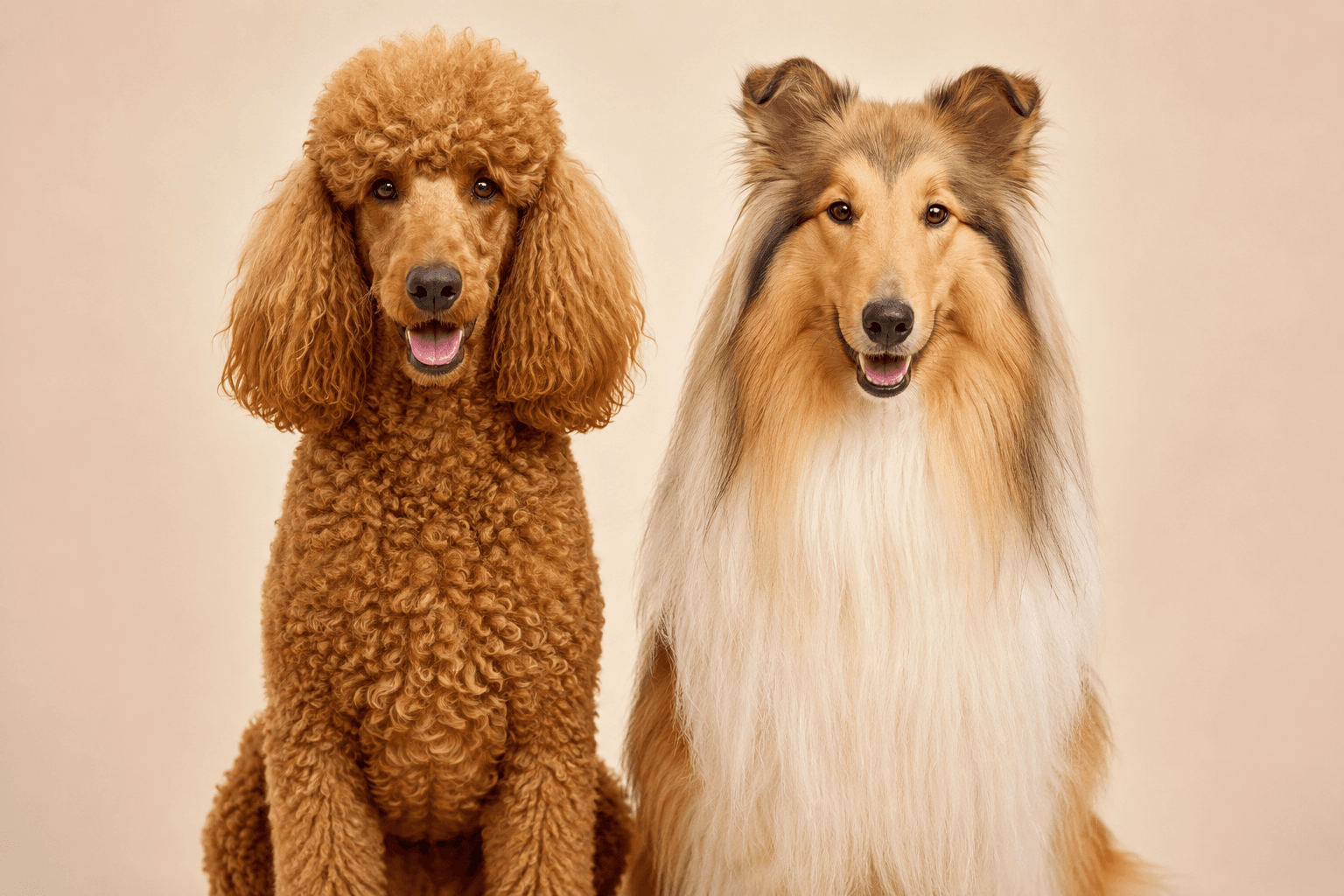
Curly and Wavy Coats
Breeds: Poodle (all sizes), Cockapoo, Labradoodle, Cavapoo, Maltipoo, Bichon Frise, Portuguese Water Dog, Lagotto Romagnolo.
What it looks like: tight curls or looser waves. Does not shed in the conventional sense: loose hair gets caught in the curl rather than falling out. This is the source of the 'low-shedding' reputation.
The grooming reality: low-shedding does not mean low-maintenance. These are among the most grooming-intensive coats you can own. Without daily brushing, loose hair trapped in the curls forms mats that can tighten to the skin within a fortnight. A severely matted curly coat often has to be clipped off entirely.
Grooming needs: daily brushing without exception. Focus on the known problem areas: behind the ears, in the armpits, under the collar, around the groin and tail. A professional clip every six to eight weeks.
Professional grooming: every six to eight weeks (six to eight professional appointments per year). This is the highest professional grooming frequency of any common breed type in the UK. Factor this into the cost of ownership before choosing a Poodle cross.
Best tools: slicker brush (essential), wide-tooth comb to check for hidden tangles, dematting comb for early-stage mats only.
Long Silky Coats
Breeds: Yorkshire Terrier, Maltese, Shih Tzu, Lhasa Apso, Cavalier King Charles Spaniel, Afghan Hound.
What it looks like: long, fine, flowing coat with a silky texture and natural shine. Low to non-shedding. Can grow to the ground on breeds kept in full coat.
Grooming needs: daily brushing to prevent tangles. Long silky coats mat at friction points (around the collar, behind the ears, under the legs) and fine tangles become difficult mats quickly. Work through gently with a pin brush and follow with a wide-tooth comb to check you have reached all the way through the coat.
Professional grooming: every six to eight weeks for a trim. Most pet owners keep their dog in a 'puppy cut' (a shorter, all-over trim that significantly reduces home maintenance). Dogs in full coat require hours of maintenance per week and are typically kept by show exhibitors.
Best tools: pin brush, wide-tooth comb, detangling spray for stubborn tangles, stainless steel comb for finishing.
Corded Coats
Breeds: Komondor, Puli, Bergamasco.
What it looks like: the coat forms naturally into long, rope-like cords or dreadlocks. Highly unusual in the UK pet population.
Grooming needs: the cording process requires specialist knowledge. In puppyhood, the coat must be separated manually as it begins to cord to prevent the entire coat from felting into one mat. Once established, the cords are maintained by separating them at the base and keeping them clean and dry.
Professional grooming: essential and specialist. Bath time for corded dogs is lengthy: the cords hold water. Drying takes hours with a force dryer. This is not a coat type to maintain without expert guidance. If you own or are considering a corded breed, seek out a groomer with specific experience in cording and ask breed clubs and the Kennel Club for referrals.
Frequently Asked Questions
Smooth-coated breeds are the lowest-maintenance: Boxers, Greyhounds, Weimaraners, Whippets, and Pointers need little more than a weekly rub-down and a monthly bath. Short double-coated breeds like Labradors are slightly more demanding but still far easier than any long, curly, or wire-coated breed.
Curly coats (Poodles and Poodle crosses) require the most consistent daily maintenance of any common coat type. Corded coats (Komondor, Puli) require the most specialist knowledge. Between these two, curly coats affect far more UK dogs.
No. The double coat regulates temperature in both directions: the undercoat provides insulation against heat as well as cold. Shaving disrupts this and can permanently alter the coat regrowth pattern. Keep a double-coated dog cool through access to shade, fresh water, and avoiding exercise in the heat of the day. Regular brushing to remove dead undercoat is more effective than shaving.
Feel the texture: smooth and flat against the skin (smooth coat); short but dense with a softer layer beneath (short double coat); long and flowing with a thick undercoat (long double coat); rough and bristly (wire coat); curling or waving without shedding (curly or wavy); long and silky without bulk (long silky). Your vet or a professional groomer can confirm if you are unsure, and your dog's breed page on Woof & Woofer includes a coat type section.
Yes, regularly. Despite being marketed as low-maintenance, Poodle crosses typically have curly or wavy coats that mat quickly without daily brushing and need professional clipping every six to eight weeks. Some Labradoodles have flatter coats closer to a Labrador, which are less demanding, but you cannot predict this before the adult coat comes in.
More from Dog Grooming
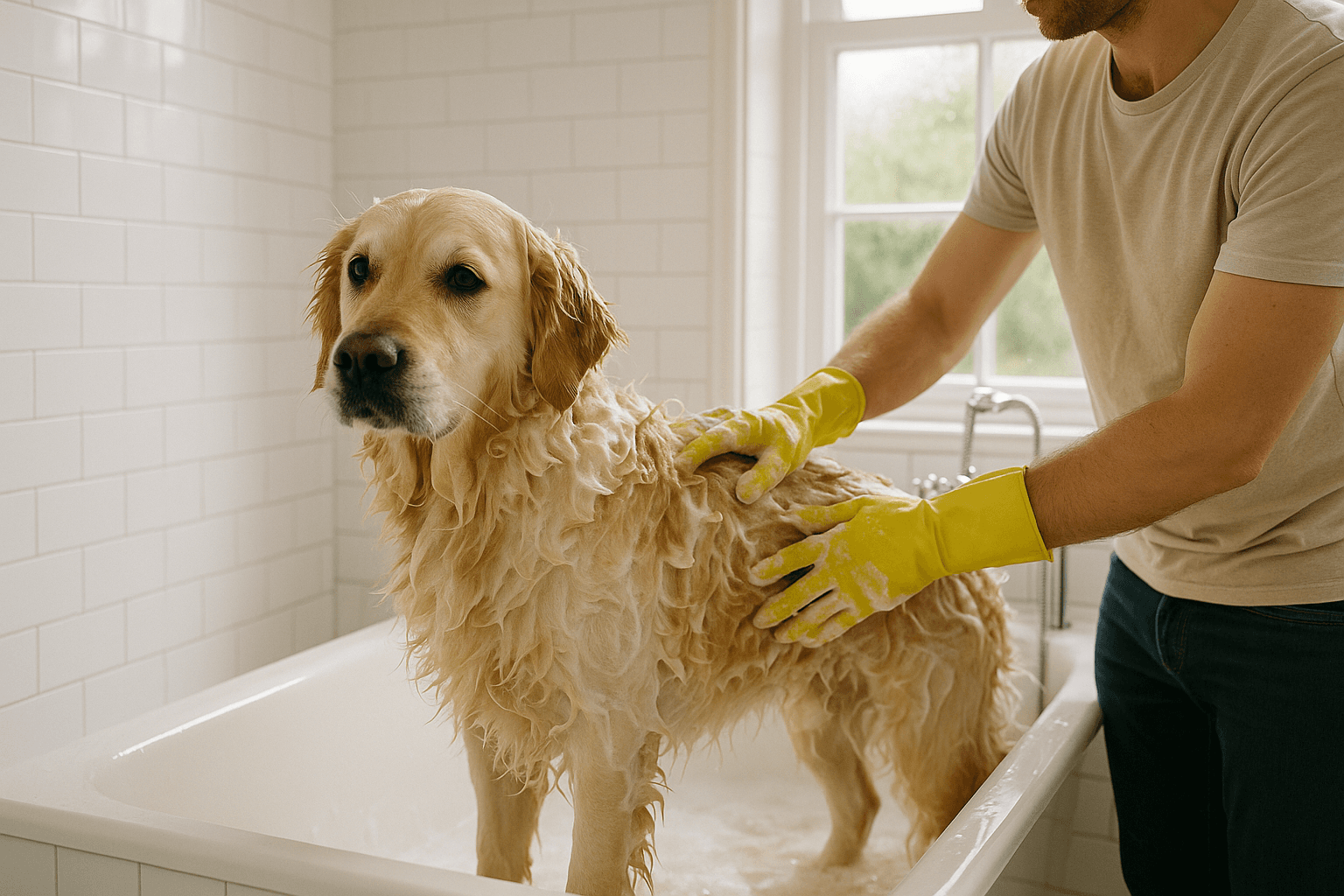
How to Groom a Dog at Home: A Step-by-Step Guide for UK Owners
Most dog grooming tasks (brushing, bathing, nail trimming, ear cleaning, teeth brushing) are well within reach of an owner prepared to learn and invest in decent tools. The tricky part is not the technique. It is starting early, being consistent, and knowing when to stop and call a professional.
Read guide →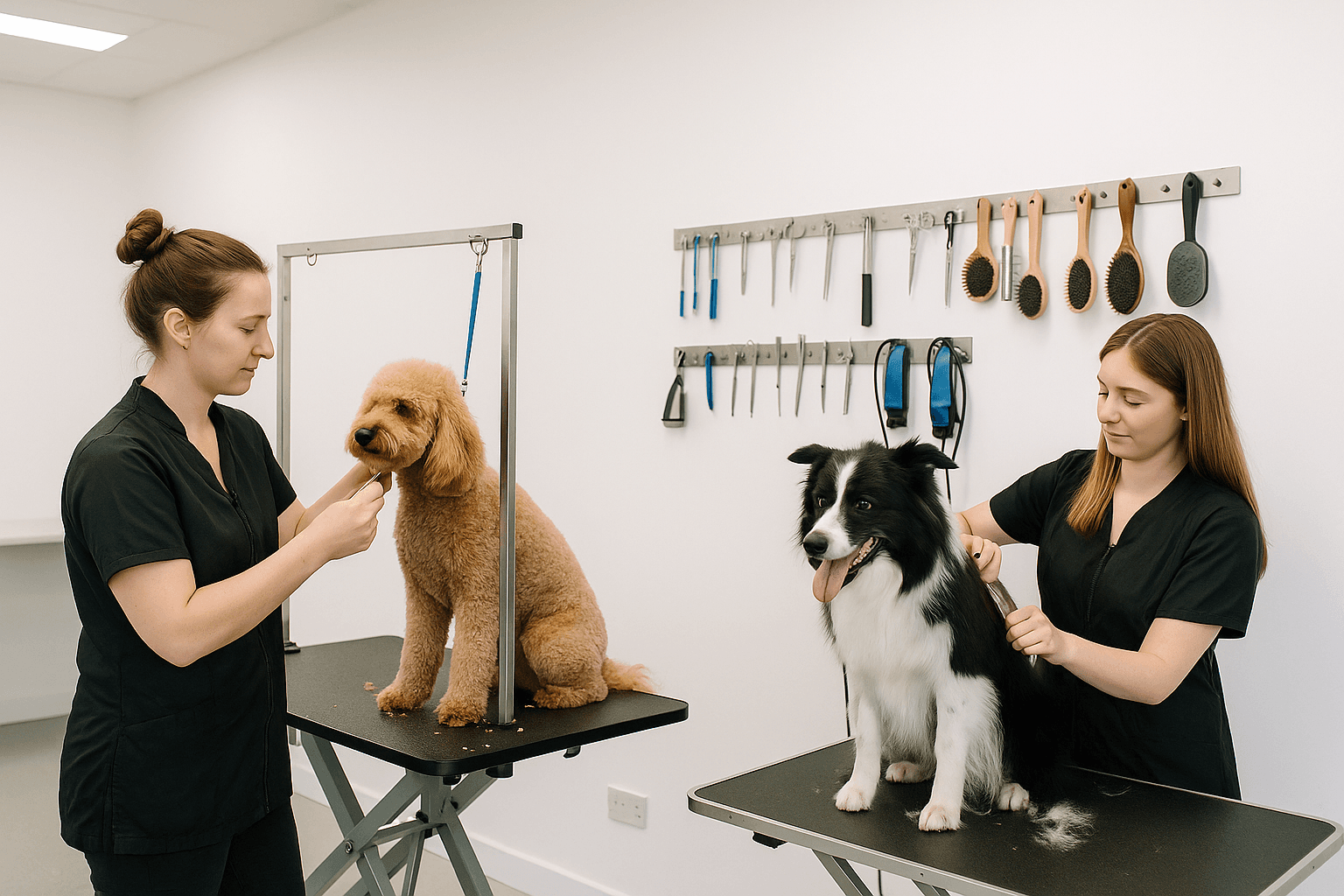
How Much Does Dog Grooming Cost in the UK?
Professional dog grooming in the UK typically costs between £30 and £90 for a full groom. Breed, coat type, size, and location all affect the price, and for high-maintenance coats like Cockapoos and Poodles, annual grooming costs can reach £300 to £520.
Read guide →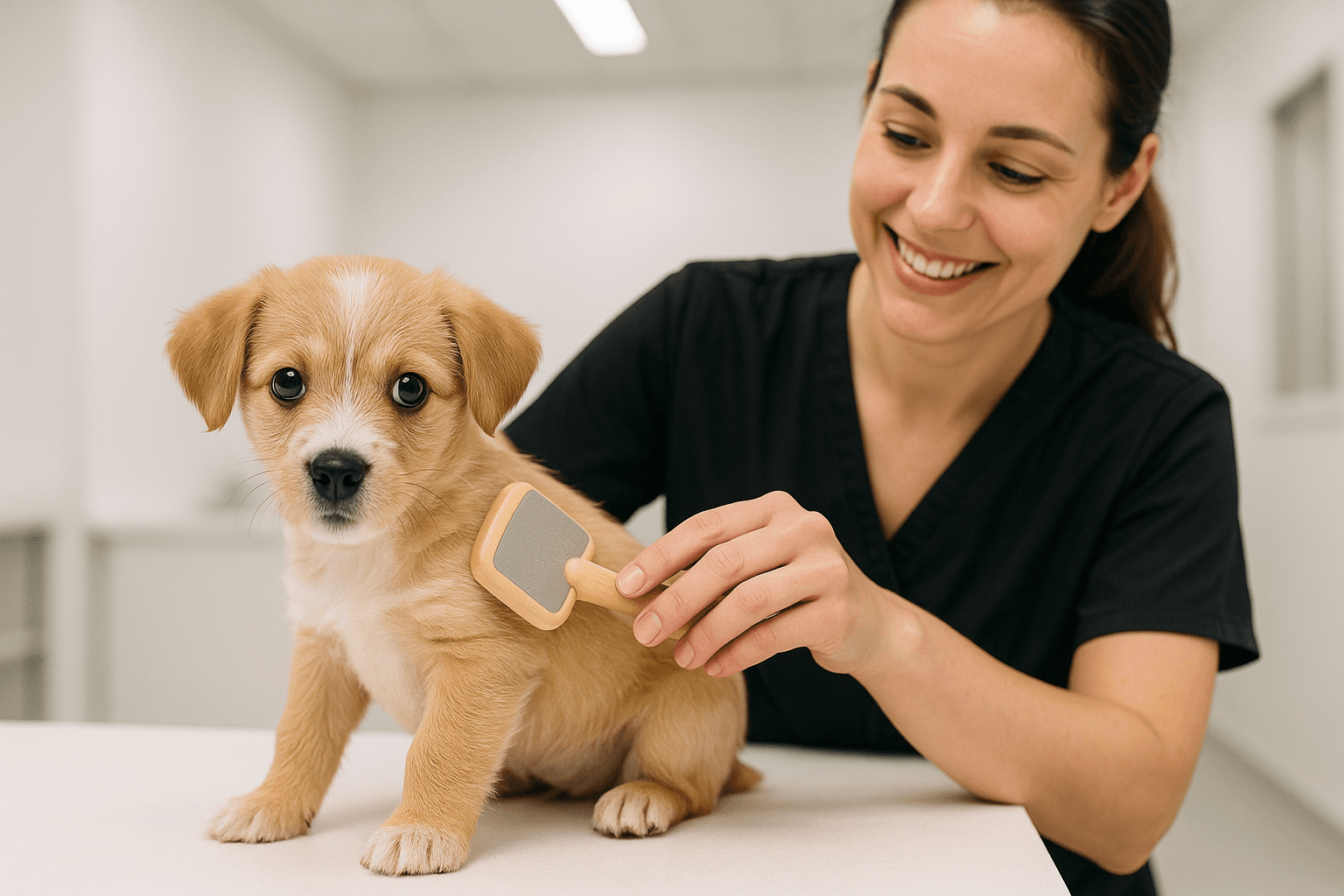
How to Groom a Puppy: The Complete First-Timer's Guide
Start grooming your puppy from the day it comes home. Not because it needs a groom at eight weeks old (it probably does not) but because the window for teaching a dog that grooming is safe, normal, and entirely unremarkable closes faster than most new owners realise. A puppy that learns early becomes an easy dog to groom for the rest of its life.
Read guide →