

Rottweiler
Complete UK breed guide

Quick answer
Rottweilers are large, confident working dogs needing experienced owners and thorough socialisation. Key health tests include hip and elbow scoring and cardiac screening for aortic stenosis. Expect to pay £40 to £80 per month for insurance. Lifespan is 8 to 10 years.
Quick Facts
- Size
- Large
- Weight
- 35–60 kg
- Lifespan
- 8–10 years
- Breed Group
- Working
- Exercise
- 75–90 mins/day
- Activity Level
- High
- Grooming
- Low
- Monthly Cost
- £150–£240/month
- Temperament
- Loyal, Confident, Protective
- Good with Children
- Yes
- Good with Dogs
- Yes
- Good for First Timers
- No
- Suits Flats
- No
Free care guide
Get the Complete Rottweiler Care Guide
Feeding, health, grooming, training and costs for your Rottweiler. Free, straight to your inbox.
Getting set up
Getting a Rottweiler? Here's what you'll need.
Our editors have picked the essentials for Rottweiler owners.
See the Senior Dog Kit →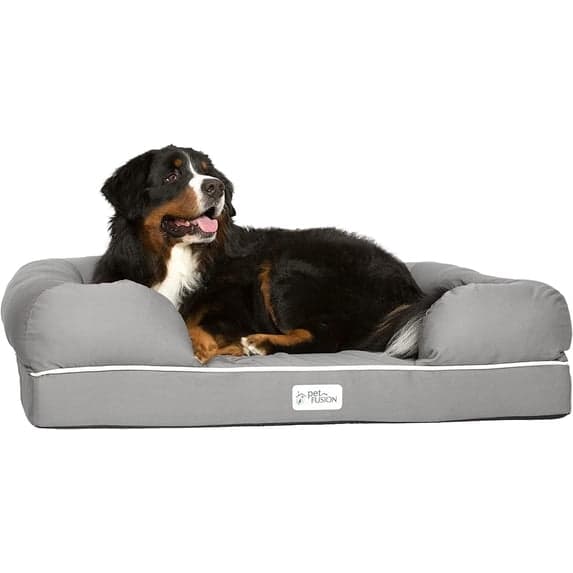

Recommended for Adult Dogs for Rottweilers
Products selected for Rottweiler size, coat type, and life stage. Affiliate disclosure.
Tuffies
Shop NowPetFusion
PetFusion Ultimate Dog Bed (Large)
Memory foam orthopedic bed with waterproof cover. Ideal for large breeds.
Shop PetFusionKurgo
Shop NowProDen PlaqueOff
VOHC-accepted. Seaweed-based dental bone with multiple flavours. From the makers of PlaqueOff Powder.
Buy on AmazonHurtta
Hurtta Mudventure ECO Raincoat (Large)
Reflective, eco-friendly raincoat built for UK weather. Large size.
Shop HurttaLily's Kitchen
Shop NowAATU Dog and Cat Food
Shop NowBarking Heads
Shop NowRoyal Canin
Royal Canin Breed-Specific Food
Nutrition precision-tailored to your breed.
Shop Royal CaninHarringtons
The UK's bestselling dry dog food. No artificial colours, flavours or preservatives. Made with natural ingredients including chicken, brown rice and vegetables. Available in multiple sizes.
Shop NowAnimology
The UK groomer standard for removing fox poo and foul odours. Deep cleaning with built-in conditioner and Pro-Vitamin B5. Suitable for all coats from 6 weeks old.
Shop NowBoshel
Shop NowPets Calm Down
Shop NowRosewood
Shop NowDrontal
Shop NowPitPat
Shop NowJulius-K9
Julius-K9 IDC Powerharness (Large)
Award-winning harness trusted by dog owners worldwide. Large size (23-30kg).
Shop Julius-K9Furbo
Shop NowKONG
KONG Classic (Large)
The classic rubber chew for large and giant breeds.
Shop KONGLickiMat
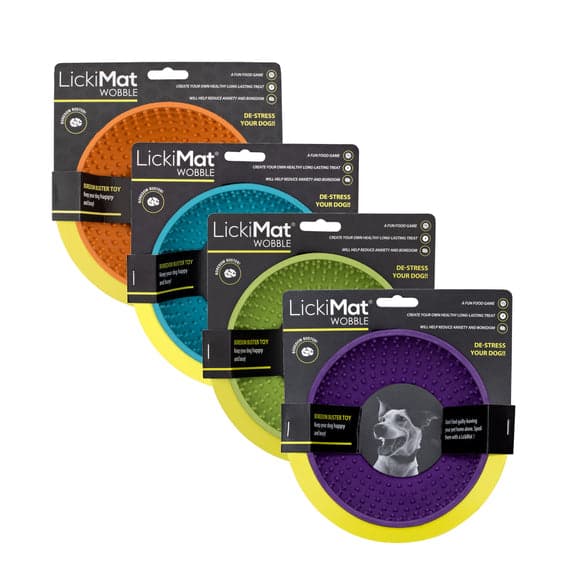
LickiMat Wobble
Slows feeding, reduces anxiety, keeps dogs calm and engaged.
Try LickiMatChuckit
Chuckit! Ball Launcher (Large)
Launch further, throw less. Sport 26L launcher for large dogs.
Shop Chuckit!Nina Ottosson
Nina Ottosson Dog Puzzle
Level 2 puzzle feeder. Engages your dog mentally and slows eating.
Try Nina OttossonTrixie
Shop NowDoggone Good
Shop NowFURminator
FURminator Deshedding Tool (Large, Short Hair)
Reduces shedding by up to 90% for large short-coated dogs.
Shop FURminatorBreed Overview
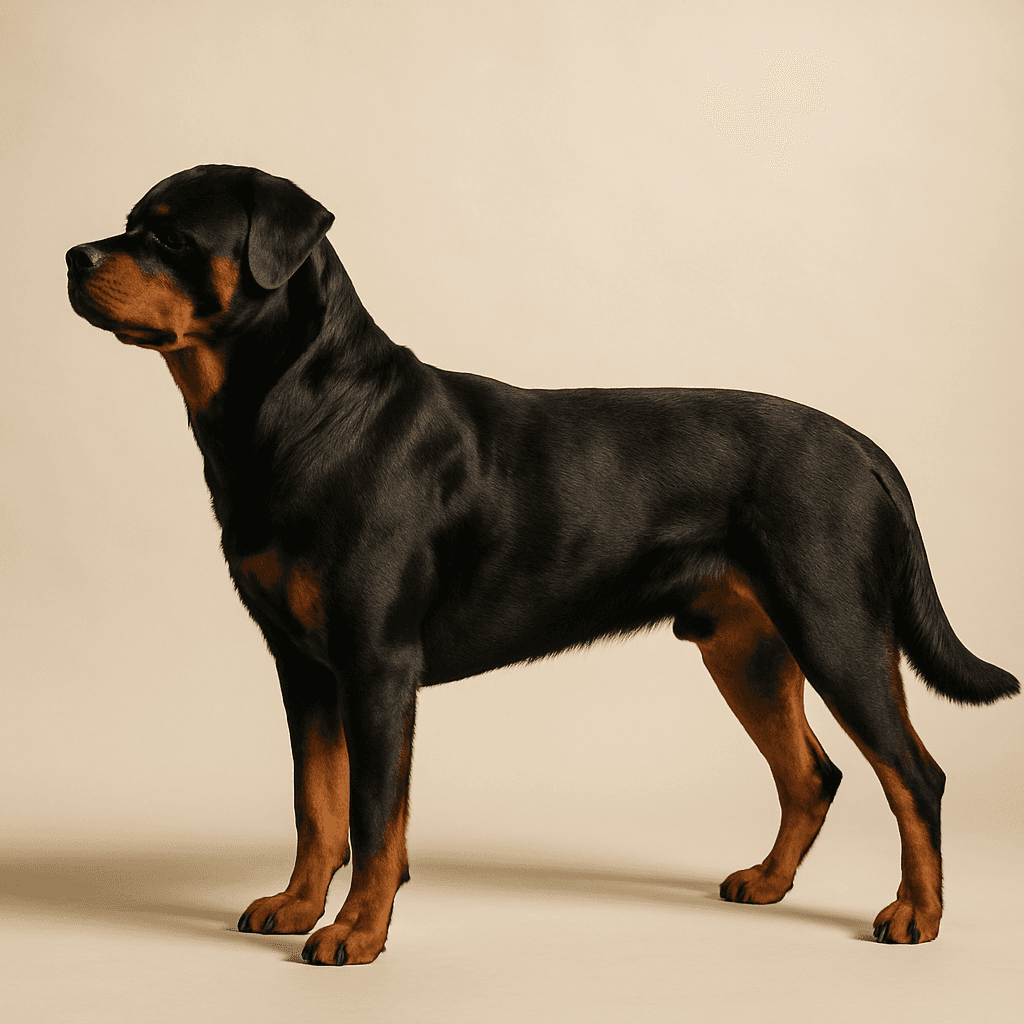
The Rottweiler is a large, powerful and highly capable working dog registered by the Kennel Club in the Working Group. It is one of the oldest herding and droving breeds in Europe, used by the Romans to drive cattle and later by German butchers in Rottweil to pull carts and guard livestock. That heritage is written into the breed's character: confident, calm when properly raised, deeply loyal to its family, and possessed of a natural guarding instinct that requires knowledgeable management.
Rottweilers are not a breed for inexperienced owners. They are large, strong dogs with a dominant temperament that will test an owner who is uncertain, inconsistent or who does not establish clear leadership through calm, consistent positive training from puppyhood. A well-raised, well-socialised Rottweiler is a stable, affectionate and impressive companion. A poorly raised one, given inadequate socialisation and training, is a serious management problem. The difference is entirely determined by the owner's approach and commitment.
Socialisation from puppyhood is non-negotiable. Rottweiler puppies must be exposed to a wide and varied range of people, environments, other animals and situations during the critical 8 to 16 week window. This does not dilute their guarding instinct: it produces a dog that can distinguish between genuine threat and normal daily life. An under-socialised Rottweiler that is reactive to everything is not a better guard dog; it is an unpredictable liability.
Exercise requirements are substantial. Adult Rottweilers need at least one to two hours of structured exercise per day, combined with mental stimulation. They thrive with a job: obedience work, tracking, protection sports and weight pulling all suit the breed's physical capabilities and mental engagement needs.
Health testing is essential when buying a Rottweiler puppy. The breed carries meaningful risks of hip dysplasia and elbow dysplasia, both assessed through the KC/BVA schemes, and sub-aortic stenosis (SAS), a congenital heart condition that should be screened for by a veterinary cardiologist before breeding. Ask to see hip scores, elbow grades and cardiac clearance on both parents.
Rottweilers are not banned under the Dangerous Dogs Act 1991. They are subject to the general requirement that all dogs must be under control in public but are not listed breeds.
Purchase prices from health-tested KC-registered breeders typically range from £1,000 to £2,000. Monthly insurance for a Rottweiler is high, typically £50 to £100, reflecting both the breed's size and the health risks. Lifespan is typically 8 to 10 years. Rottweiler Welfare UK is the primary breed-specific rescue and rehomes dogs nationally.
The Rottweiler is a breed that rewards serious ownership with exceptional loyalty and companionship. Do the research, find a health-tested breeder, invest fully in training and socialisation, and this is one of the most rewarding dogs you can own.
Temperament & Personality
Rottweilers are confident, calm and deeply loyal dogs when properly raised. They are not naturally aggressive: the breed standard describes them as good-natured, placid, devoted and eager to work. In the right hands, this is exactly what they are. In the wrong hands, their physical power and natural guarding instinct create serious management challenges.
They bond closely with their family and are typically gentle and affectionate with the people they know. Many Rottweilers are devoted companions who are entirely relaxed in the home. They tend to be aloof with strangers rather than overtly friendly: a Rottweiler that greets every unfamiliar person with enthusiasm is unusual. This aloofness is appropriate and breed-typical; aggression toward strangers without cause is not.
The guarding instinct is real and should be respected rather than suppressed or amplified. A well-socialised Rottweiler will assess situations calmly and respond proportionately. An under-socialised one that has had the protective instinct reinforced inappropriately will not distinguish between real and perceived threats.
Rottweilers do not do well with isolation or boredom. A Rottweiler that is left alone for extended periods without exercise and stimulation will express its frustration. They are companion dogs that want to be with their people.
They can be stubborn and will test boundaries, particularly during adolescence. Consistent, calm positive reinforcement training with clear expectations works well. Harsh methods produce anxiety and unpredictability in a breed of this physical capability.
Training
Rottweilers are intelligent and capable learners but require an owner who is calm, consistent and confident. They respond well to positive reinforcement but are perceptive dogs that will quickly identify and exploit inconsistency.
Four priorities for a new Rottweiler owner:
- Socialisation. Begin immediately and make it comprehensive. Puppy classes, controlled introductions to a wide range of people, environments, sounds and other animals during the 8 to 16 week window. This is the single most important investment in a Rottweiler's future manageability.
- Loose lead walking. A pulling Rottweiler is a physical management problem for most adults. Harness and consistent loose lead training from day one. The habit is far easier to prevent than to correct.
- Basic obedience. Sit, stay, down, come and leave it. These are not optional extras: they are the daily management tools for a large, powerful dog. Enrol in a positive reinforcement class with a trainer experienced with working breeds.
- Boundary setting. Rottweilers benefit from clear, consistent household rules established from puppyhood. A puppy allowed on furniture and to demand attention will become a large adult dog with the same habits. Decide the rules early and apply them consistently.
Common mistakes: Using confrontational methods with a dominant breed. This creates an adversarial relationship and amplifies rather than manages the problem. Find a trainer accredited by the APDT or IMDT who has specific experience with working breeds.
Exercise Needs
Adult Rottweilers need one to two hours of structured exercise per day. This should include walks, training sessions and mental engagement. They are working dogs and thrive when given a job.
Puppies should not be over-exercised. Five minutes per month of age, twice daily, protects growing joints in a large breed. Avoid forced road walking, jumping and sustained running on hard surfaces until the growth plates have closed at around 18 months.
Rottweilers enjoy structured training activities alongside physical exercise. Obedience, tracking, carting and protection sports all provide appropriate physical and mental outlets. Without sufficient exercise and stimulation, Rottweilers become bored and express this through destructive behaviour.
Swimming is generally good exercise for the breed. Hot weather exercise should be managed carefully: large dark-coated dogs are more susceptible to heatstroke than many other breeds.
Health & Vet Costs
Rottweilers carry several hereditary health conditions that responsible breeders test for.
Hip dysplasia is one of the most significant concerns. The breed has a relatively high incidence. The KC/BVA Hip Scoring scheme assesses hip conformation: buyers should ask for hip scores on both parents, ideally below the breed mean. Hip dysplasia can cause chronic pain and lameness and may require surgery costing £3,000 to £7,000 per hip.
Elbow dysplasia is assessed separately through the KC/BVA Elbow Grading scheme. Rottweilers have a high incidence. Both parents should be graded before breeding. Elbow dysplasia causes forelimb lameness and may require surgical management.
Sub-aortic stenosis (SAS) is a congenital heart condition in which the outflow tract from the left ventricle is narrowed. It ranges from mild and manageable to severe and potentially causing sudden death in young adult dogs. Breeding dogs should be screened by a veterinary cardiologist. The British Rottweiler Association recommends cardiac screening as part of the health testing protocol.
Osteosarcoma (bone cancer) is seen at higher rates in large and giant breeds including the Rottweiler than in smaller dogs. Limb swelling, lameness and pain are signs. Treatment is expensive and prognosis is guarded.
Hypothyroidism occurs in some lines, causing weight gain, lethargy and coat changes.
Monthly insurance typically costs £50 to £100 for comprehensive lifetime cover. Lifespan is 8 to 10 years.
See a vet immediately if: your dog shows lameness, joint swelling, exercise intolerance, breathing difficulty, fainting, or unexplained limb swelling.
Feeding & Nutrition
Rottweilers are large, muscular dogs with specific nutritional requirements. Feed a high-quality complete diet formulated for large breeds. Large breed formulations control energy density and calcium-phosphorus ratios to support healthy bone development, which is particularly important in puppies given the breed's hip and elbow dysplasia risk.
Do not overfeed. Excess weight places additional load on joints that may already be compromised by hereditary conditions. You should be able to feel your dog's ribs without pressing hard but not see them prominently.
Puppies should be fed a large-breed puppy formula until 18 months to support appropriate growth rate. Rapid growth increases musculoskeletal development risk.
Feed two meals per day. Large deep-chested breeds are at some risk of bloat (gastric dilatation-volvulus): avoid vigorous exercise for an hour before and after meals. Fresh water should always be available.
Feeding your Rottweiler
How much to feed, which food types suit this breed, and what to avoid.
Grooming & Care
Rottweilers have a short, dense double coat that is low-maintenance. A weekly brush with a rubber grooming mitt or bristle brush removes dead hair and keeps the coat healthy. They shed moderately year-round and more heavily during seasonal coat changes in spring and autumn.
Bathing every four to six weeks using a dog shampoo is sufficient. Nails should be trimmed every three to four weeks: a Rottweiler with overgrown nails will have altered gait, which can worsen joint stress in a breed prone to hip and elbow problems. Ears should be checked and cleaned weekly. Teeth benefit from regular brushing.
The breed's facial folds (where present) and the area under the tail should be checked regularly and kept clean and dry.
Costs of Ownership
Purchase price: A Rottweiler puppy from a KC-registered, health-tested breeder (hip scored, elbow graded, cardiac screened) typically costs £1,000 to £2,000 in 2025 to 2026. Rescue rehoming fees range from £100 to £350.
Setup costs: Large crate, bedding, harness, bowls, initial vet check, vaccinations, microchip and neutering typically total £600 to £1,200.
Monthly running costs:
- Food (large breed): £60 to £100
- Insurance (comprehensive lifetime): £50 to £100
- Routine vet care and parasite prevention: £20 to £40
- Training (ongoing): £15 to £30
- Total monthly estimate: £145 to £270
Annual estimate: approximately £1,740 to £3,240, before unexpected vet costs.
Lifetime costs: With a lifespan of 8 to 10 years, total lifetime costs typically range from £15,000 to £28,000 including purchase. Dogs requiring hip, elbow or cardiac treatment will sit significantly higher.
Estimated cost breakdown
Estimates based on UK average costs. Actual costs vary by location, vet, and lifestyle.
Owner note
Is your Rottweiler insured?
Rottweiler insurance typically costs £30–£75 per month depending on age, cover level and where you live. Getting the right policy before your first vet visit is one of the most important decisions you will make as a new owner.
Compare dog insuranceWe may earn a commission if you buy through our links. This never influences our recommendations.
Where to Find a Rottweiler in the UK
Whether you are looking for a Rottweiler puppy from a responsible breeder or hoping to give a rescue Rottweiler a second chance, there are reliable routes to finding the right dog. The most important thing is that you find them through the right channel — one that puts the dog's welfare first.
Finding a Rottweiler Puppy
The Kennel Club's Find a Puppy service is the safest starting point for anyone looking for a Rottweiler puppy. It connects buyers with breeders who register their litters and allows you to verify parental health test results.
For Rottweilers, the relevant breed club is The Rottweiler Club. They maintain a breeder register and can be contacted directly for recommendations.
Before you commit, read our complete guide to finding a puppy responsibly — including the red flags that separate an ethical breeder from a puppy farm.
Read the Puppy Buying GuideRescuing a Rottweiler
Rottweiler-specific rescue organisations are run by people who know the breed inside out. They assess every dog carefully and match them to homes that genuinely suit their needs. Waiting lists exist but are worth it.
Key Rottweiler rescues in the UK include:
Our rescue guide covers the full adoption process in detail.
Find a Rescue DogIs a Rottweiler Right for You?
Well suited to: experienced dog owners with knowledge of large or working breeds; active households with time for proper exercise and training; homes with secure outdoor space; owners who will invest in ongoing training and socialisation.
Not suited to: first-time dog owners without experience of large or dominant breeds; households where the dog would be left alone for long periods; flat or urban dwellers without access to outdoor space; owners expecting a low-maintenance companion.
The Rottweiler is a rewarding breed in the right hands. It is a serious commitment that demands an owner who is prepared to invest in training, socialisation and healthcare. Do the research, find an experienced trainer before the puppy arrives, and approach ownership as a long-term commitment to doing the breed justice.
Frequently Asked Questions
Yes, Rottweilers can be excellent family dogs when properly socialised and trained from puppyhood. They are naturally protective of their families and good with children, though their size and strength mean supervision with young children is essential. Early socialisation and consistent training are key to developing a well-balanced family companion.
Rottweilers require 75 to 90 minutes of exercise daily to maintain their physical and mental wellbeing. This should include a mix of walks, play sessions, and activities that engage their working dog instincts. Without adequate exercise, they may develop behavioural problems.
Yes, Rottweilers shed moderately throughout the year, with heavier shedding during spring and autumn. Regular brushing with a firm-bristled brush will help manage loose hair and keep their short coat in good condition. Despite moderate shedding, their grooming requirements are relatively low overall.
Rottweilers are highly intelligent and eager to please, making them responsive to training when handled by experienced owners. They require firm, consistent, and positive reinforcement methods rather than harsh corrections. Early socialisation and obedience training are essential to channel their natural protective instincts appropriately.
Rottweilers typically live between 8 and 10 years. Providing good nutrition, regular exercise, preventative veterinary care, and maintaining a healthy weight can help maximise their lifespan and quality of life.
The estimated monthly cost of owning a Rottweiler is between £150 and £240, covering food, routine veterinary care, insurance, and general maintenance. This can vary depending on the quality of food chosen, any health conditions, and regional veterinary costs across the UK.
Rottweilers are not recommended for first-time dog owners due to their size, strength, and need for experienced handling and training. They require an owner who can provide firm, consistent leadership and understand their working dog heritage. Experienced dog owners who can commit to proper socialisation and training will find them rewarding companions.
Related Breeds
Boxer
Boxers are playful, loyal Working Group dogs with a typical lifespan of 10 to 12 years. ARVC (a breed-specific heart con...
View breed guide →Bullmastiff
The Bullmastiff is a large, powerful British guard breed developed to apprehend poachers. Loyal and calm with its family...
View breed guide →Dobermann
Dobermanns are athletic, loyal working dogs with a significant inherited cardiac condition: Dilated Cardiomyopathy (DCM)...
View breed guide →Related Guides
Find local services for your Rottweiler
Search verified UK listings for vets, groomers, trainers and walkers near you.
Upcoming events for Rottweiler owners
Championship Show
Darlington Dog Show Society Championship Show 2026
18 to 20 September 2026 · Ripon, North Yorkshire
Companion Show
Paws in the Park — Kent 2026
19 to 20 September 2026 · Maidstone, Kent
Championship Show
Belfast Dog Show Society Championship Show 2026
26 to 27 September 2026 · Lisburn, County Antrim
Festival
DogFest at the Palace 2026
3 to 4 October 2026 · Woodstock, Oxfordshire
Championship Show
South Wales Kennel Association Championship Show 2026
8 to 11 October 2026 · Builth Wells, Powys