How Much Should I Feed My Dog?
Quick answer
How much to feed your dog depends on their weight, age, activity level, and the type of food you are using. Most adult dogs need two meals per day. Always start with the manufacturer's feeding guide on the packaging, then adjust based on your dog's body condition score -- not by whether they seem hungry.
Start With the Feeding Guide on the Pack
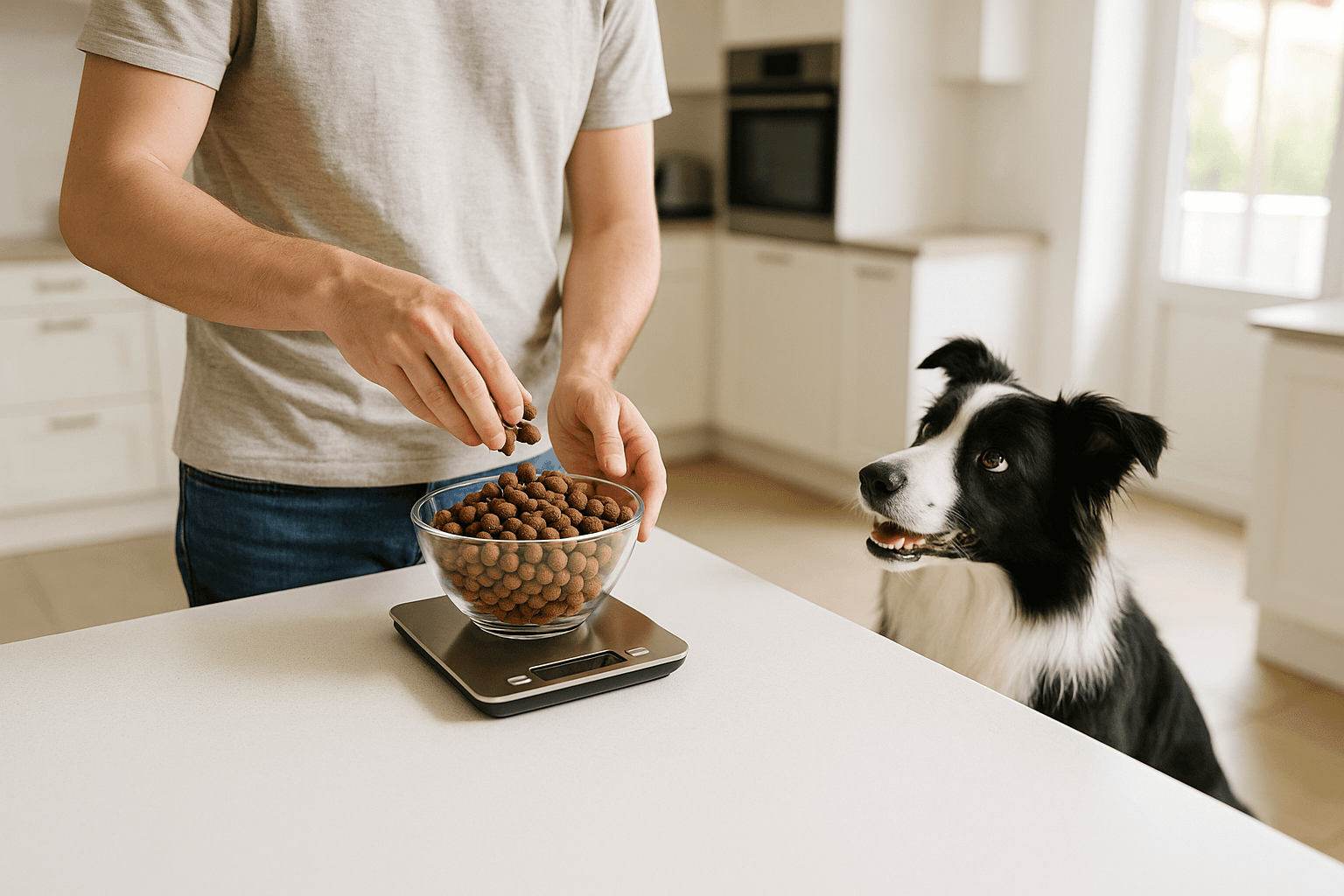
Every complete dog food sold in the UK must carry a feeding guide. This is your starting point. The guide will give a daily amount based on your dog's bodyweight, typically split across two meals for adults.
These are starting guidelines, not exact prescriptions. They are calculated for an average dog of that weight. Your dog may need more or less depending on their individual metabolism, activity level, and life stage.
If your dog has been neutered, reduce the feeding guide amount by approximately 20% as a starting point. Neutered dogs typically have lower energy requirements.
How to Know If You Are Feeding the Right Amount: Body Condition Scoring
Body condition scoring (BCS) is the method vets use to assess whether a dog is underweight, ideal, or overweight. It is more reliable than the scales alone because it accounts for muscle mass and fat distribution.
How to assess your dog at home:
Run your hands along your dog's ribcage. You should be able to feel the ribs easily with light pressure but not see them prominently. If you cannot feel the ribs at all, your dog is likely overweight. If the ribs are clearly visible, they may be underweight.
From above, a dog at a healthy weight should have a visible waist behind the ribs. From the side, there should be an abdominal tuck -- the belly should rise slightly between the chest and hind legs.
UK Pet Food (formerly the PFMA) and PDSA both publish free body condition score charts you can use at home.
Feeding Guide by Life Stage
Puppies
Puppies need significantly more calories per kilogram of bodyweight than adult dogs. Most puppy foods carry age and weight-specific feeding guides. Follow them closely and adjust as your puppy grows. Feed puppy-specific food until your dog reaches adulthood -- 12 months for small breeds, up to 24 months for large and giant breeds. See the full guide: Puppy Feeding Guide
Adult Dogs
Most adult dogs do well on two meals per day -- morning and evening. Splitting the daily allowance reduces bloat risk (particularly important for large, deep-chested breeds) and helps manage hunger.
Free feeding -- leaving food available at all times -- is not recommended. It makes it impossible to monitor intake and contributes to overeating.
Senior Dogs
Dogs aged 7 and over typically need fewer calories but benefit from high-quality protein to maintain muscle mass. Monitor body condition more frequently and adjust portions accordingly. See the full guide: Senior Dog Nutrition
Why 50% of UK Dogs Are Overweight
UK Pet Food reports that vets estimate 50% of UK dogs are currently overweight or obese -- yet only 4% of owners think their dog needs to lose weight. An overweight dog can lose up to 2.5 years of life expectancy, according to research cited by PDSA.
Treats count. If your dog gets regular treats, factor them into their daily calorie allowance and reduce the main meal accordingly.
Frequently Asked Questions
Twice a day is recommended for most adult dogs. It helps manage hunger, supports digestive health, and reduces bloat risk in larger breeds. Puppies need three to four meals per day until six months of age, then twice daily.
Not necessarily. Many dogs will eat whenever food is available regardless of whether they need it. Use body condition scoring to assess whether your dog is actually underweight. If their BCS is healthy, the hunger is behavioural rather than a nutritional need.
Transition gradually over 7 to 10 days. Start with 75% old food and 25% new food for two to three days, then 50/50, then 25% old and 75% new, then fully switched. A sudden switch frequently causes digestive upset.
Active working or outdoor dogs may need slightly more food in cold weather to maintain body temperature. House dogs with a largely indoor lifestyle typically do not need a seasonal adjustment.
More from Dog Nutrition
How to Choose Dog Food UK: Ingredients, Labels and Life Stages Explained
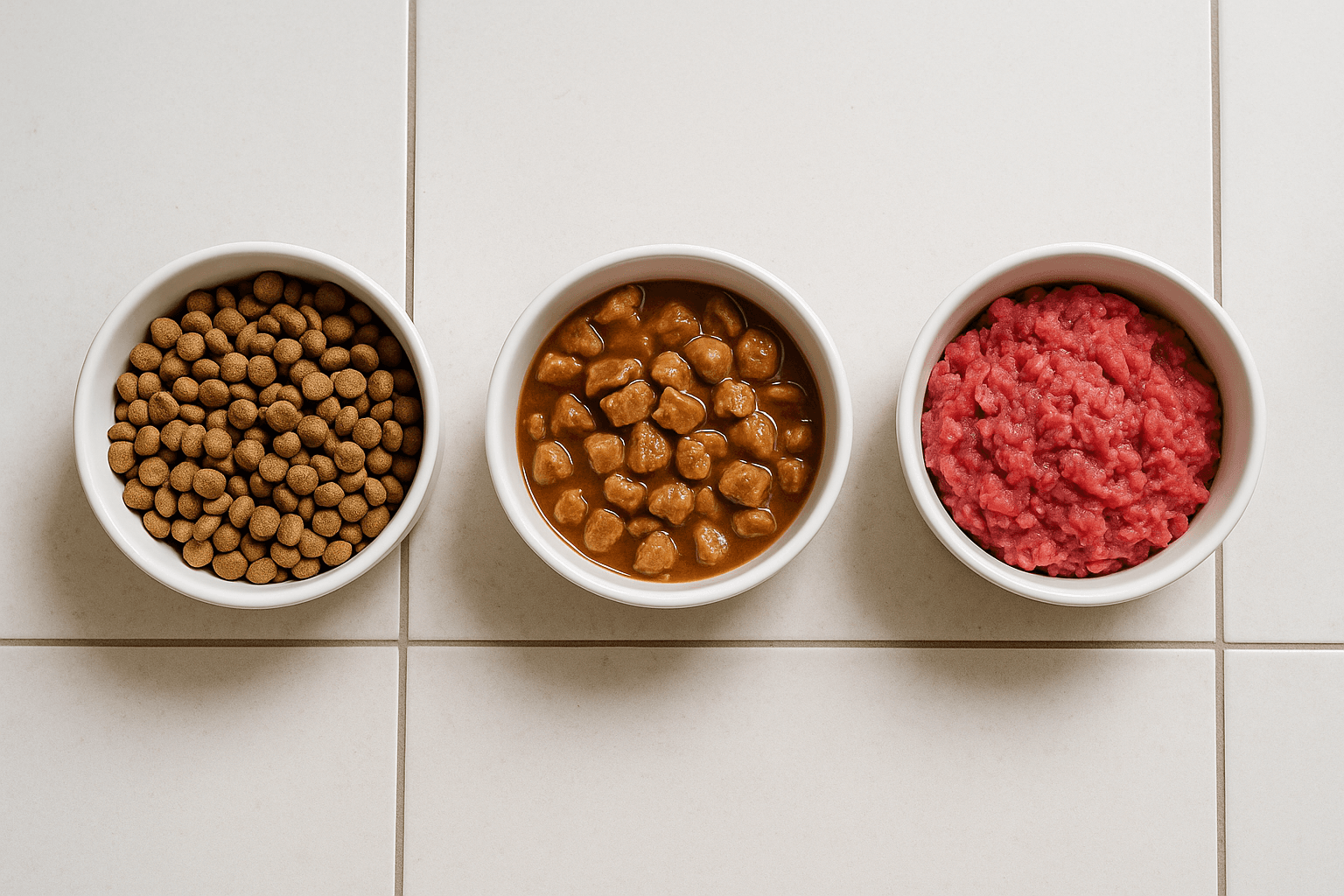
The best dog food for your dog depends on their age, breed, health, and your budget. Look for a named meat source as the first ingredient, choose a food labelled "complete" rather than "complementary," and ensure it meets FEDIAF nutritional guidelines. Fresh, air-dried, and raw options are growing in popularity alongside traditional dry and wet food.
Read guide →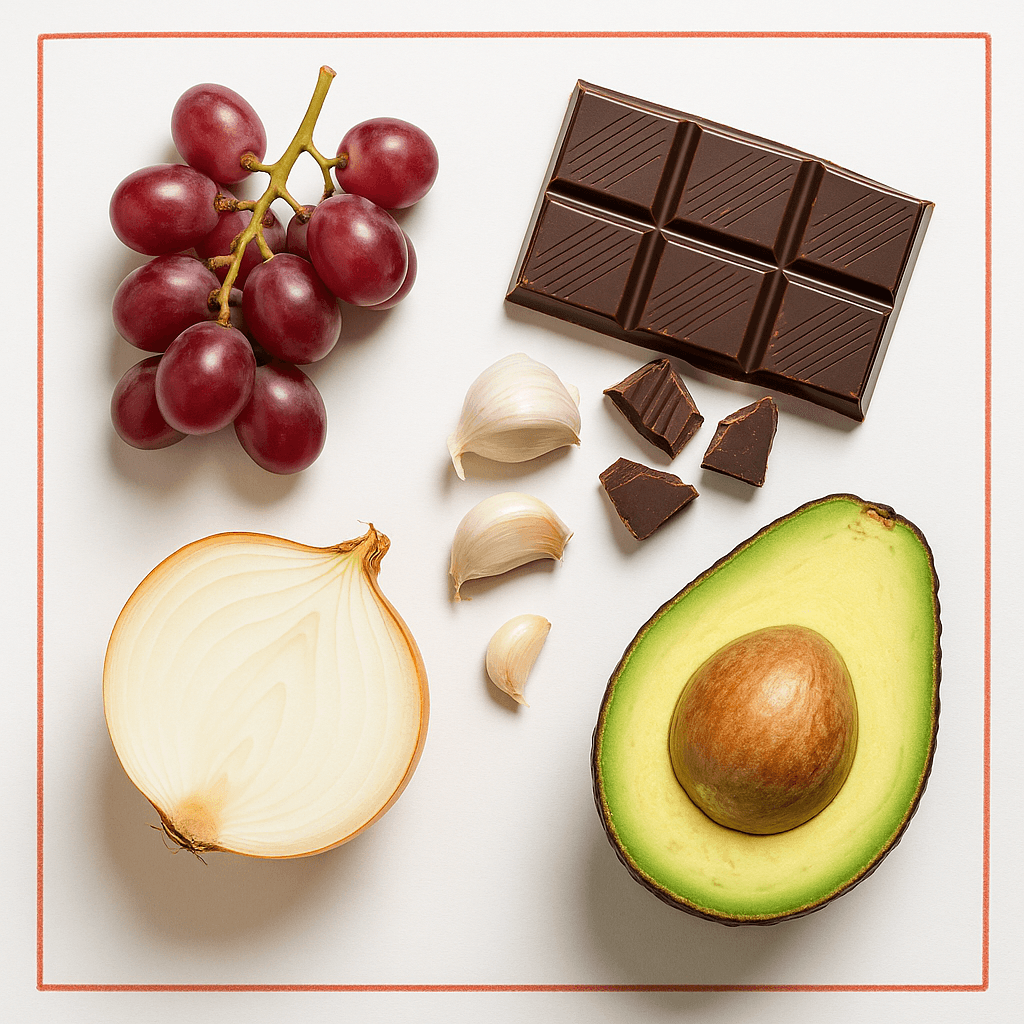
Foods Dogs Cannot Eat: The UK Owner's Safety Guide
The most dangerous foods for dogs in the UK are grapes and raisins (can cause fatal kidney failure), xylitol (in some peanut butters and sugar-free products, causes blood sugar crash and liver failure), chocolate (theobromine toxicity), and alliums including onions and garlic. If your dog eats any of these, call your vet or the Animal Poison Line on 0300 999 0077 immediately without waiting for symptoms.
Read guide →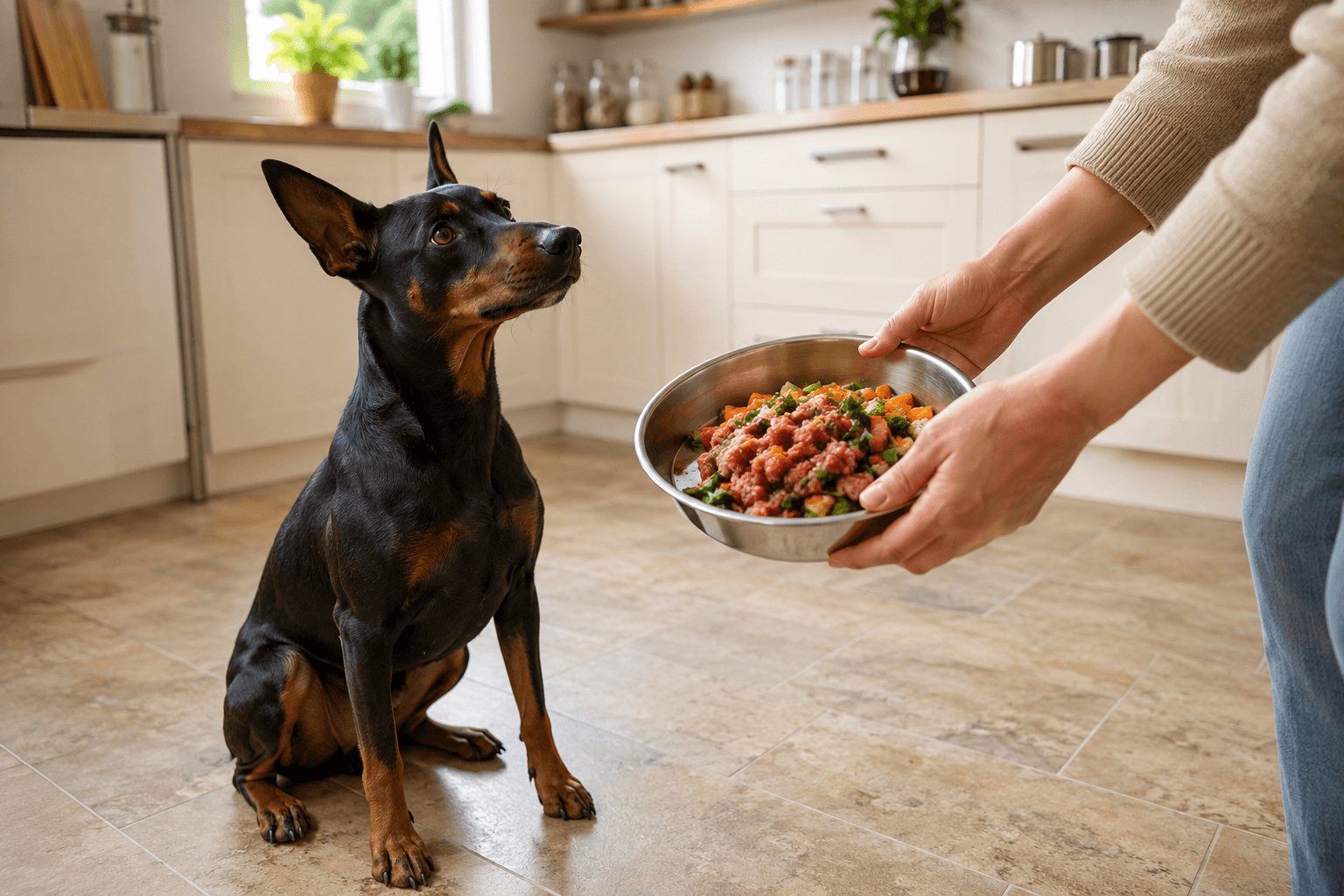
Raw Feeding Dogs in the UK: A Beginner's Guide to BARF
Raw feeding (BARF) in the UK typically follows the PMR ratio: 80% muscle meat, 10% raw meaty bone and 10% organ (at least half of which should be liver). The BVA advises caution due to food safety risks from Salmonella and Campylobacter in raw meat. Raw feeding is not suitable for immunocompromised dogs or households with immunocompromised members, young children or pregnant women.
Read guide →