

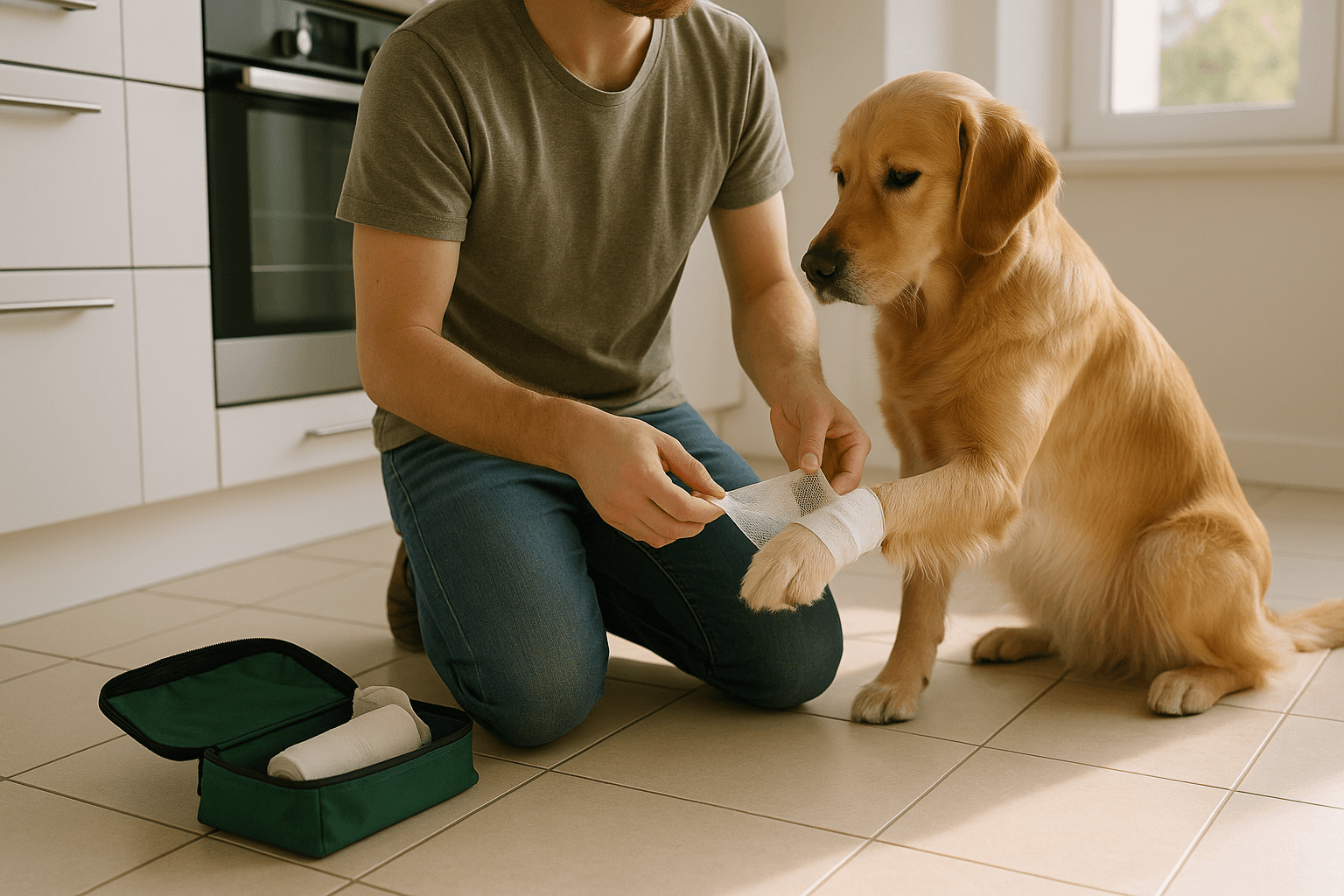
Dog First Aid UK: What to Do in a Pet Emergency
Quick answer
In a dog emergency in the UK, call your vet or the Animal Poison Line (0300 999 0077) immediately. Basic first aid stabilises but does not treat: cool heatstroke with tepid water, apply firm pressure to wounds, and never give dogs human pain relief such as ibuprofen or paracetamol, which are toxic to dogs.
Dog First Aid UK: What to Do in a Pet Emergency
Knowing basic dog first aid can save your dog's life in the minutes before you reach a vet. The most important rule is this: first aid stabilises, it does not treat. Every serious situation ends with an immediate call to your vet or, out of hours, an emergency practice. This guide covers the most common emergencies UK dog owners face and exactly what to do.
Before Any Emergency: Have the Numbers Ready
Save these before you need them:
- Your daytime vet's number
- Your out-of-hours emergency vet's number (ask your practice who covers them)
- Animal Poison Line: 0300 999 0077 (24-hour, per-call charge of approximately £35, run by the Veterinary Poisons Information Service)
The Animal Poison Line is specifically for suspected poisoning. For all other emergencies, your vet or emergency vet is the first call.
Suspected Poisoning
Signs: vomiting, drooling, tremors, collapse, seizures, disorientation, pale gums. Many toxins cause no immediate signs.
What to do:
- Remove your dog from the source immediately
- Call the Animal Poison Line (0300 999 0077) or your vet immediately
- Note what was ingested and when, and the approximate quantity
- Do not induce vomiting unless specifically instructed by a vet or the Poison Line
- Take the packaging of the substance to the vet with you
Common UK poisons include xylitol (in some peanut butters and sugar-free foods), grapes and raisins, chocolate, onions, antifreeze (ethylene glycol), ibuprofen and paracetamol, slug pellets and rat poison. Rat poison in particular may not cause visible symptoms for 3 to 5 days: do not wait for signs if ingestion is suspected.
Choking
Signs: pawing at the mouth, gagging, blue-tinged gums, distress, inability to bark normally.
What to do:
- Look in the mouth if it is safe to do so without being bitten: a distressed dog may bite reflexively
- If you can see the object clearly, try to remove it with your fingers; do not blindly sweep
- For a small dog, hold them upside down briefly and allow gravity to help
- For a larger dog, try the canine Heimlich: kneel behind the dog, wrap your arms around the abdomen just behind the ribcage, and apply firm upward and forward pressure
- If the dog loses consciousness, call your vet immediately and begin rescue breathing if you are trained to do so
Bleeding Wounds
Signs: visible blood, laceration or puncture wound.
What to do:
- Apply firm, direct pressure with a clean cloth or bandage pad
- Do not remove the cloth if it soaks through: add more on top and maintain pressure
- For limb wounds, elevate the limb if possible
- Do not apply a tourniquet unless you have been trained to use one
- Get to a vet as soon as possible: wounds that bleed heavily, involve punctures from bites or sharp objects, or are near the eyes, face or joints need prompt veterinary assessment
Minor cuts that stop bleeding within a few minutes and are not deep can be cleaned gently with clean water and monitored. Bite wounds always require veterinary assessment even if they appear small: the damage beneath the skin is often far greater than the entry point suggests.
Suspected Fracture
Signs: non-weight-bearing lameness, visible deformity, swelling, extreme pain on touch.
What to do:
- Keep the dog as still and calm as possible
- Do not attempt to splint the limb
- For transport, support the dog's body and minimise movement of the injured area
- Muzzle the dog if needed for safety: even the calmest dog may bite when in severe pain. Use a soft lead, tie or purpose-made muzzle. Do not muzzle if breathing is compromised.
- Call your vet immediately
Burns and Scalds
Signs: redness, blistering, singed fur, pain on touch, the dog licking a specific area.
What to do:
- Cool the area immediately with cool (not cold or iced) running water for a minimum of 10 minutes
- Do not apply butter, toothpaste or any cream
- Cover loosely with a clean, damp cloth
- Get to a vet: burns are often more serious than they appear and can cause shock
Chemical burns require the same water treatment: rinse for at least 20 minutes and call your vet immediately. Wear gloves if possible to avoid contact with the chemical.
Heatstroke
Signs: excessive panting, drooling, red or purple gums, vomiting, collapse, disorientation. Most common in brachycephalic breeds (French Bulldogs, Pugs, Bulldogs) and in dogs left in cars.
What to do:
- Move the dog to a cool, shaded area immediately
- Wet the dog with cool (not ice cold) water: focus on the neck, armpits and groin
- Fan the dog while wetting them
- Offer small amounts of cool water to drink if conscious
- Call your vet immediately: heatstroke requires veterinary treatment even if the dog appears to recover
Do not use ice or ice-cold water: this causes blood vessels near the skin to constrict, trapping heat inside. Do not cover the dog with wet towels: these trap heat rather than allowing it to dissipate.
The PDSA advises that heatstroke can be fatal within minutes. A dog left in a car on a 22-degree day can experience fatal heatstroke within an hour.
Bloat (Gastric Dilatation-Volvulus)
Signs: distended, hard abdomen, unproductive retching (trying to vomit without producing anything), distress, restlessness, collapse. Most common in large, deep-chested breeds: Great Danes, Weimaraners, German Shepherds, Standard Poodles, Dobermanns, Irish Setters.
What to do: This is a life-threatening emergency requiring immediate surgery. There is no home treatment.
- Call your vet or emergency vet immediately: do not wait to see if it resolves
- Keep the dog calm and still
- Do not give food or water
- Get to the vet as fast as safely possible
Without treatment, bloat can be fatal within hours.
Seizures
Signs: loss of consciousness, convulsions, paddling legs, jaw chomping, loss of bladder or bowel control, foaming at the mouth.
What to do:
- Stay calm and time the seizure
- Do not restrain the dog or put your hands near their mouth: dogs do not swallow their tongues
- Remove any nearby objects that could cause injury
- Dim the lights and reduce noise if possible
- A single seizure lasting less than 2 to 3 minutes: call your vet during or immediately after; monitor the dog closely
- Seizure lasting more than 3 minutes, or multiple seizures in quick succession: emergency vet immediately. Prolonged seizures (status epilepticus) require urgent medical intervention.
After a seizure, dogs are often disoriented, wobbly and may temporarily lose vision. This passes within minutes to an hour. Keep them calm and confined.
Road Traffic Accidents
Signs: obvious trauma, pain, shock (pale gums, rapid breathing, weak pulse), inability to move.
What to do:
- Ensure your own safety first: move the dog off the road using a blanket, coat or board as a stretcher if possible, supporting the whole body
- Check for breathing: if not breathing and you are trained, begin CPR
- Control any obvious bleeding with direct pressure
- Keep the dog warm and as still as possible: spinal injuries are possible
- Call your vet or emergency vet immediately
Do not assume the dog is uninjured because they are conscious and moving: internal injuries may not be immediately apparent.
For broader guidance on preventative health care, see our Dog Health Hub. For symptoms that warrant a same-day vet visit rather than an emergency, see our guide to Signs Your Dog Needs a Vet.
Frequently Asked Questions
Only if safe to do so and necessary to prevent a bite. Use a soft lead or commercial muzzle. Never muzzle a dog that is vomiting, having breathing difficulties, or has a suspected muzzle or jaw injury.
A basic kit: absorbent dressings, cohesive bandage, adhesive tape, sterile saline wash, blunt-ended scissors, tick remover, digital thermometer, disposable gloves, a foil blanket and the Animal Poison Line number (0300 999 0077).
No. Both are toxic to dogs and can cause organ failure. Never give human pain relief to a dog without specific veterinary instruction. Call your vet if your dog is in pain.
Signs include pale, white or blue-tinged gums, rapid shallow breathing, a rapid weak pulse, cold extremities and extreme lethargy or collapse. Shock is a medical emergency: call your vet or emergency vet immediately.
A healthy dog's rectal temperature is 38 to 39.2 degrees Celsius. Below 37.5 suggests hypothermia; above 39.5 suggests fever or heatstroke. A pet thermometer is a useful first aid kit addition.
Yes. The Pet First Aid Registrar and Canine First Aid both offer accredited courses in the UK, available in-person and online. Practical training is significantly more useful than reading alone.
More from Dog Health

How to keep your dog cool in the heat: tips every UK owner needs
Heatstroke can kill a dog in under an hour. Most UK vets advise avoiding walks above 25°C, particularly for flat-faced breeds, elderly dogs and overweight dogs. Do the five-second pavement test before every walk: press the back of your hand flat on the ground for five seconds. If you cannot hold it there, it is too hot for your dog's paws. If heatstroke is suspected, follow Cool First Transport Second: apply cool water to the belly, armpits and paws, call your vet, then transport.
Read guide →
Dog Insurance UK: The Complete Guide to Choosing the Right Cover
The average UK dog insurance claim is £685, and complex treatments regularly exceed £4,000. Lifetime cover is the most comprehensive policy type, resetting your vet fee limit every year so long-term conditions stay covered for life. Dog insurance in the UK costs between £15 and £120 per month, depending on your dog's breed, age, policy type, and where you live.
Read guide →
Dog Vaccinations UK: Core Vaccines, Boosters and Costs
Adult dogs in the UK need annual leptospirosis boosters and three-yearly boosters for distemper, hepatitis and parvovirus, unless titre testing confirms existing immunity. The BVA supports titre testing as an alternative to automatic three-yearly core boosters, but annual leptospirosis vaccination should continue regardless.
Read guide →