

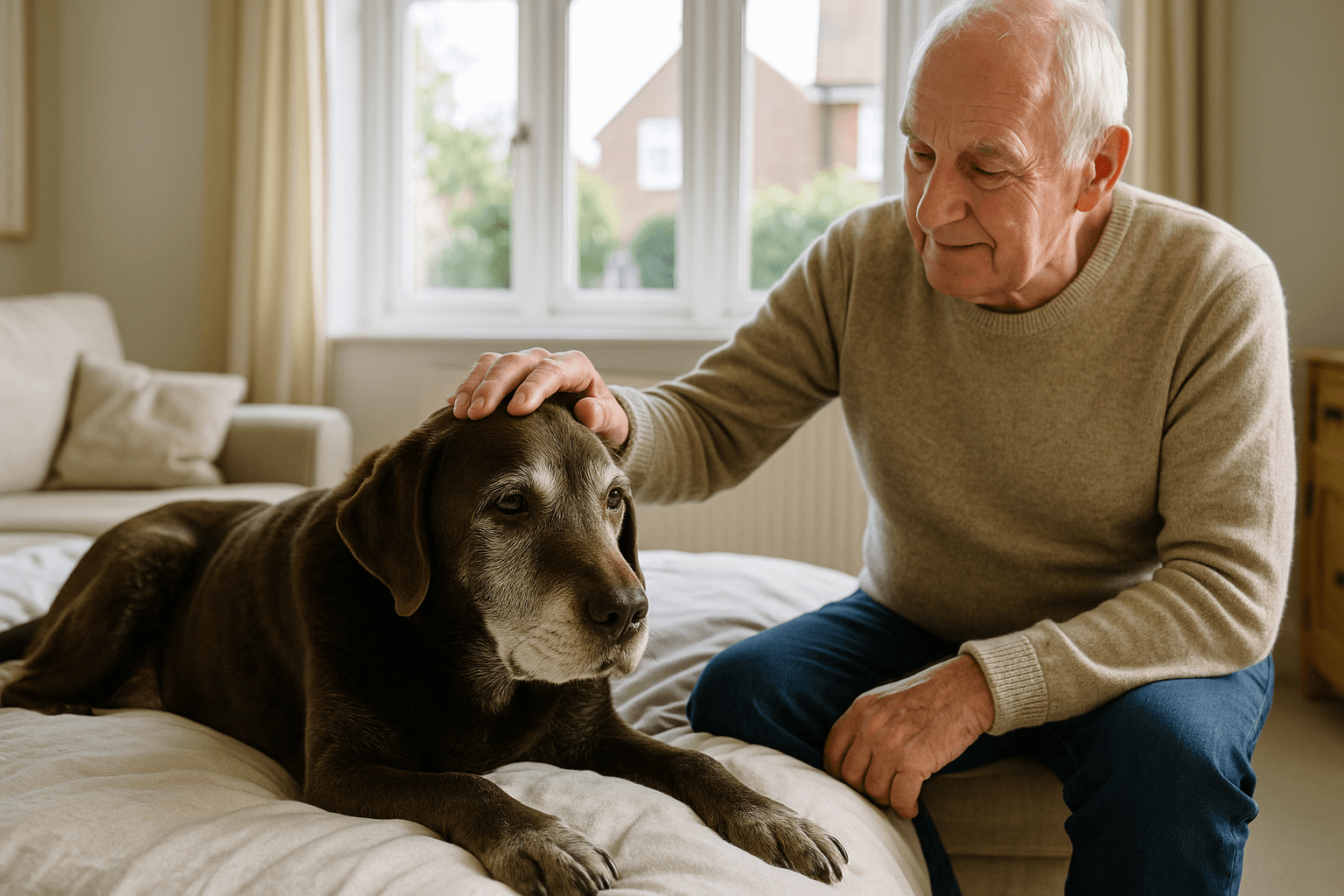
Senior Dog Care UK: Health, Comfort and Quality of Life
Quick answer
Senior dogs in the UK benefit from six-monthly vet checks to catch conditions like arthritis, kidney disease and cognitive dysfunction early. Giant breeds are considered senior from 5 to 6 years; small breeds from 10 to 12. Weight management, joint support and environmental adaptations are among the most impactful changes an owner can make.
Senior Dog Care UK: Health, Comfort and Quality of Life
Dogs are living longer than ever, and the senior years can be among the most rewarding of your time together. Understanding what changes to expect, when to seek veterinary advice, and how to adapt your dog's environment and routine makes a significant difference to their comfort and quality of life. This guide covers the practical reality of caring for an older dog in the UK.
When Is a Dog Considered Senior?
There is no single answer: age at which a dog becomes senior depends significantly on size and breed.
| Breed size | Considered senior from |
|---|---|
| Small breeds (under 10kg) | 10 to 12 years |
| Medium breeds (10 to 25kg) | 8 to 10 years |
| Large breeds (25 to 40kg) | 7 to 8 years |
| Giant breeds (over 40kg) | 5 to 6 years |
Giant breeds age the fastest and have the shortest lifespans. A 6-year-old Great Dane is an older dog; a 6-year-old Miniature Dachshund is middle-aged.
Six-Monthly Vet Checks
Annual vet visits are a minimum for adult dogs. From the point your vet considers your dog senior, six-monthly checks allow earlier detection of the conditions that develop gradually in older dogs.
At a senior health check, your vet will typically assess:
- Weight and body condition
- Heart and lung function (a heart murmur, common in older dogs, can be monitored and managed if caught early)
- Joint mobility and signs of pain
- Eyes and vision
- Teeth and gums
- Kidney and liver function via blood and urine testing
Blood and urine testing matters particularly for senior dogs. Early kidney disease shows no external symptoms but is detectable in routine bloodwork. Catching it early allows dietary management that can meaningfully extend quality and duration of life.
Common Conditions in Older Dogs
Arthritis One of the most prevalent conditions in senior dogs. Signs include stiffness after rest, reluctance to use stairs, slower to get up and down, reduced interest in exercise and irritability when touched around joints. Many dogs hide pain well: reduced activity is often the first noticeable sign rather than obvious limping.
Management options include: prescription anti-inflammatory medication (NSAIDs specifically formulated for dogs), joint supplements (omega-3 fatty acids and glucosamine have the strongest evidence base), physiotherapy, hydrotherapy, environmental adaptations and weight management.
Dental Disease The majority of dogs over 5 years old have some degree of dental disease, and it worsens with age. Untreated dental disease causes pain, difficulty eating and bacterial spread to the heart, kidneys and liver. Signs include bad breath, difficulty chewing, dropping food, reduced appetite and pawing at the mouth.
Professional dental scaling under anaesthetic is the only way to address established dental disease. Many owners worry about anaesthetic risk in older dogs: a pre-anaesthetic blood test assesses organ function and significantly reduces this risk. Untreated dental pain is a bigger welfare concern than a well-managed anaesthetic.
Cognitive Dysfunction Syndrome (CDS) The canine equivalent of dementia. Signs include confusion, disorientation (getting stuck in corners, staring at walls), disturbed sleep patterns (sleeping during the day, restless at night), house training regression, reduced interaction and apparent anxiety or agitation.
CDS is manageable but not reversible. Options include: veterinary prescription diets formulated for cognitive support, supplements (S-adenosylmethionine and medium-chain triglycerides have some evidence), medication in some cases, and environmental adaptations (night lights, consistent routines, reduced changes to the home layout).
Kidney Disease Chronic kidney disease (CKD) is common in older dogs. Early stages are detectable only on bloodwork. Later signs include increased thirst and urination, reduced appetite, weight loss, vomiting and lethargy.
Management involves prescription kidney diets (lower in phosphorus and protein), increased water intake, and medication to manage blood pressure and secondary effects. CKD progresses but can be managed effectively for months to years with appropriate support.
Heart Disease Mitral valve disease is the most common cardiac condition in older dogs, particularly in Cavalier King Charles Spaniels. Signs include a heart murmur (detected by your vet), exercise intolerance, coughing, laboured breathing and fainting. Medication can significantly extend comfortable life once disease progresses to certain stages.
Cancer Cancer is the leading cause of death in older dogs. Common types include mast cell tumours, lymphoma, osteosarcoma (bone cancer in large breeds) and haemangiosarcoma. Any new lump, rapid weight loss or unexplained deterioration in an older dog warrants prompt veterinary assessment.
Exercise and Mobility
Senior dogs still need regular exercise but often need adapted versions of what they did when younger. The goal is maintaining muscle mass and joint mobility without overloading painful joints.
Principles for exercising an older dog:
- Shorter, more frequent walks rather than one long walk
- Consistent moderate exercise is better than inconsistent intense exercise
- Warm up slowly and allow time to cool down
- Avoid hard surfaces where possible: grass is kinder on joints
- Watch for signs of pain or fatigue: lagging behind, slowing down, panting excessively
- Hydrotherapy is excellent for arthritic dogs: consult your vet for a referral
Swimming and water-based exercise is low-impact and very beneficial for dogs with joint problems. UK hydrotherapy practitioners should be registered with the National Association of Registered Canine Hydrotherapists (NARCH) or the Canine Hydrotherapy Association (CHA).
Nutrition for Senior Dogs
Older dogs have different nutritional needs to younger adults:
- Calories: many senior dogs need fewer calories as metabolism slows, but some need more if weight loss is a concern
- Protein: contrary to older advice, current evidence supports maintaining adequate protein in senior dogs unless kidney disease requires restriction
- Joint support: foods containing omega-3 fatty acids (EPA and DHA) have evidence for reducing joint inflammation
- Dental health: dry food supports dental health better than wet food in most dogs
A senior-specific complete food is appropriate for most older dogs. If your dog has a diagnosed condition (kidney disease, heart disease, diabetes), a prescription diet formulated for that condition is likely to be recommended by your vet.
The PDSA advises that weight management is one of the most impactful things an owner can do for a senior dog: excess weight accelerates joint deterioration, increases cardiac workload and worsens almost every age-related condition.
Adapting the Home
Simple environmental changes make a significant difference to an arthritic or mobility-impaired dog's daily life:
- Non-slip mats on smooth floors (kitchen tiles and wooden floors are hazardous for dogs with reduced grip)
- A ramp or set of steps to access the sofa or car if your dog is accustomed to using them
- An orthopaedic memory foam bed at floor level (no need to step up or down)
- Raised food and water bowls for dogs with neck or shoulder arthritis
- Blocking access to stairs if navigation has become unsafe
- Night lights for dogs showing signs of confusion or poor night vision
Quality of Life and End-of-Life Decisions
The most difficult part of owning a senior dog is recognising when quality of life has declined beyond what can be managed. The PDSA quality of life assessment, available at pdsa.org.uk, provides a structured framework for thinking through this with your vet.
Factors to consider: is your dog eating? Are they able to do things they enjoy? Are they in pain that cannot be managed? Are they having more bad days than good?
Euthanasia, when the time comes, is a final act of kindness. Your vet will guide you through the process. You may request a home visit from many practices: this allows your dog to spend their final moments in a familiar, comfortable environment.
For broader health guidance, see our Dog Health Hub. For breed-specific health risks as your dog ages, see our Breed Guides.
Frequently Asked Questions
Older dogs often mask pain. Signs include changes in posture, reduced activity, altered sleep, reduced grooming, irritability when touched in specific areas, tension around the eyes and changes in appetite. If in doubt, ask your vet for a pain assessment.
Modern anaesthetic protocols with pre-anaesthetic bloodwork are considerably safer than a decade ago. Age alone is not a reason to avoid necessary procedures. Untreated pain from dental disease or an operable tumour is a bigger welfare concern than a well-managed anaesthetic.
A senior-specific complete food is appropriate for most healthy older dogs. If your dog has a specific diagnosis such as kidney disease, heart disease or obesity, discuss nutrition with your vet as a prescription diet may be more appropriate.
Increased sleep is normal in senior dogs. A dog sleeping significantly more than usual, difficult to rouse, or showing weakness or confusion alongside extra sleep warrants a vet check, as these can indicate pain, anaemia or organ disease.
The strongest evidence is for omega-3 fatty acids (EPA and DHA from fish oil) for joint and cardiovascular health, and glucosamine and chondroitin for joint support. Discuss dosing with your vet and be cautious of supplements making extravagant claims without evidence.
Useful frameworks include the PDSA quality of life assessment and the HHHHHMM scale. Your vet is your most important guide: have an honest conversation about prognosis and quality of life at each senior check. More bad days than good is a key indicator.
More from Dog Health

How to keep your dog cool in the heat: tips every UK owner needs
Heatstroke can kill a dog in under an hour. Most UK vets advise avoiding walks above 25°C, particularly for flat-faced breeds, elderly dogs and overweight dogs. Do the five-second pavement test before every walk: press the back of your hand flat on the ground for five seconds. If you cannot hold it there, it is too hot for your dog's paws. If heatstroke is suspected, follow Cool First Transport Second: apply cool water to the belly, armpits and paws, call your vet, then transport.
Read guide →
Dog Insurance UK: The Complete Guide to Choosing the Right Cover
The average UK dog insurance claim is £685, and complex treatments regularly exceed £4,000. Lifetime cover is the most comprehensive policy type, resetting your vet fee limit every year so long-term conditions stay covered for life. Dog insurance in the UK costs between £15 and £120 per month, depending on your dog's breed, age, policy type, and where you live.
Read guide →
Dog Vaccinations UK: Core Vaccines, Boosters and Costs
Adult dogs in the UK need annual leptospirosis boosters and three-yearly boosters for distemper, hepatitis and parvovirus, unless titre testing confirms existing immunity. The BVA supports titre testing as an alternative to automatic three-yearly core boosters, but annual leptospirosis vaccination should continue regardless.
Read guide →