


New puppy essentials UK: what to buy before they arrive
Before bringing a puppy home, you need to buy at minimum: a correctly sized crate, an ID tag engraved with your contact details (a legal requirement in England, Scotland, and Wales), food and water bowls, an appropriate puppy food, a collar, poo bags, and an enzymatic cleaner for accidents. The products here cover everything in that list plus the extras that make the first few weeks considerably less chaotic. Breed-specific guidance on quantities and sizing is on our breed pages.
What this guide covers
The legal requirements
Three things are legally required before your puppy comes home: microchipping by 8 weeks, an ID tag engraved with your name and address worn in public at all times, and cleaning up after your dog.

Laser-engraved, durable, and legally compliant from day one.
Red Dingo's ID tags are laser-engraved directly onto the tag rather than stamped, which means the details remain legible long after cheaper pressed-metal alternatives have worn smooth. The honest caveat: the tag jingles against collar hardware; a silicone tag silencer solves this for under £2.

Sized precisely, built to last, and designed to carry an ID tag correctly.
The Ruffwear Flat Out collar is a padded flat collar with an integrated ID tag attachment ring positioned at the side of the collar, which reduces tag spinning and keeps engraving readable. It adjusts across a wide range during rapid growth. The honest caveat: more expensive than a basic collar; for a puppy that will outgrow it within months, the budget may be better spent on a quality adult collar once growth stabilises.
Feeding
Puppies need puppy-specific food fed in smaller, more frequent portions than adults. Transition gradually over a week from whatever the breeder was feeding to avoid stomach upset.

Honest complete puppy nutrition at a price most owners can sustain.
Harringtons Puppy Complete meets the nutritional requirements for a growing puppy without the premium price tag. Named protein sources, no artificial colours or preservatives, widely available in UK supermarkets and pet retailers. The honest caveat: cereal content is higher than premium alternatives; if your vet recommends a grain-free or high-meat diet, this is not the right food.
Functional, indestructible, and dishwasher safe from day one.
Stainless steel bowls resist bacterial build-up and do not leach compounds into food or water. The non-slip rubber base reduces bowl sliding. Dishwasher safe, which matters when running three meals a day. The honest caveat: no stand included, which matters for larger breeds prone to bloat who benefit from raised feeding.
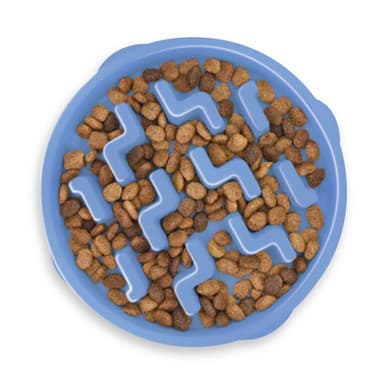
Turns a 30-second meal into three minutes and reduces bloat risk.
The maze-like ridge pattern forces dogs to eat around obstacles rather than scooping food directly, slowing eating speed significantly and reducing bloat risk in deep-chested breeds. The honest caveat: some puppies learn to flip the bowl; a non-slip mat underneath reduces this.
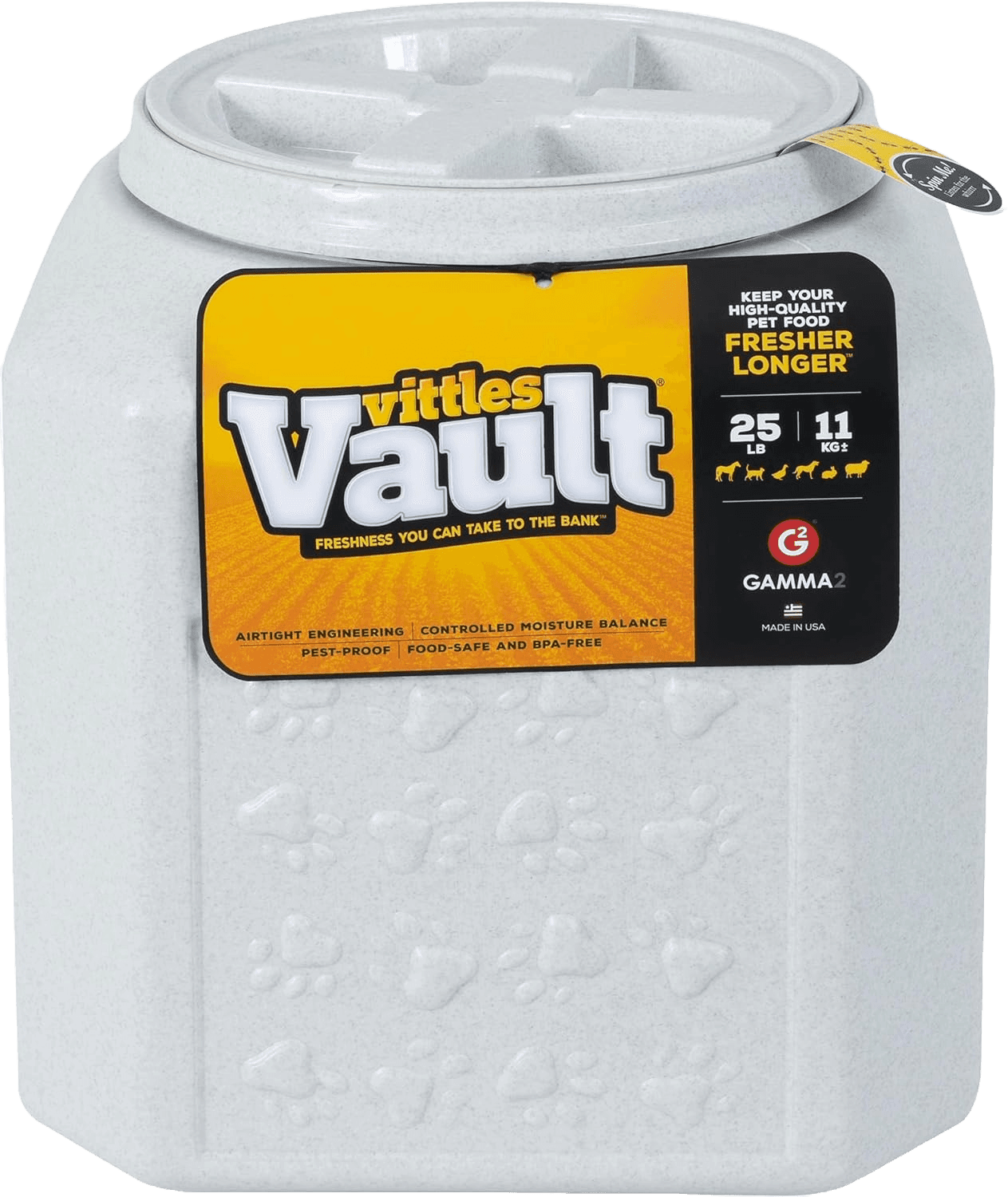
Keeps dry food fresh and pest-free without taking over the kitchen.
Dry dog food stored in its original bag goes stale faster and is more vulnerable to moisture and pests. The Vittles Vault uses a rolling seal lid that creates an airtight closure without clips or latches. The honest caveat: the rolling seal lid is confusing the first time; read the instructions before your first fill.

Keeps water fresh and encourages puppies to drink more consistently.
A circulating fountain keeps water oxygenated, encouraging more frequent drinking and reducing urinary issues from chronic low water intake. The honest caveat: the pump requires cleaning every one to two weeks or it accumulates biofilm; owners unlikely to maintain this may be better served by a heavy stainless steel bowl changed twice daily.
Sleep and crate training
Most trainers recommend crate training from the first night. Size the crate for your adult dog using the divider panel to scale it down for puppyhood, rather than buying a puppy-sized crate you will replace in months.
The right crate for small breeds, built to last past the puppy stage.
The 24-inch Ellie-Bo suits small adult dogs including Cavaliers, Miniature Schnauzers, and French Bulldogs. Includes a divider panel, sets up in under a minute, stores flat, double-door design. The honest caveat: the plastic base tray is functional but not the most robust; dogs that scratch or dig may crack it within months.
The correct adult size for most medium breeds, with a divider for puppyhood.
The 30-inch Ellie-Bo is the correct size for most medium breeds at adult size. The included divider panel prevents a young dog from having so much space it toilets at one end and sleeps at the other. The honest caveat: the carry handle is functional but not comfortable for anything beyond a short move within the house.
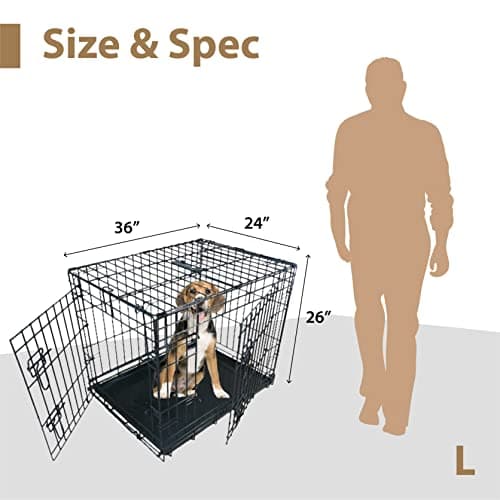
Sized for large breeds with room to stand, turn, and lie fully extended.
The 36-inch Ellie-Bo suits large adult dogs including Labradors, Golden Retrievers, and Springer Spaniels. Buy this size from day one rather than purchasing a smaller crate and replacing it in six months. The honest caveat: at 36 inches this crate takes up significant floor space; measure your intended location before ordering.

Soft, washable, and a useful scent anchor in the crate from night one.
A familiar blanket helps a puppy settle in a crate during the unsettling first few weeks away from their litter. Machine washable and holds up better than supermarket equivalents through repeated cycles. The honest caveat: buy two so one is always available while the other is in the wash.
Settling in
The first 48 hours are the hardest. A puppy has just left their mother and littermates. These products ease the adjustment without eliminating the process.
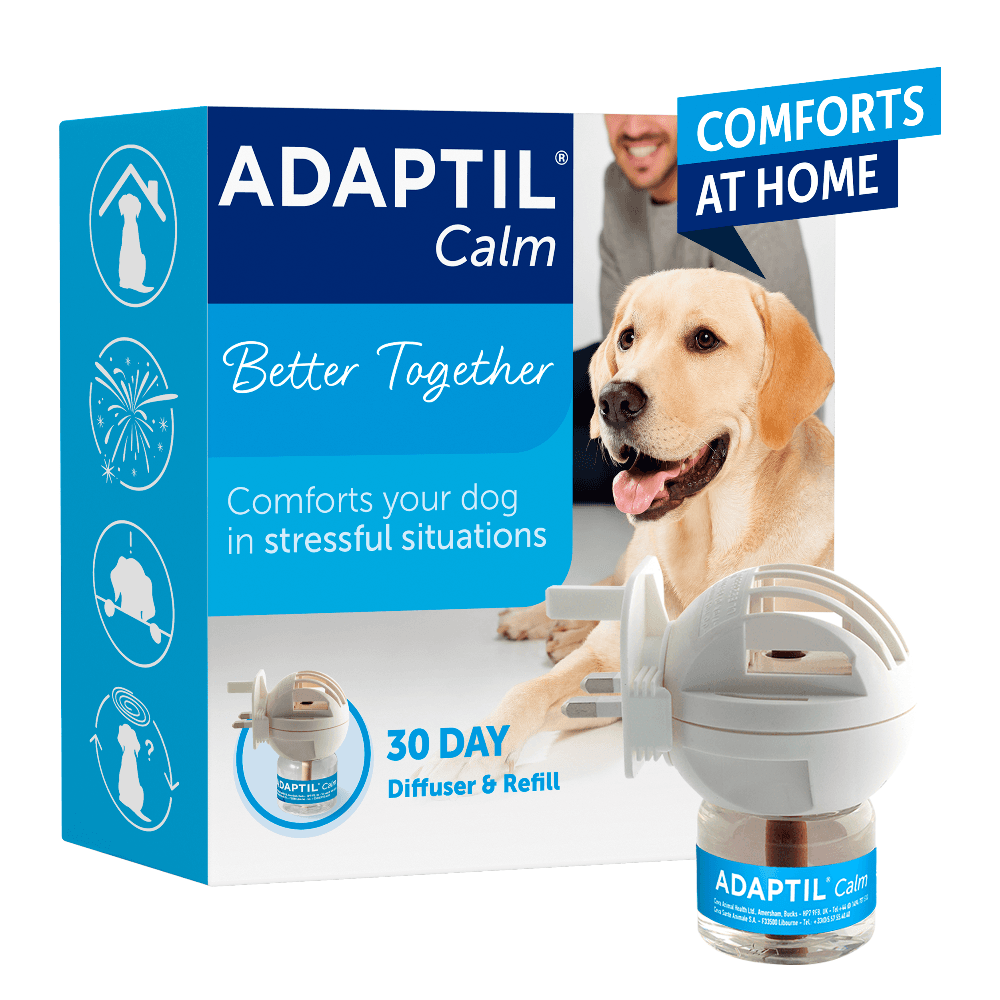
Clinically evidenced pheromone support for the settling-in period.
Adaptil releases a synthetic version of the calming pheromone a mother dog produces for her puppies. Plug it into the room where the crate is sited two days before the puppy arrives. Clinical studies show it reduces stress behaviours in puppies during the first weeks. The honest caveat: refills are an ongoing cost, and some dogs show no apparent response, which is within the normal range of individual variation.
Reliably absorbent and large enough that aim does not need to be perfect.
Simple Solution's Premium Puppy Pads use a quick-dry polymer layer that keeps the surface dry after absorption. Larger than budget alternatives, with an attractant scent that encourages use in the designated spot. The honest caveat: pads are a bridge tool, not a long-term solution; use them alongside outdoor access from the start, not as a substitute.
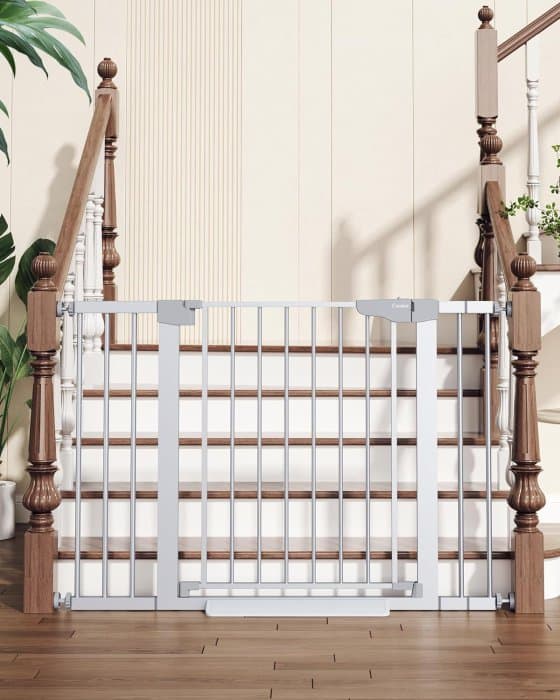
Limits a puppy to a manageable area without drilling into your doorframe.
The Cumbor gate fits openings from 60cm to 150cm via extension panels, pressure-mounts without drilling, and opens with one hand. The honest caveat: the pressure mechanism can mark painted surfaces over time; use a thin adhesive wall protector behind the mounting points if your paintwork is fresh.
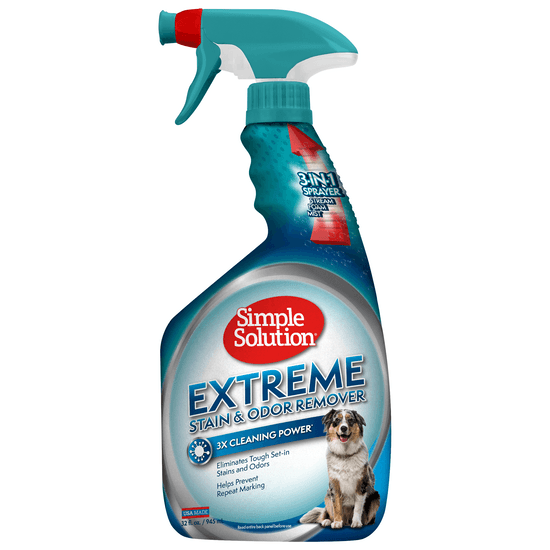
Breaks down urine proteins so the smell does not bring a puppy back.
Standard cleaning products mask pet odour rather than eliminating it. Simple Solution Extreme uses enzyme technology to break down the proteins in urine, faeces, and vomit at a molecular level. The honest caveat: it requires dwell time to work; spraying and immediately wiping does not give the enzymes time to act. Leave it for at least five minutes before removing.
Health and preventative care
Register with a vet before your puppy arrives. The vaccination schedule needs continuing, worming needs to start early, and pet insurance should be arranged in the first week before any health issues arise.

The UK veterinary standard for puppy worming, dosed by weight.
Most puppies arrive with roundworms, transmitted from the mother before and after birth. Drontal Puppy Worming Suspension is the most widely used veterinary-recommended worming product in the UK for dogs under six months, dosed by weight using the included syringe. Standard schedule: every two weeks until 12 weeks, monthly until six months, then quarterly. The honest caveat: always dose by your puppy's current weight rather than estimated adult weight.
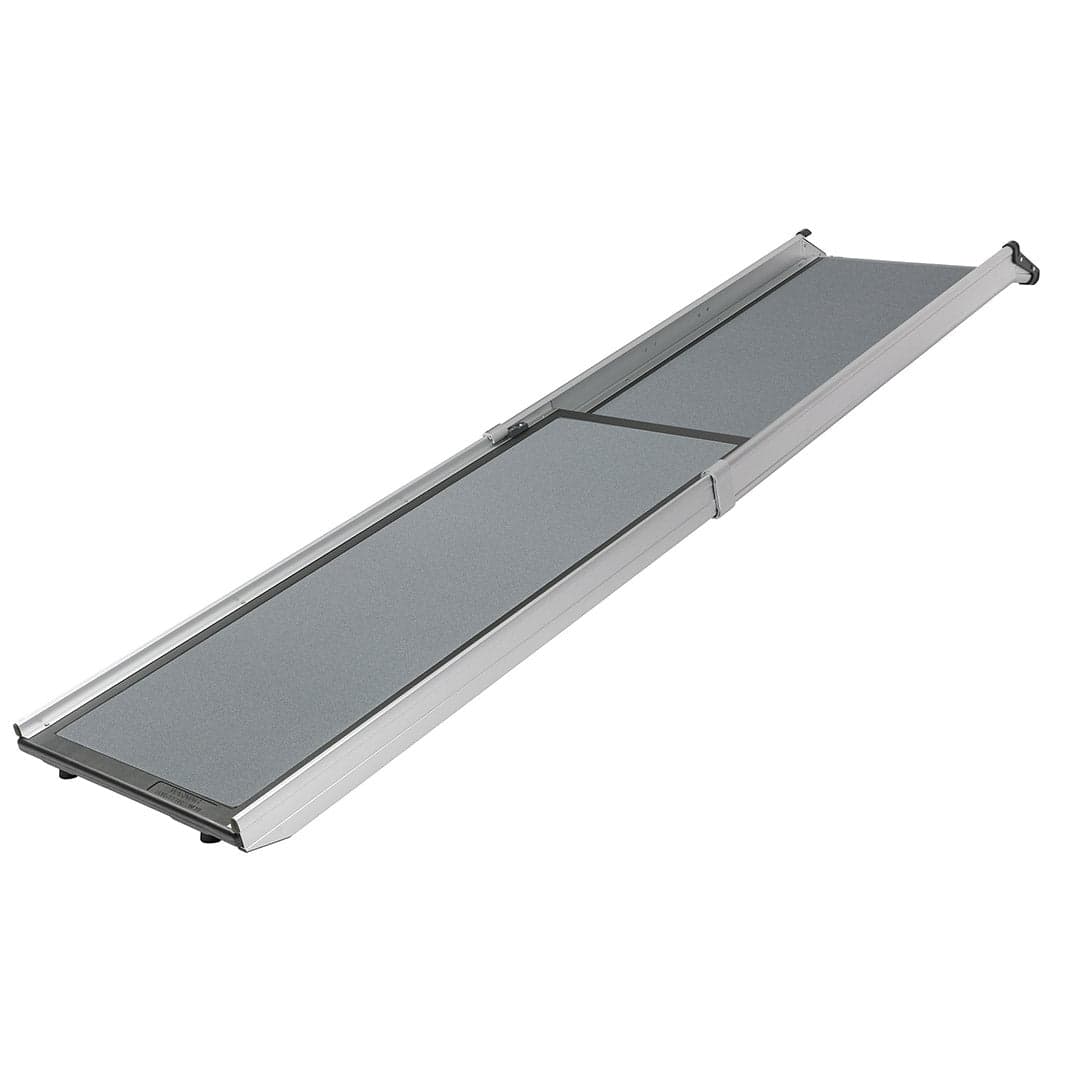
Worth having before you need it, not after something has already happened.
Contains bandages, gauze, antiseptic wipes, a digital thermometer, tick remover, and emergency contact information. Covers the gap between an incident and getting to a vet. The honest caveat: the scissors included are functional but small; if you anticipate needing to cut through dense coat, add a dedicated pair of bandage scissors.
Walking and safety
A harness, not a collar, is the right equipment for walking a puppy. Hold off on full walks until your vet confirms vaccinations are complete, typically around 10-12 weeks.
Four-point adjustment that grows with a puppy through the first months.
The Ruffwear Front Range has enough adjustment range to scale usefully with a growing puppy for several months before needing to be replaced. Foam-padded chest and belly straps distribute pressure without restricting shoulder movement. The honest caveat: even with maximum adjustment range, a harness fitted correctly at eight weeks may need checking weekly during rapid growth phases.

Leak-proof, lavender-scented, and the standard choice for a reason.
Earth Rated poo bags are genuinely leak-proof, thick enough to use without puncturing, and the handle-tie closure means no double-bagging. At 300 bags per pack they represent good value. The honest caveat: they are not biodegradable in the landfill conditions where most dog waste ends up; if environmental impact is a priority, look for certified compostable alternatives.
Training and enrichment
Start training from the first week. Puppies are most receptive in the first few months and habits formed now tend to stick.
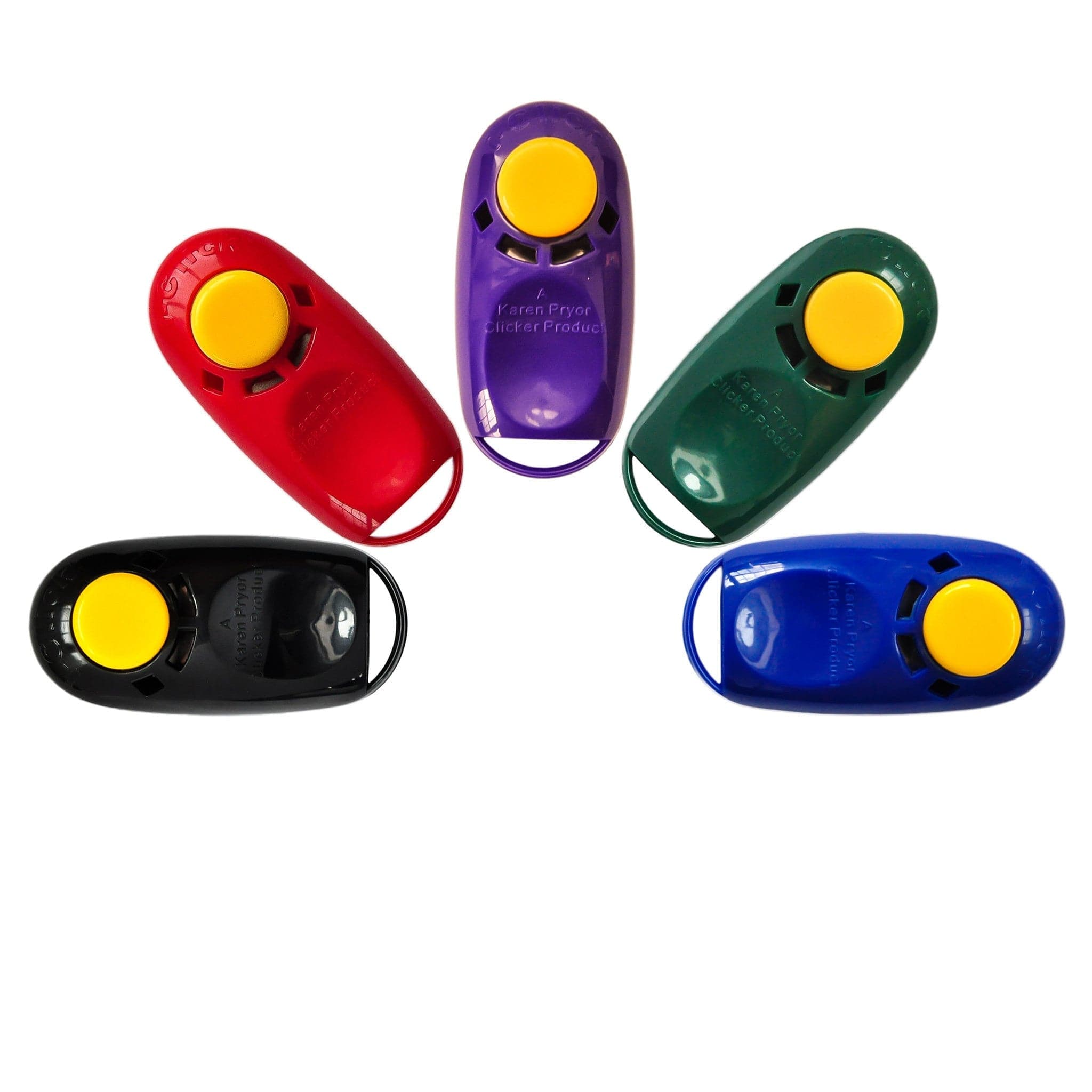
The clicker professional trainers use, at under £8.
The Karen Pryor i-Click uses a button mechanism producing a quieter, more consistent sound than box-style clickers, less alarming to noise-sensitive puppies and easier to operate one-handed. The honest caveat: a clicker used with poor timing creates confusion; pair it with a good beginner training resource before your first session.
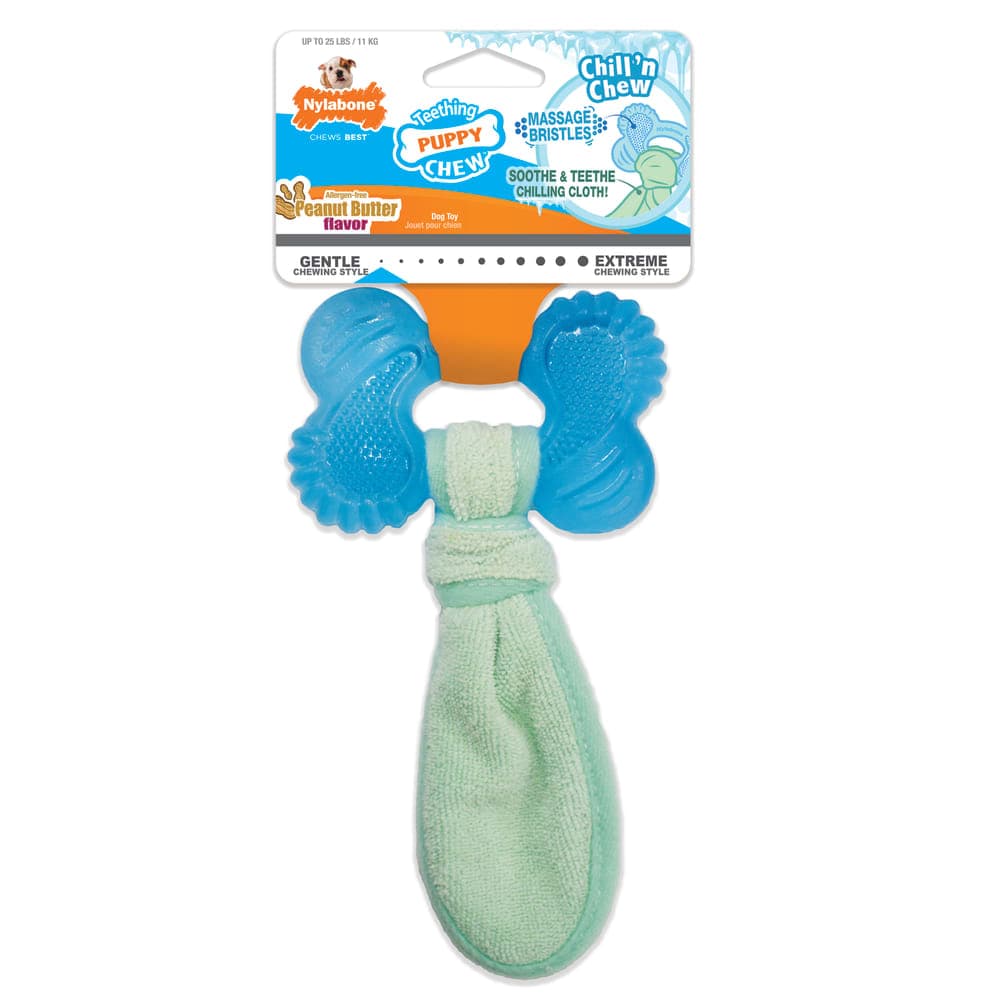
Keeps teething puppies off your furniture and your hands.
Puppies teethe from around three to six months and will chew anything available. The Nylabone Puppy Teething Chew Ring uses a softer nylon compound than adult Nylabones, textured for relief during teething. The honest caveat: some puppies show no interest in nylon chews and prefer natural options such as a frozen KONG; have a backup if the Nylabone is ignored.

The puppy version of the most useful dog toy ever made.
The KONG Classic Puppy uses a softer rubber compound than the adult Classic, appropriate for puppy teeth and jaws still developing. Stuff with puppy food or plain yoghurt and freeze. The honest caveat: an unstuffed KONG is ignored by most puppies within two minutes. Introduce it pre-loaded from the first use so the puppy learns immediately that working it produces reward.
Frequently asked questions
What is legally required for a new puppy in the UK?
In England, Scotland, and Wales, your dog must wear a collar with your name and address on an ID tag whenever they are in a public place under the Control of Dogs Order 1992. Microchipping is also a legal requirement: puppies must be microchipped before eight weeks of age and the chip must be registered on an approved database. Failure to comply with either requirement can result in a fixed penalty notice. Neutering, vaccination, and insurance are not legally required, though all are strongly recommended.
When can I take my puppy for walks?
The standard UK veterinary guidance is to wait until two weeks after your puppy's second vaccination is complete before walking in public areas where unknown dogs have been. This typically means around 11 to 13 weeks of age, depending on the vaccination schedule your vet uses. Before that point, your own garden is safe provided it is not shared with unknown dogs, and you can carry your puppy to busy environments to support socialisation without putting them on the ground.
How much does a puppy cost in the first year?
A realistic first-year budget for a medium-sized breed in the UK includes: the purchase price, vaccinations (£60 to £100), neutering (£150 to £400), insurance (£20 to £60 per month), food (£30 to £80 per month), and equipment (£150 to £400 one-off). Total first-year costs of £2,000 to £4,000 are common before factoring in the purchase price. Budget for unexpected vet bills even with insurance, as excesses and policy gaps are a normal part of ownership.
Should I get pet insurance before the first vet visit?
Yes. Arrange insurance as soon as your puppy comes home, before any health issues are identified. Most pet insurance policies exclude pre-existing conditions, meaning a problem identified at the first vet check may not be covered if you have not yet arranged a policy. The cost is also typically lower for puppies than for older dogs, making the first week the best time to start.
What size crate should I buy for my puppy?
Buy the crate sized for your dog's adult dimensions, not their puppy size, and use the included divider panel to reduce the internal space during housetraining. A puppy given too much space in a crate will toilet at one end and sleep at the other, undermining the housetraining process. Check your breed page or ask your breeder for the expected adult size before ordering, as a 24-inch crate suits a Cocker Spaniel but is unsuitable for a Labrador.
Woof & Woofer earns a small commission from some links on this page. This never influences our recommendations. Learn more.
More buying guides
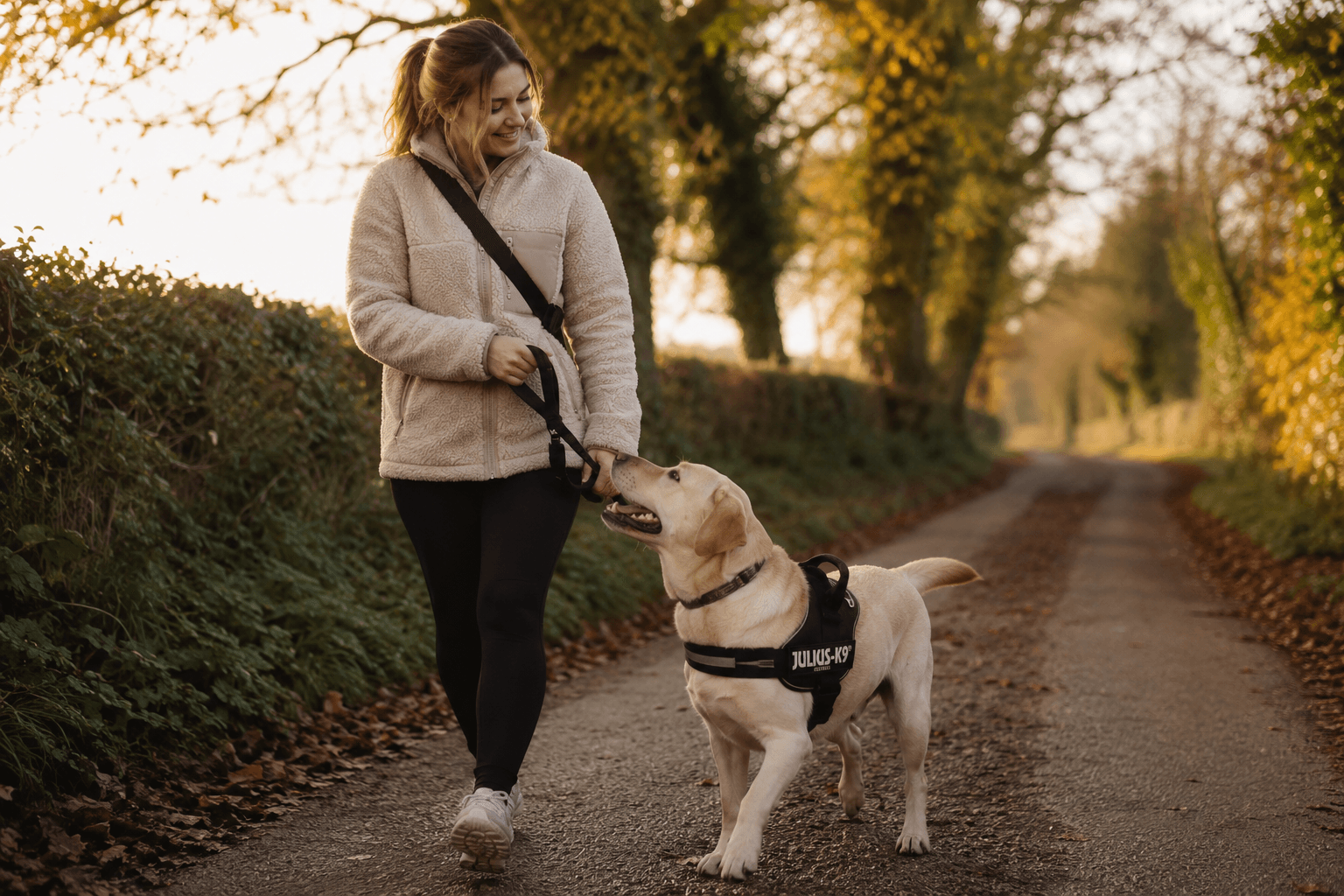
First dog essentials UK: everything you need
Getting a dog for the first time means buying before you know what you actually need. This kit covers the genuine essentials you will use from week one, plus the extras that prevent the most common first-dog mistakes. It works equally well for an adopted adult dog, a dog from a breeder, or an older puppy moving into its forever home.
Read the guide →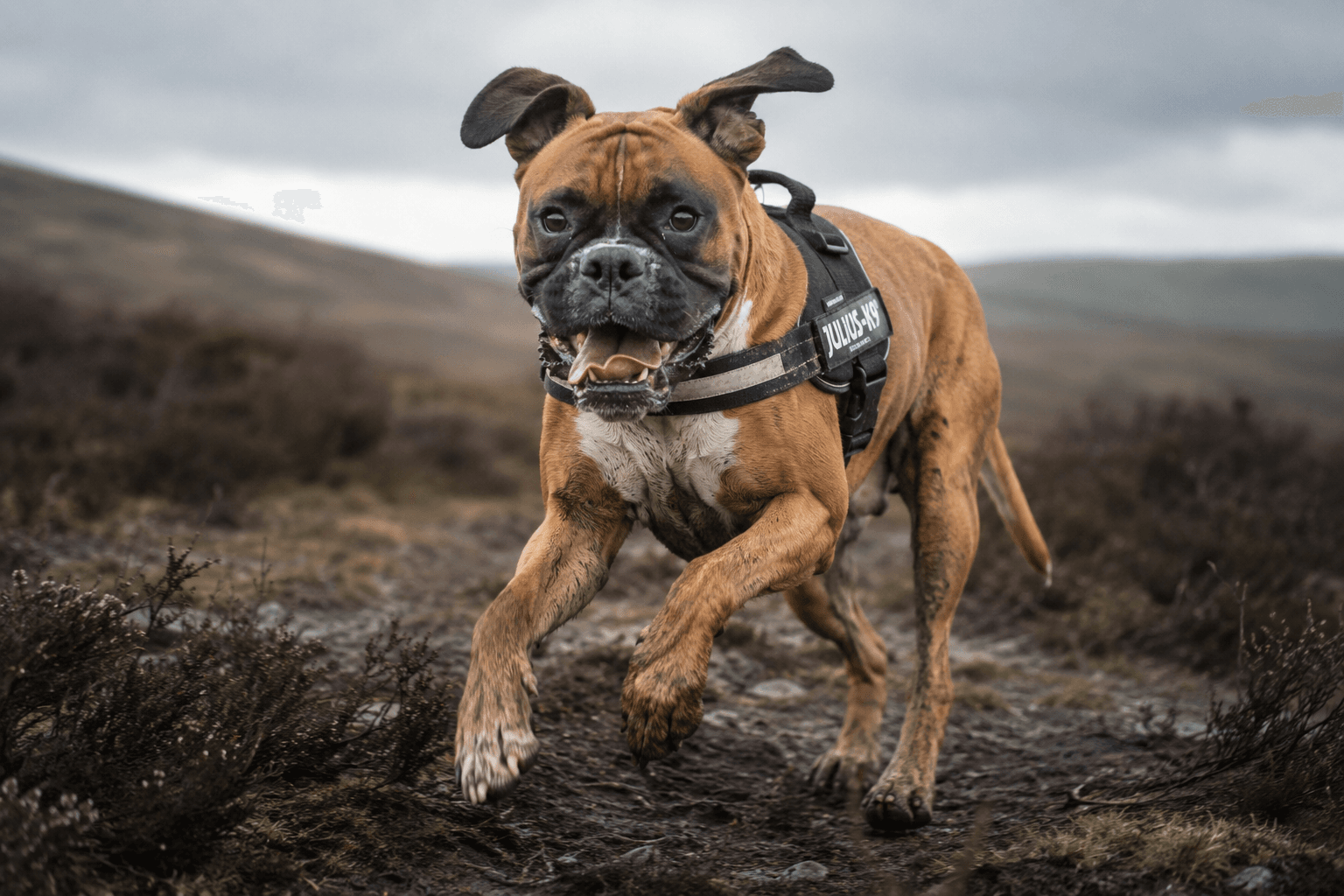
Active dog essentials UK: gear for high-energy and working dogs
Most dogs need a walk. Active dogs need equipment that keeps up with them. This kit is for high-energy breeds, working dogs, and owners who do more than a pavement circuit twice a day. Everything here is chosen for performance and durability, not for the lifestyle image on the packaging.
Read the guide →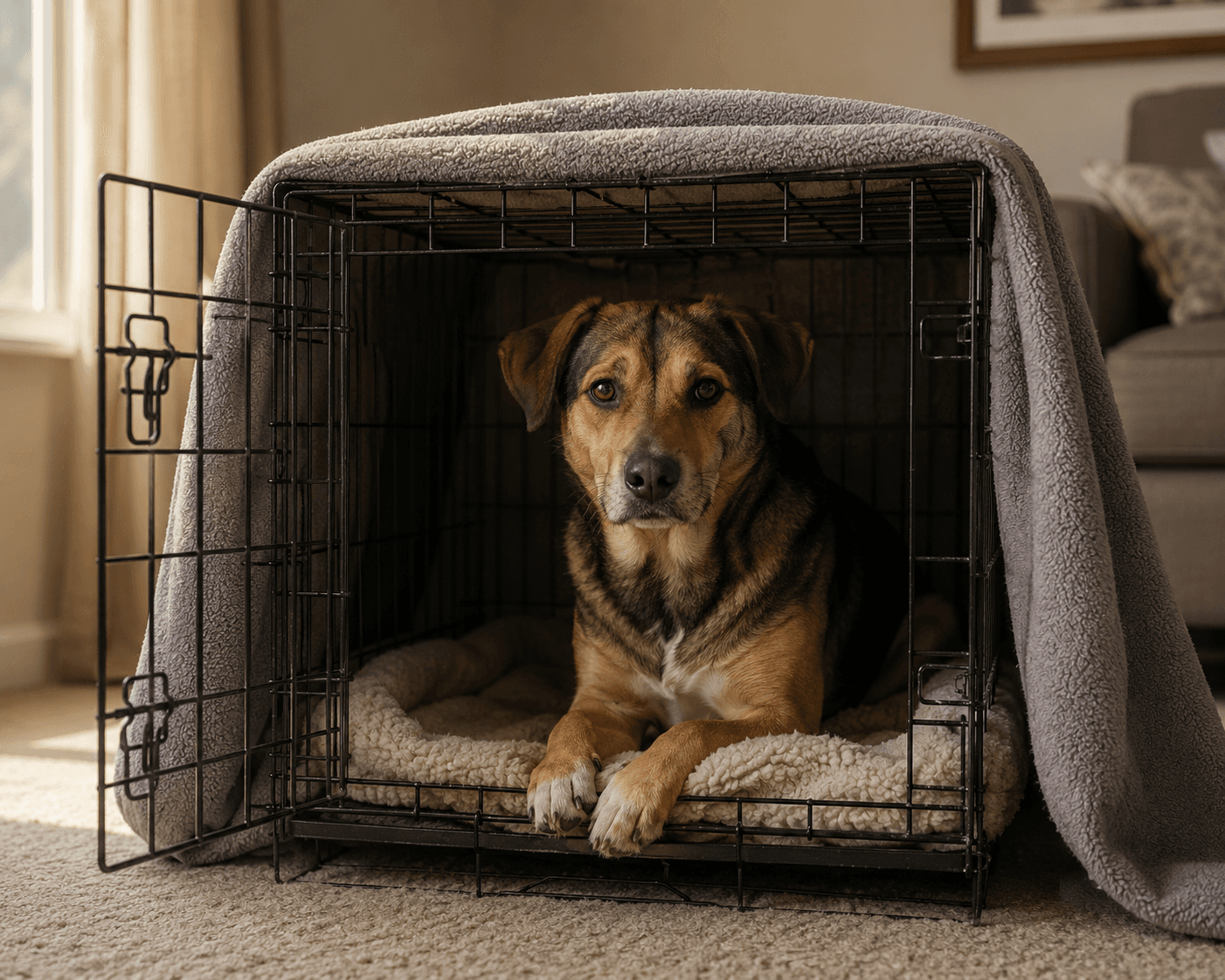
Rescue dog essentials UK: everything you need for the first 30 days
Rescue dogs need time, not a house full of toys. The first 30 days are about decompression, safety, and building trust, not training. This kit covers what you actually need before your rescue comes home and what to introduce gradually in the weeks that follow. It works for dogs of any age, any history, and any breed.
Read the guide →