What do F1, F2, F1b and F2b mean in dogs?
Quick answer
F1 means the direct offspring of two purebred dogs of different breeds, roughly 50% of each. F1b means backcrossed to a purebred (almost always the Poodle), producing a dog around 75% Poodle with a curlier, lower-shedding coat. F2 comes from two F1 parents and is the least predictable generation. A higher generation number does not mean a healthier or better dog — it only affects coat and temperament predictability.
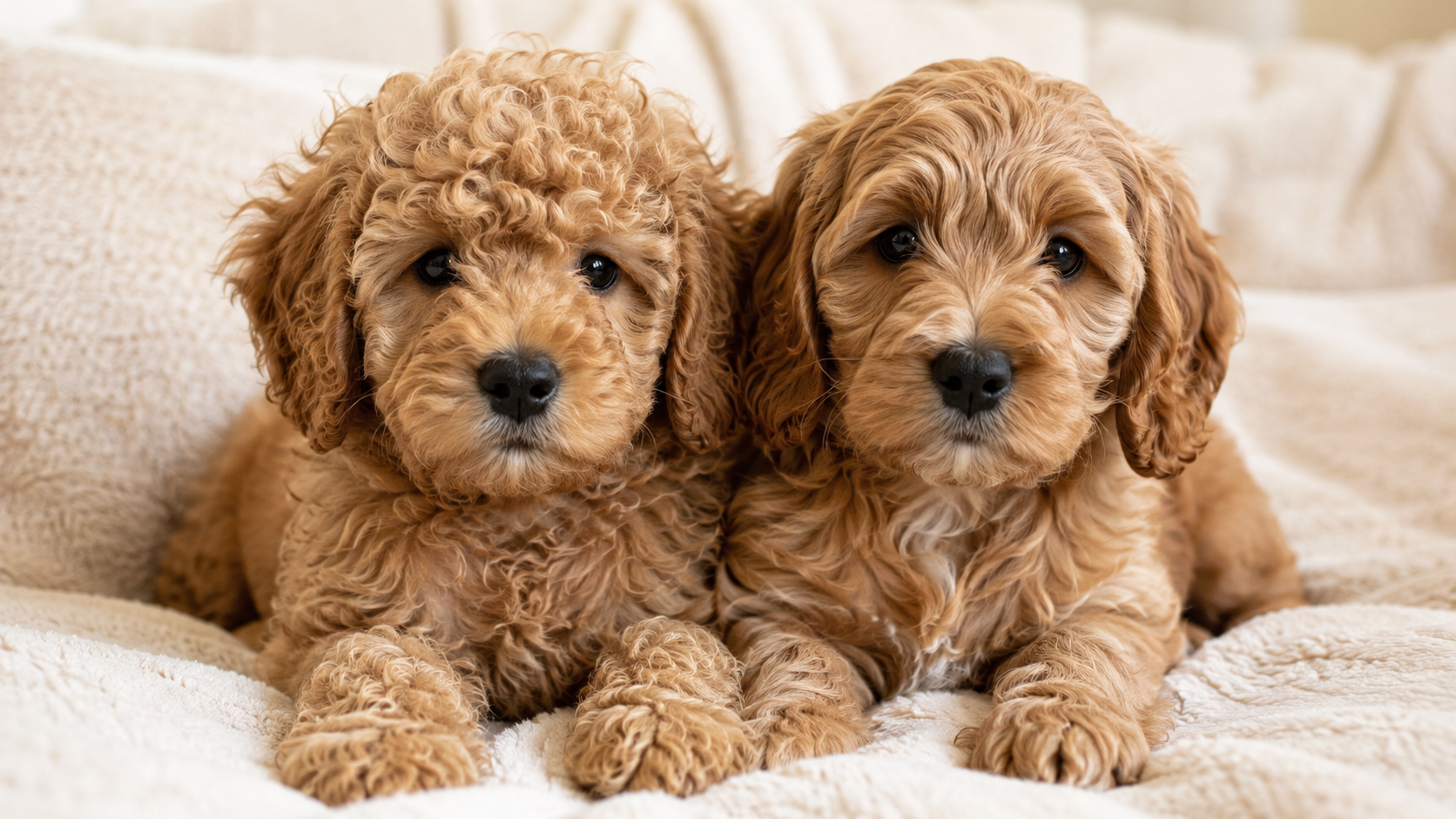
If your puppy search has led you to Cockapoo or Labradoodle listings, you have almost certainly seen codes like F1, F2, F1b, and F2b without a clue what they mean. The F stands for filial, a genetics term for offspring. The number tells you how many generations your dog is from its two original purebred parents. The b means one parent was bred back to a purebred, almost always the Poodle. Once you understand the system, the codes are genuinely useful. They tell you a lot about what kind of coat and shedding level to expect, which matters more than most breeders let on.
What does the ‘F’ stand for in dog breeding?
Filial. It comes from the Latin for offspring and is borrowed from genetics to describe generational distance from two original purebred lines. You will see it used almost exclusively for Poodle crosses in the UK, but the system applies to any deliberate two-breed cross.
A higher F number does not mean a better dog. It means your dog is further from its two purebred great-grandparents, which changes how predictable the coat and temperament are, and nothing else.
What is an F1 dog?
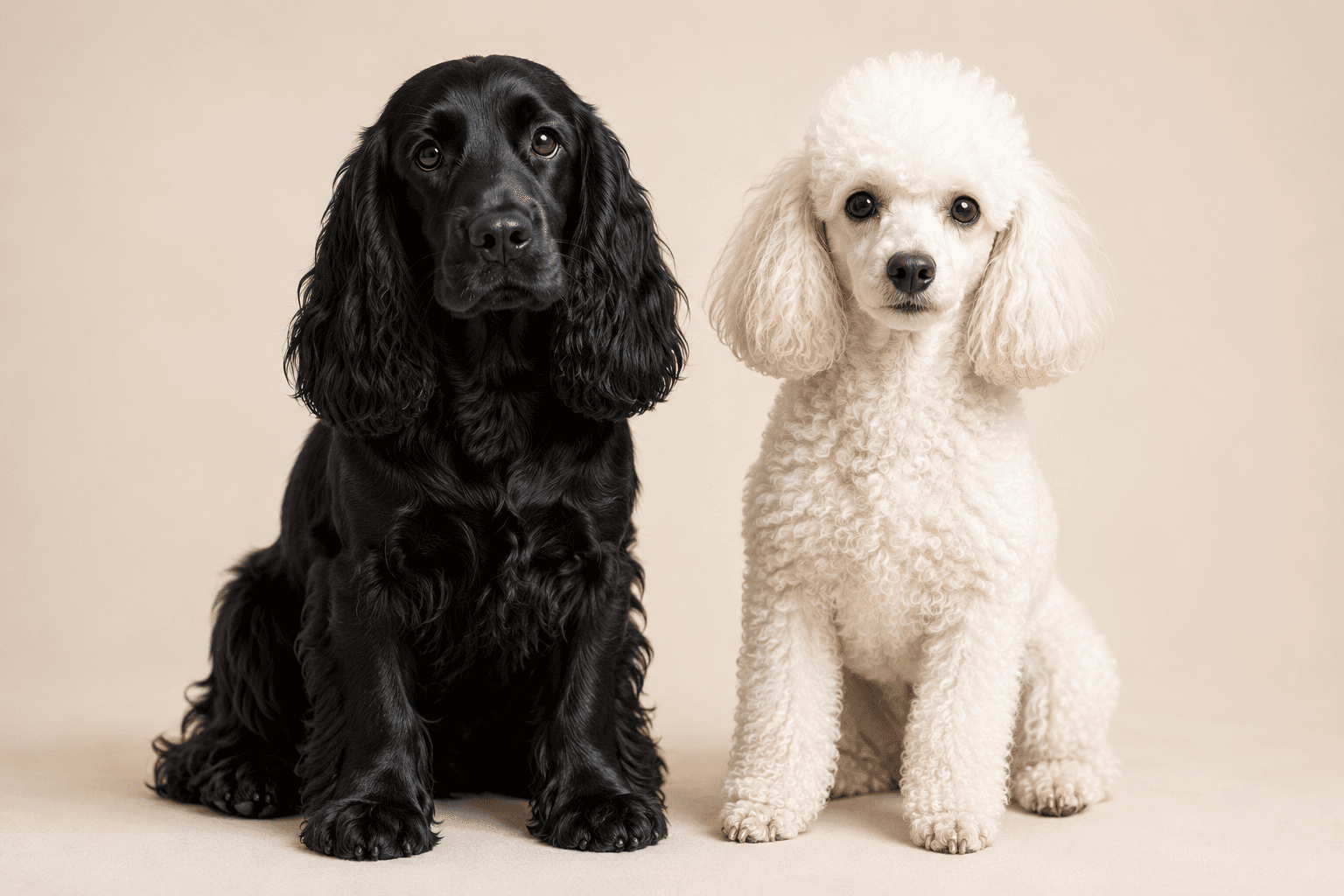
An F1 dog is the direct offspring of two unrelated purebred dogs of different breeds. Your F1 Cockapoo has one purebred Cocker Spaniel parent and one purebred Poodle parent, making it roughly 50% of each.
Coat and temperament are variable at this stage. Pups from the same F1 litter can have straight, wavy, or curly coats, because neither parent’s genetics have settled into a dominant pattern. Most UK breeders list Cockapoos and Labradoodles as F1 by default, often without adding the code at all. If a listing gives no generation, assume F1.
F1 dogs carry the strongest hybrid vigour effect of any generation. This is the tendency for first-generation crosses to be slightly more robust than either parent breed.
The honest caveat:
What is an F1b dog?
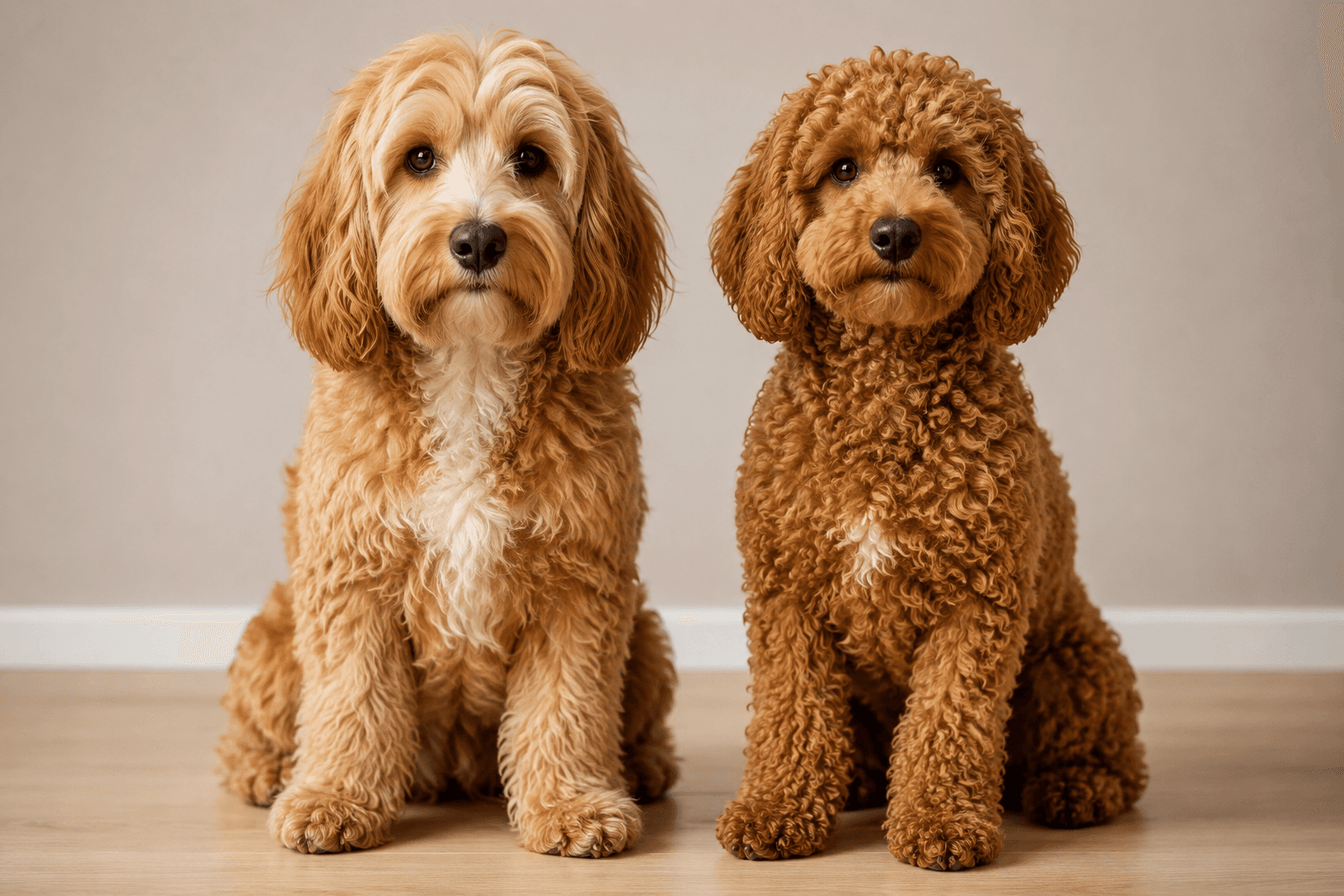
The b stands for backcross. One F1 parent has been mated back to a purebred dog, almost always the Poodle. Your F1b Cockapoo is approximately 75% Poodle and 25% Cocker Spaniel.
The extra Poodle genetics push the coat toward curlier and lower-shedding. F1b is what most breeders recommend if you have mild dog allergies or a strong preference for a dog that does not leave hair on everything you own.
The honest caveat:
What is an F2 dog?
An F2 dog comes from two F1 parents. Your F2 Labradoodle has two F1 Labradoodle parents.
The genetics are still roughly 50/50 on average, but there is much more variation between individual pups than you would see in an F1 litter. Because each F1 parent is already a mix, their pups can pull traits from several grandparent lines. One puppy might have a flat, shedding coat. The next from the same litter could be tight and curly. You will not know until the coat comes through, and even experienced breeders cannot always predict it at eight weeks.
F2 dogs are healthy and make brilliant pets. The unpredictability matters most if you have specific requirements around shedding or allergies. If you want a family dog and coat type is not a deciding factor, it matters very little.
What is an F2b dog?
An F2b dog comes from mating an F1 dog with an F1b dog. The result is approximately 62.5% Poodle and 37.5% of the other breed. The aim is to improve coat consistency over a straight F2 cross while keeping some genetic contribution from the non-Poodle side.
Results tend to be more consistent than F2 but not as reliable as F1b. It is a less common generation in the UK market, but you will see it listed by breeders working toward more predictable litters.
Note: not all breeders use the same definition of F2b. Some describe an F2 crossed with a purebred Poodle as F2b, which produces different genetics than F1 x F1b. Ask your breeder which dogs were actually mated rather than relying on the label alone.
What is an F3 or multigenerational dog?
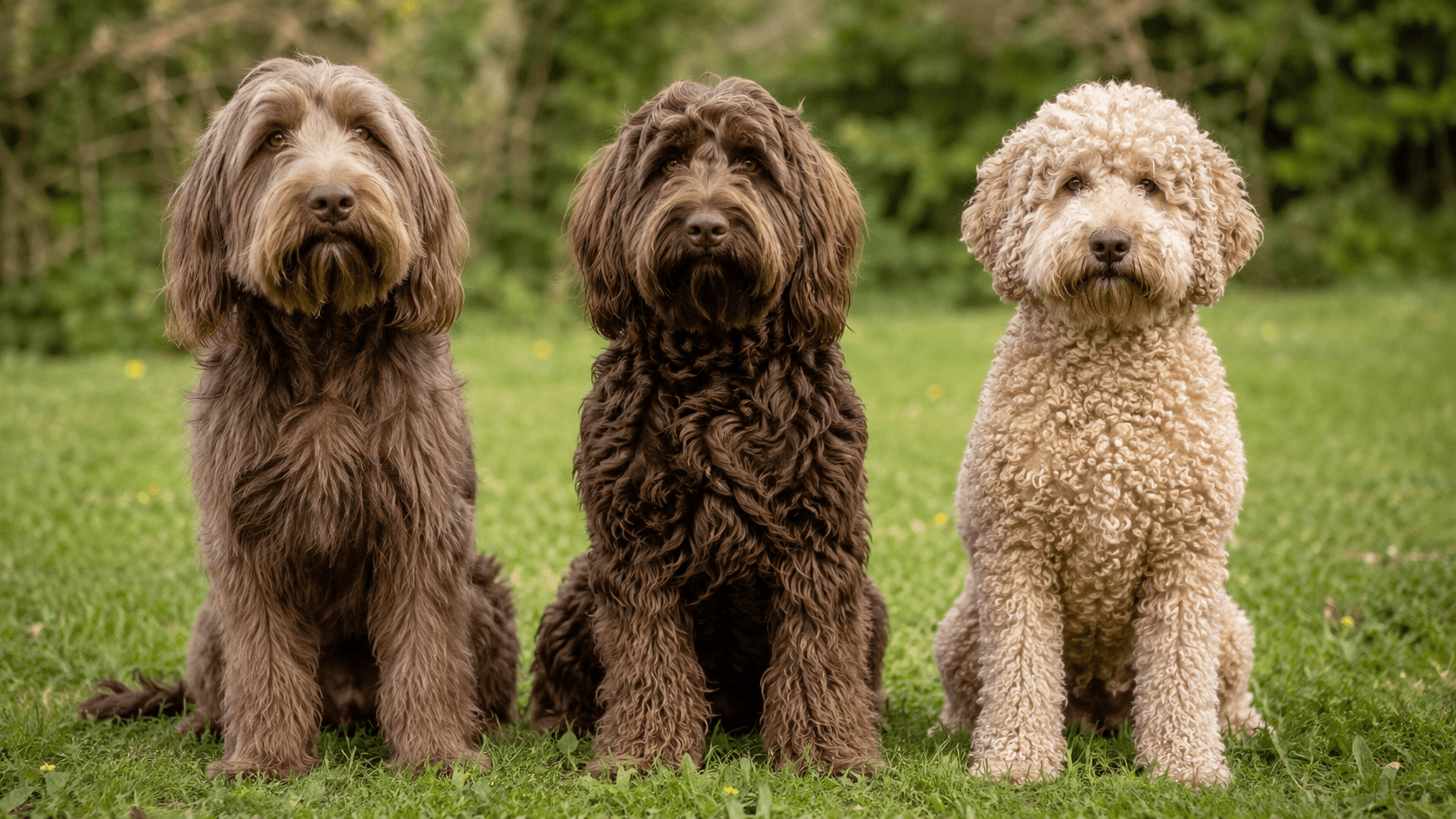
F3 dogs come from two F2 parents. Beyond that, the term multigenerational, or multigen, takes over. The goal of multigenerational breeding is to produce a crossbreed whose traits, coat type, size, and temperament, are as consistent as those of a purebred.
It takes many generations of careful selective breeding to get there, and the label multigen does not guarantee that standard has been met. If you are considering an F3 or multigen dog, ask for the full breeding history, not just the label.
Multigenerational breeding is more established in Australia and the US than in the UK, where the market still leans heavily toward F1 and F1b.
Does the generation code affect how healthy your dog is?
Not in the way breeders sometimes imply. The idea you will often hear is hybrid vigour: that crossing two unrelated gene pools produces healthier offspring. There is a genuine genetic principle behind it, but it gets overstated with some enthusiasm by people selling puppies.
A 2024 study published in PLOS ONE compared health outcomes in Cockapoos, Labradoodles, and Cavapoos against their purebred parent breeds. It found no statistically significant difference in health outcomes for 86.6% of the conditions studied. Designer crossbreeds showed lower odds for only 6.4% of conditions. The hybrid vigour effect is real and strongest at F1, but it weakens in later generations and it does not protect against conditions carried by both parent breeds.
Your Cockapoo can still inherit the heart problems common in Cavalier King Charles Spaniels and the eye conditions common in Cocker Spaniels, regardless of what generation it is.
The generation code tells you about coat predictability. For health, what matters is the testing done on the parent dogs. Ask to see hip, elbow, and eye certificates, and check that the tests relevant to both parent breeds were completed before mating. See our crossbreed health testing guide for the full breakdown by breed.
Which generation is right for your dog and your lifestyle?
If you have dog allergies or want minimal shedding, your best starting point is F1b or F2b. The higher Poodle percentage gives a curlier, lower-shedding coat in most cases.
The honest caveat:
If you want the most predictable outcome, F1b and multigen dogs from established breeding programmes produce the most consistent litters. F2 is the least predictable generation and is better suited to owners who are genuinely relaxed about whatever coat comes through.
If you are looking for a family pet and shedding is not a priority, F1 is a sensible choice. It is the most widely available generation in the UK, straightforward to find from a reputable breeder, and carries the strongest hybrid vigour effect.
If you want to support the longer-term development of a stable crossbreed type, look for F3 or multigen breeders who can show you a serious programme with consistent health testing across generations. Standards under this label vary considerably.
On price: F1 dogs tend to be slightly more accessible than F1b or multigen, but there is no fixed rule. Some F1 breeders charge as much as anyone.
Generation codes at a glance
| Code | Parents | Approx. Poodle % | Coat consistency |
|---|---|---|---|
| F1 | Purebred A x Purebred B | 50% | Moderate — varies between pups in the same litter |
| F1b | F1 x Purebred Poodle | 75% | High — usually curly, low shed |
| F2 | F1 x F1 | ~50% | Lower — most variation of any generation |
| F2b | F1 x F1b | ~62.5% | Good — more consistent than F2 |
| F3 / Multigen | F2 x F2 or higher | Varies | High if from an established programme |
Frequently asked questions
What does F1 mean in dogs?
F1 means first-generation crossbreed: the direct offspring of two purebred dogs of different breeds. An F1 Cockapoo has one purebred Cocker Spaniel parent and one purebred Poodle parent, making it roughly 50% of each.
What does F1b mean in dogs?
The b stands for backcross. Your F1b dog was produced by mating an F1 crossbreed back to a purebred, almost always the Poodle. This makes the dog approximately 75% Poodle and 25% of the other breed. The higher Poodle genetics typically produce a curlier, lower-shedding coat.
Is an F1 or F2 dog healthier?
Neither is definitively healthier. F1 dogs benefit most from hybrid vigour, but a 2024 PLOS ONE study found no statistically significant health difference between crossbreed generations and purebred counterparts in 86.6% of conditions studied. Health testing of the parent dogs is a far more reliable indicator than generation code.
Which generation is best if I have dog allergies?
F1b and F2b give you the best odds of a low-shedding coat because of the higher Poodle genetics. No dog is truly hypoallergenic, though. Always spend time with the specific dog before committing if allergies are a factor.
What is an F3 or multigenerational dog?
An F3 dog comes from two F2 parents. F3 and beyond are often called multigenerational and aim to produce consistent, predictable traits across litters. They are more common in Australia and the US than in the UK.
Does a higher F number mean a better dog?
No. A higher number means your dog is further from its two original purebred ancestors. Which generation suits you depends on what matters most: coat type, shedding level, predictability, or simply what a reputable local breeder has available.
Should I ask a breeder what generation my puppy is?
Yes, and ask to see the evidence. A reputable breeder can tell you exactly which dogs were mated, provide their health certificates, and explain how the generation was determined. If they cannot, that is a concern regardless of what code they are using.
A note on how breeders use these codes
Generation codes are not regulated in the UK. The Kennel Club does not recognise most crossbreeds for registration purposes, so there is no official body setting standard definitions. Two breeders both listing F2b may mean different parent combinations. The code is only as reliable as the breeder behind it. Ask which dogs were mated rather than what label the litter has been given.