Goldendoodle
Complete UK breed guide

Quick answer
The Goldendoodle is a cross between a Golden Retriever and a Poodle, popular for low-shedding coats and friendly temperament. It is not recognised by the Kennel Club. Health and coat type vary significantly. Health testing of both parent breeds is essential.
Quick Facts
- Size
- Large
- Weight
- 20–35 kg
- Lifespan
- 10–15 years
- Exercise
- 60–90 mins/day
- Activity Level
- High
- Grooming
- High
- Monthly Cost
- £120–£190/month
- Temperament
- Affectionate, Intelligent, Eager to please
- Good with Children
- Yes
- Good with Dogs
- Yes
- Good for First Timers
- Yes
- Suits Flats
- No
Free care guide
Get the Complete Goldendoodle Care Guide
Feeding, health, grooming, training and costs for your Goldendoodle. Free, straight to your inbox.
Getting set up
Getting a Goldendoodle? Here's what you'll need.
Our editors have picked the essentials for Goldendoodle owners.
See the Active Dog Kit →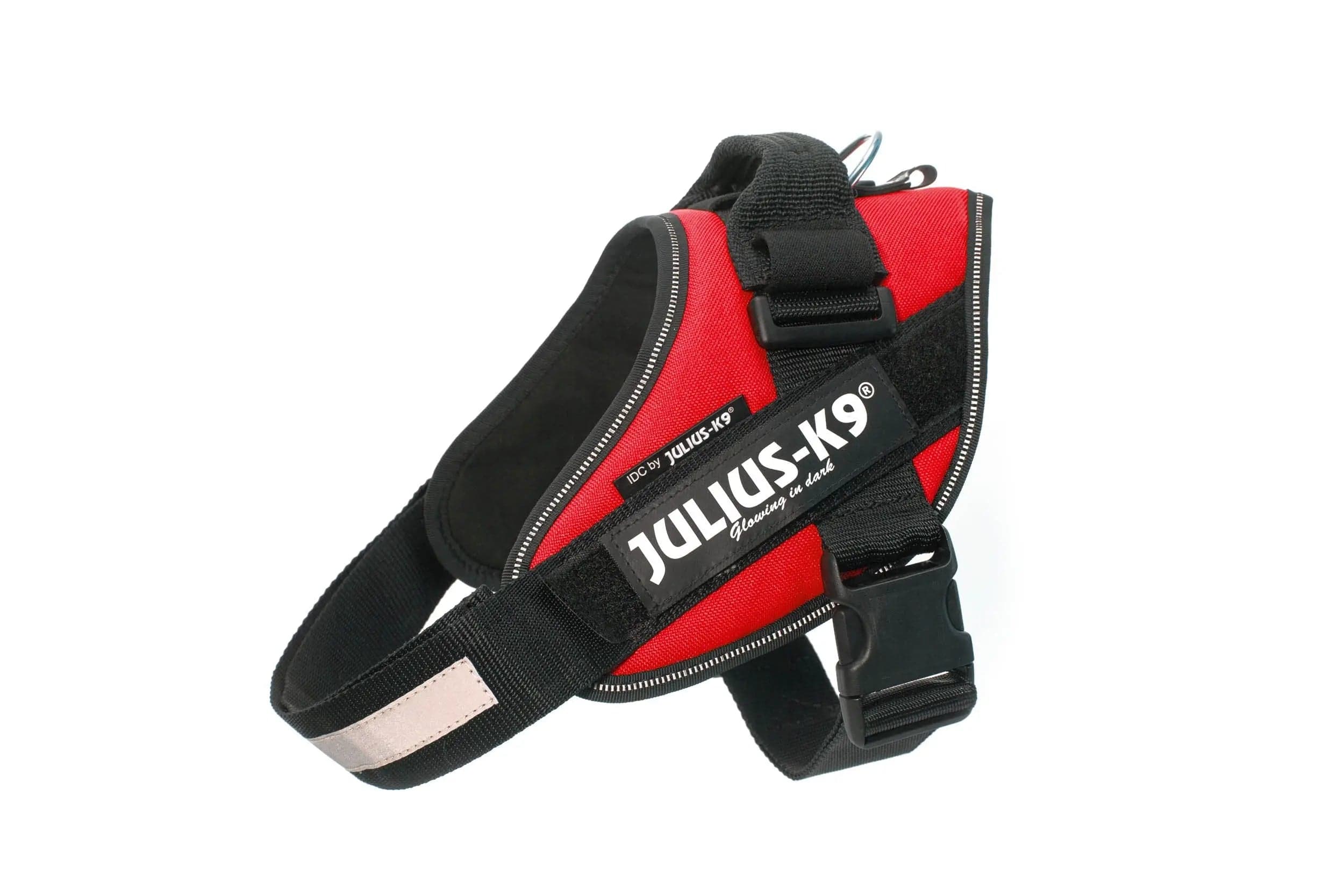
Everything you need for a Goldendoodle
Harnesses, grooming, food and more, all chosen specifically for Goldendoodle owners.
See the guideRecommended for Adult Dogs for Goldendoodles
Products selected for Goldendoodle size, coat type, and life stage. Affiliate disclosure.
PetFusion
PetFusion Ultimate Dog Bed (Large)
Memory foam orthopedic bed with waterproof cover. Ideal for large breeds.
Shop PetFusionTuffies
Shop NowKurgo
Shop NowProDen PlaqueOff
VOHC-accepted. Seaweed-based dental bone with multiple flavours. From the makers of PlaqueOff Powder.
Buy on AmazonHurtta
Hurtta Mudventure ECO Raincoat (Large)
Reflective, eco-friendly raincoat built for UK weather. Large size.
Shop HurttaLily's Kitchen
Shop NowAATU Dog and Cat Food
Shop NowBarking Heads
Shop NowRoyal Canin
Royal Canin Breed-Specific Food
Nutrition precision-tailored to your breed.
Shop Royal CaninHarringtons
The UK's bestselling dry dog food. No artificial colours, flavours or preservatives. Made with natural ingredients including chicken, brown rice and vegetables. Available in multiple sizes.
Shop NowAndis
Shop NowAnimology
The UK groomer standard for removing fox poo and foul odours. Deep cleaning with built-in conditioner and Pro-Vitamin B5. Suitable for all coats from 6 weeks old.
Shop NowBoshel
Shop NowChris Christensen
Shop NowDrontal
Shop NowPets Calm Down
Shop NowRosewood
Shop NowJulius-K9
Julius-K9 IDC Powerharness (Large)
Award-winning harness trusted by dog owners worldwide. Large size (23-30kg).
Shop Julius-K9PitPat
Shop NowFurbo
Shop NowNina Ottosson
Nina Ottosson Dog Puzzle
Level 2 puzzle feeder. Engages your dog mentally and slows eating.
Try Nina OttossonLickiMat
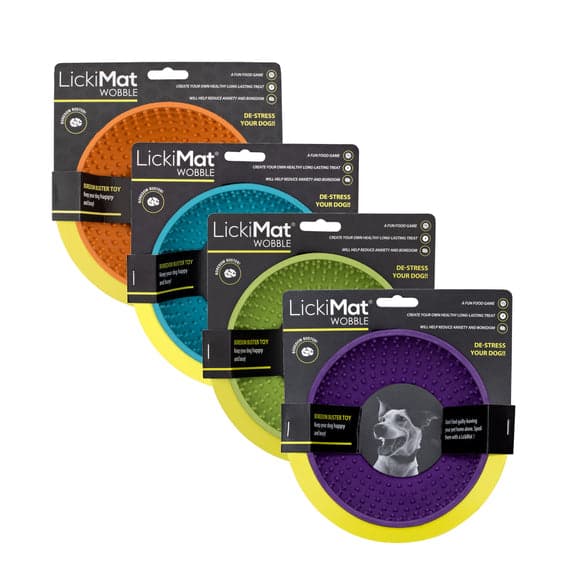
LickiMat Wobble
Slows feeding, reduces anxiety, keeps dogs calm and engaged.
Try LickiMatKONG
KONG Classic (Large)
The classic rubber chew for large and giant breeds.
Shop KONGChuckit
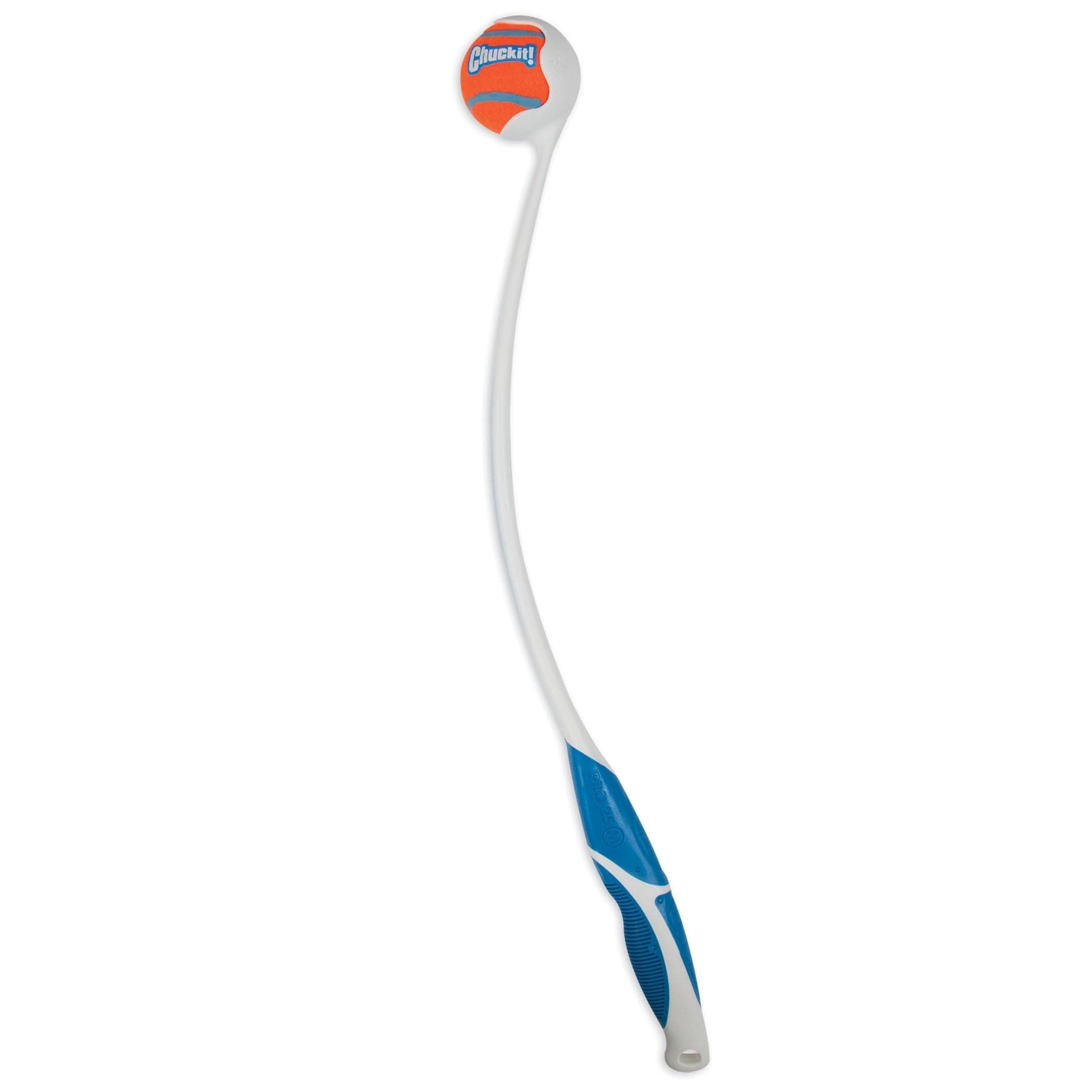
Chuckit! Ball Launcher (Large)
Launch further, throw less. Sport 26L launcher for large dogs.
Shop Chuckit!Trixie
Shop NowDoggone Good
Shop NowFURminator
FURminator Deshedding Tool (Large, Long & Double Coat)
Reduces shedding by up to 90% for large long-coated dogs.
Shop FURminatorBreed Overview
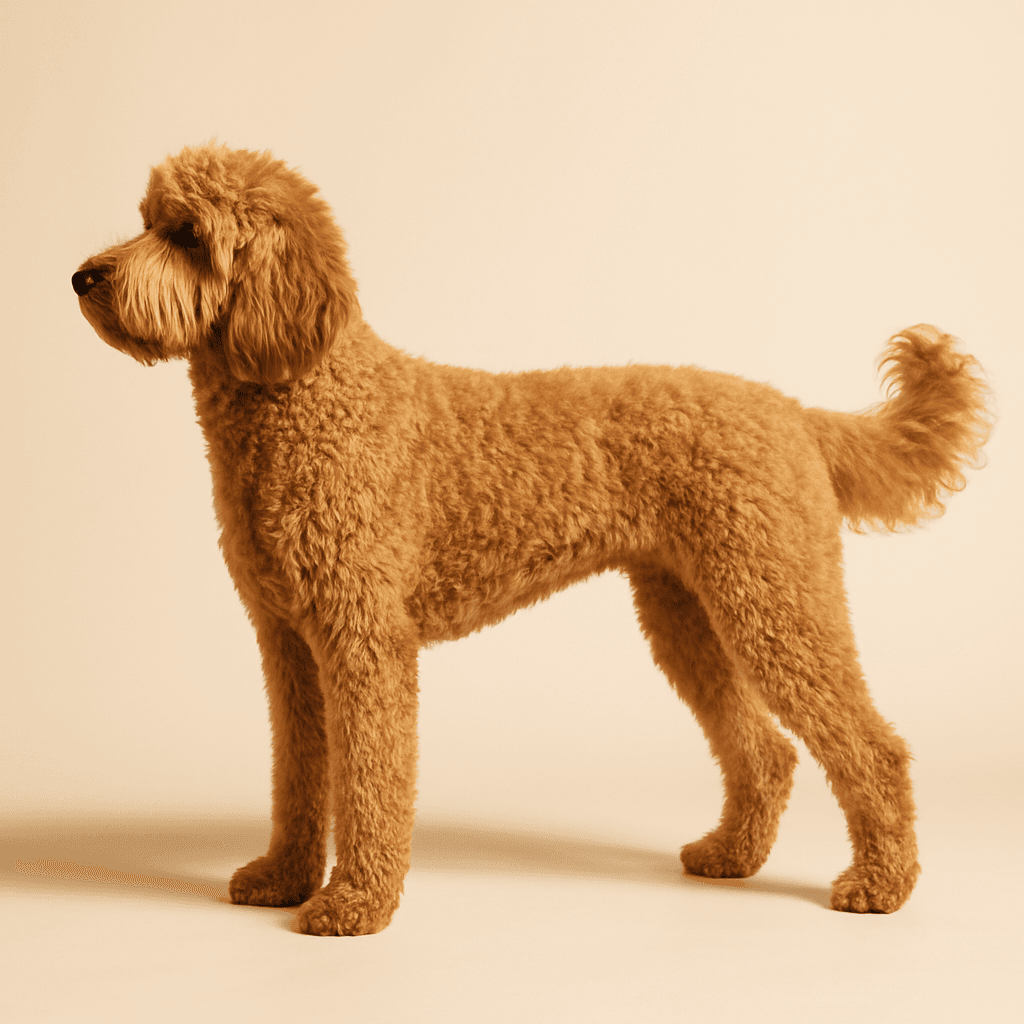
The Goldendoodle is a cross between a Golden Retriever and a Poodle, bred in various sizes from miniature to large standard depending on whether a miniature, medium or standard Poodle is used. It is one of the most popular crossbreeds in the UK, driven by demand for a sociable, friendly dog with a reduced-shedding coat.
The Goldendoodle is not recognised by the Kennel Club as a breed and cannot be KC-registered. This means there is no breed standard, no breed health monitoring data and no formal registration system. The quality of Goldendoodle breeders varies enormously, from those who health-test both parents rigorously and breed thoughtfully, to those who breed purely to meet demand with no health testing whatsoever. The purchase price tells you nothing about the breeder's standards: Goldendoodles frequently sell for more than many health-tested pedigree breeds.
Their appeal is genuine. Most Goldendoodles are sociable, affectionate and enthusiastic dogs that inherit the friendly temperament of the Golden Retriever and the intelligence and trainability of the Poodle. They are typically good with children, other dogs and people generally. They are active dogs that enjoy family life and participate enthusiastically in exercise and play.
The coat, however, is not what it is frequently marketed as. Goldendoodle coats vary significantly: some are curly and low-shedding, others are wavy with moderate shedding, and some are straighter and shed similarly to a Golden Retriever. The coat type cannot be predicted reliably in many crosses, and all but the straightest coats require significant grooming. Professional grooming every six to twelve weeks at £55 to £90 per session is a real and ongoing cost. Read our full guide to F1, F2 and F1b generations explained and are doodles and crossbreeds really hypoallergenic? for more detail.
Health testing is the critical question for any Goldendoodle buyer. Both the Golden Retriever and Poodle parents carry conditions that can be tested for: hip and elbow dysplasia, Progressive Retinal Atrophy, heart conditions and skin conditions. Ask any breeder for documented evidence of testing on both parents and expect specific test results rather than vague assurances.
Purchase prices typically range from £1,500 to £3,500. Monthly insurance is £40 to £80. The Doodle Trust rehomes Goldendoodles and similar crosses nationally.
The Goldendoodle can be an excellent companion for the right owner. Do not choose one based on appearance or marketing claims. Verify health testing, understand the grooming commitment for the specific coat type, and match the dog's exercise needs to your lifestyle.
Ultimately, the Goldendoodle is as good as the breeder who produces it and the owner who trains it. Both factors matter enormously with this cross. Choose your breeder carefully, verify health testing, commit to early training, and manage grooming expectations realistically from the start.
Temperament & Personality
Goldendoodles are typically sociable, affectionate and enthusiastic dogs. They tend to be people-oriented, enjoy interaction and play, and are generally friendly with other dogs and people. This reflects the temperament of both parent breeds.
Individual temperament varies more in crossbreeds than in established pedigrees. Most Goldendoodles fall within a predictable range of sociable and friendly, but the specific balance of Golden Retriever and Poodle traits is not guaranteed.
They are active, playful dogs that retain enthusiasm for activity well into adulthood. They are not low-energy companions. An under-exercised Goldendoodle will express its boredom through boisterous behaviour, destructive chewing and attention-seeking.
They bond closely with their family and are generally warm and affectionate. This closeness means they do not typically manage long periods alone without proper preparation. Separation anxiety is seen in the cross.
Their intelligence makes them responsive training partners when training is positive and engaging. They are not difficult dogs to train when approached correctly.
Goldendoodles are generally described as good-natured, outgoing and friendly. This consistent assessment across the cross reflects genuine breed character from both parent breeds, even if individual variation exists.
Training
Goldendoodles inherit their trainability from both parent breeds. Golden Retrievers and Poodles are both highly trainable, people-pleasing dogs, and most Goldendoodles reflect this.
Four priorities for a new Goldendoodle owner:
- Basic obedience from day one. Goldendoodles are large, energetic and boisterous. A large Goldendoodle that jumps, pulls and does not respond to basic commands is difficult to live with. Start sit, stay, down, come and loose lead walking immediately.
- Loose lead walking. A standard Goldendoodle of 30kg that pulls is unpleasant and potentially dangerous. Use a front-clip harness and consistent training from puppyhood. Do not allow pulling at any size.
- Socialisation. Thorough positive exposure to people, environments, sounds and other dogs during the 8 to 16 week window. Well-socialised Goldendoodles are confident and sociable.
- Building independence. Both parent breeds are people-oriented. Goldendoodles that are not accustomed to being alone from puppyhood frequently develop separation anxiety. Build independence positively from the first week.
Common mistakes: Allowing boisterous behaviour because the dog is friendly and its size seems manageable as a puppy. A Goldendoodle at full size that has not been taught manners is a significant management problem.
Good to know
Exercise Needs
Exercise needs for Goldendoodles depend on their size and which parent's traits are more dominant, but in general they are active dogs that need daily, meaningful exercise.
Adult standard Goldendoodles: One to two hours of exercise per day, including opportunities to run and play as well as walk. They enjoy swimming, retrieving games and off-lead exercise in safe areas.
Adult miniature Goldendoodles: 45 to 60 minutes per day is typically sufficient, with play and mental stimulation supplementing walks.
Mental stimulation: Both parent breeds are intelligent. Goldendoodles generally inherit this and need mental engagement alongside physical exercise. Training sessions, puzzle feeders, scent games and retrieving activities all provide appropriate stimulation.
Puppy exercise: Larger Goldendoodle puppies need particularly careful exercise management to protect developing joints. Use the five minutes per month of age guideline as a maximum for on-lead walks. Free play in a safe area is generally fine but avoid repetitive jumping or stair climbing in the first year.
Swimming: Many Goldendoodles enjoy swimming and it is an excellent low-impact exercise. Ensure the dog can exit the water safely and rinse the coat after swimming in salt water or chlorinated pools.
Health & Vet Costs
Goldendoodles, as a crossbreed, are sometimes assumed to benefit from hybrid vigour and therefore be healthier than pedigree dogs. The evidence for this is partial. They can inherit health conditions from either parent breed, and health testing of both parents is essential.
Hip and elbow dysplasia: Both Golden Retrievers and Poodles can carry hip and elbow dysplasia. The Golden Retriever parent should be BVA/KC Hip and Elbow Scored. The Poodle parent should be hip scored if standard-sized. Ask for testing evidence from both parents.
Progressive Retinal Atrophy (PRA): The Poodle parent should be DNA tested for prcd-PRA. PRA causes progressive vision loss.
Heart conditions: Golden Retrievers carry a risk of Subvalvular Aortic Stenosis (SAS). The Golden Retriever parent should be cardiac screened.
Ichthyosis: A skin condition in Golden Retrievers causing flaky, thickened skin. A DNA test is available and the Golden Retriever parent should be tested.
Bloat (GDV): Larger, deep-chested Goldendoodles carry some risk. See above under nutrition.
Cancer: Golden Retrievers have among the highest cancer rates of any breed. Goldendoodles may inherit some of this elevated risk, though the data for crosses is less established than for pedigrees.
Ear infections: Common in both parent breeds. The characteristic ear shape and coat around the ears predisposes to chronic infection in some dogs.
Monthly insurance typically costs £40 to £80 for a standard Goldendoodle. Lifespan is approximately 10 to 15 years depending on size (larger dogs have shorter lifespans on average).
Feeding & Nutrition
Goldendoodle nutritional needs depend significantly on their size, which varies considerably across the cross. A miniature Goldendoodle and a large standard Goldendoodle have very different caloric requirements.
Daily feeding: Follow the manufacturer's guidelines for your dog's weight and activity level. A standard Goldendoodle (25 to 35kg) typically needs 250 to 350g of a good quality dry complete food per day, split into two meals.
Bloat awareness (larger dogs): Larger Goldendoodles with deep chests share some risk of gastric dilatation-volvulus (bloat) with their Poodle and Golden Retriever parents. Avoid intense exercise immediately before and after meals. Signs of bloat include unproductive retching, distended abdomen and rapid deterioration: this is a veterinary emergency.
Weight management: Both Golden Retrievers and Poodles can be prone to weight gain if overfed. Monitor body condition and adjust feeding accordingly.
Joint health support: Larger Goldendoodles benefit from foods containing omega-3 fatty acids to support joint health, particularly as they age.
Foods to avoid: Grapes and raisins are toxic. Onion, garlic, chocolate and xylitol are also toxic. Avoid table scraps.
Puppy feeding: Three to four times daily until 12 weeks, then three times until six months, then twice daily. Large and standard Goldendoodle puppies should use a large-breed puppy food to support correct growth rate.
Feeding your Goldendoodle
How much to feed, which food types suit this breed, and what to avoid.
Grooming & Care
Goldendoodle coat type is one of the most variable and unpredictable aspects of the cross. Coats range from wavy to curly to straight, and shedding levels vary accordingly.
Curly coats: Closest to the Poodle parent. Minimal shedding but requires professional grooming every six to eight weeks and daily brushing to prevent matting. This is the highest maintenance coat type.
Wavy coats: The most common in first-generation (F1) crosses. Moderate shedding and requires brushing three to four times per week and professional grooming every eight to twelve weeks.
Straighter coats: Closest to the Golden Retriever parent. Higher shedding. Requires regular brushing but is more forgiving if professional grooming is delayed.
Daily brushing: Regardless of coat type, regular brushing prevents matting and removes debris. Neglected coats mat severely, particularly behind the ears, in the armpits and around the collar.
Professional grooming: Essential for most Goldendoodles, every six to twelve weeks depending on coat type. Costs £55 to £90 per session for a standard-sized dog.
Bathing: Every four to six weeks or when dirty.
Ear care: Both parent breeds can be prone to ear infections. Check weekly and clean as directed by your vet.
Important note on "non-shedding" claims: Goldendoodles are widely marketed as non-shedding or hypoallergenic. This is not reliably accurate, particularly in F1 crosses. Coat type cannot be guaranteed before the puppy is born.
Costs of Ownership
Goldendoodles are frequently among the most expensive crossbreed dogs to purchase in the UK, driven by high demand and limited KC registration. The lifetime costs are also significant.
Purchase price: £1,500 to £3,500 and sometimes higher for puppies from popular breeders. This is high relative to many pedigree KC-registered breeds. Buyers should not interpret high price as a guarantee of quality or health testing.
Monthly insurance: £40 to £80 for a standard Goldendoodle on a comprehensive lifetime policy. As a crossbreed, Goldendoodles are not separately risk-rated by all insurers.
Food: £35 to £65 per month for a standard-sized dog on a good quality complete dry food.
Professional grooming: £55 to £90 every six to twelve weeks, depending on coat type and size.
Routine veterinary care: Annual vaccination and health check approximately £60 to £80.
Health testing note: Health testing in Goldendoodles varies enormously between breeders. For a Goldendoodle, both parents should be tested: the Golden Retriever parent for hip and elbow dysplasia, heart, and eyes; the Poodle parent for hip dysplasia, Progressive Retinal Atrophy and other breed-specific conditions. Ask specifically what tests have been done and request copies of results.
Total estimated monthly cost: £200 to £350 for a standard Goldendoodle including insurance, food, grooming and routine care.
Estimated cost breakdown
Estimates based on UK average costs. Actual costs vary by location, vet, and lifestyle.
Owner note
Is your Goldendoodle insured?
Goldendoodle insurance typically costs £30–£75 per month depending on age, cover level and where you live. Getting the right policy before your first vet visit is one of the most important decisions you will make as a new owner.
Compare dog insuranceWe may earn a commission if you buy through our links. This never influences our recommendations.
Where to Find a Goldendoodle in the UK
Whether you are looking for a Goldendoodle puppy from a responsible breeder or hoping to give a rescue Goldendoodle a second chance, there are reliable routes to finding the right dog. The most important thing is that you find them through the right channel — one that puts the dog's welfare first.
Finding a Goldendoodle Puppy
The Kennel Club's Find a Puppy service is the safest starting point for anyone looking for a Goldendoodle puppy. It connects buyers with breeders who register their litters and allows you to verify parental health test results.
The Goldendoodle breed club maintains a breeder register and can be contacted via the Kennel Club website for recommendations.
Before you commit, read our complete guide to finding a puppy responsibly — including the red flags that separate an ethical breeder from a puppy farm.
Read the Puppy Buying GuideRescuing a Goldendoodle
Goldendoodle-specific rescue organisations are run by people who know the breed inside out. They assess every dog carefully and match them to homes that genuinely suit their needs. Waiting lists exist but are worth it.
Key Goldendoodle rescues in the UK include:
Our rescue guide covers the full adoption process in detail.
Find a Rescue DogIs a Goldendoodle Right for You?
Best suited to: Active families and individuals wanting a sociable, people-oriented companion; owners who want reduced shedding compared to a purebred Golden Retriever; those willing to commit to significant grooming.
Can work with: First-time dog owners who research thoroughly and commit to training; households with children; owners in houses with gardens.
Not ideal for: Those seeking a predictable breed type (coat, size and temperament vary considerably); owners wanting a KC-registered pedigree; owners looking for a low-maintenance coat; those who believe Goldendoodles are hypoallergenic (they are not reliably so).
Size and living situation: Goldendoodles vary in size from miniature (10 to 15kg) to large standard (25 to 40kg) depending on the Poodle size used. Consider size carefully against your living situation before buying.
Children and other pets: Goldendoodles are typically sociable and good with children and other pets when well socialised. Individual temperament varies.
Alone time: Both parent breeds are sociable and people-oriented. Goldendoodles generally do not manage long periods alone well. Separation anxiety is seen in the cross.
Frequently Asked Questions
Yes, Goldendoodles make excellent family dogs. They are affectionate, patient with children, and enjoy being part of family activities. Their friendly nature and eagerness to please make them well-suited to households with children of various ages.
Goldendoodles require 60-90 minutes of exercise daily to stay healthy and happy. This should include a mix of walks, playtime, and mental stimulation such as training or puzzle games. Without adequate exercise, they may develop behavioural problems.
Goldendoodles are low-shedding dogs, making them a good choice for people with allergies or those who prefer minimal hair around the home. However, their curly coat requires regular grooming to prevent matting and maintain coat health.
Goldendoodles are highly intelligent and eager to please, which makes them relatively easy to train. They respond well to positive reinforcement methods and enjoy learning new commands. Early socialisation and consistent training from puppyhood produce the best results.
Goldendoodles typically live between 10-15 years, depending on genetics, diet, exercise, and overall healthcare. Maintaining a healthy weight, providing regular veterinary check-ups, and ensuring adequate exercise can help maximise their lifespan.
Monthly costs for a Goldendoodle typically range from £120-£190, covering food, grooming, and routine care. This estimate can vary depending on the dog's size, quality of food, grooming frequency, and any health issues that may arise.
Yes, Goldendoodles are generally good for first-time owners due to their intelligent, trainable nature and friendly temperament. However, they do require significant daily exercise and regular grooming, so prospective owners should be prepared for these commitments.
Related Breeds
Golden Retriever
Golden Retrievers are intelligent, gentle family dogs and one of the UK's most popular breeds. Approximately 60 per cent...
View breed guide →Labradoodle
The Labradoodle is a Labrador and Poodle cross and one of the UK's most popular dogs, though not KC-recognised. No Labra...
View breed guide →Poodle (Standard)
Standard Poodles are athletic, highly intelligent dogs and one of the longest-lived large breeds, with a typical lifespa...
View breed guide →Related Guides
Find local services for your Goldendoodle
Search verified UK listings for vets, groomers, trainers and walkers near you.
Upcoming events for Goldendoodle owners
Championship Show
Darlington Dog Show Society Championship Show 2026
18 to 20 September 2026 · Ripon, North Yorkshire
Companion Show
Paws in the Park — Kent 2026
19 to 20 September 2026 · Maidstone, Kent
Championship Show
Belfast Dog Show Society Championship Show 2026
26 to 27 September 2026 · Lisburn, County Antrim
Festival
DogFest at the Palace 2026
3 to 4 October 2026 · Woodstock, Oxfordshire
Championship Show
South Wales Kennel Association Championship Show 2026
8 to 11 October 2026 · Builth Wells, Powys