

UK Puppy Vaccination Schedule: What, When and How Much
Quick answer
The UK puppy vaccination primary course starts at 8 weeks and covers parvovirus, distemper, infectious hepatitis and leptospirosis in two doses given 2 to 4 weeks apart. The course costs £60 to £120 at most UK practices, with full protection established 1 to 2 weeks after the final dose.
UK Puppy Vaccination Schedule: What, When and How Much
Puppy vaccinations in the UK protect against several serious and potentially fatal diseases. The primary course starts at 8 weeks and costs between £60 and £120 at most UK practices. This guide covers exactly what your puppy is vaccinated against, the schedule to follow, and what to expect at each appointment.
Why Vaccinations Matter
Parvovirus, distemper and leptospirosis are not historical diseases. They still circulate in the UK dog population and can kill an unvaccinated puppy rapidly. Parvovirus in particular is extremely hardy: it can survive in soil for up to a year and is resistant to most household disinfectants.
The PDSA confirms that vaccination is the single most effective preventative measure available to dog owners. Cost is not a reason to delay: puppy health plans, available at many practices, spread the cost across monthly payments and include the primary course.
Core UK Puppy Vaccines
The UK primary course covers four core diseases:
Canine Parvovirus (CPV) A severe gastrointestinal disease causing vomiting, bloody diarrhoea and rapid dehydration. Mortality in unvaccinated puppies is high. Survivors may have lasting organ damage.
Canine Distemper Virus (CDV) A systemic disease affecting the respiratory system, gastrointestinal tract and central nervous system. It is often fatal and has no cure: treatment is supportive only.
Infectious Canine Hepatitis (ICH / Adenovirus) Attacks the liver and kidneys. Severe cases cause acute liver failure. Recovered dogs can shed the virus for months.
Leptospirosis (Lepto) A bacterial infection spread through rat urine and contaminated water. It affects the kidneys and liver and can be transmitted to humans (Weil's disease). UK leptospirosis vaccination typically covers four serovars (L4 vaccine).
The UK Primary Vaccination Schedule
| Age | What happens |
|---|---|
| 8 weeks | First dose: distemper, hepatitis, parvovirus, leptospirosis |
| 10 to 12 weeks | Second dose: same core vaccines |
| 12 to 14 weeks | Full protection established (1 to 2 weeks post-final dose) |
The precise timing varies slightly by vaccine brand and your vet's protocol. Some practices use a 6-week-old first dose if the puppy has been under their care from birth. Ask your vet for the schedule specific to the product they use.
Your puppy should not walk in public areas where unvaccinated dogs have been until 1 to 2 weeks after the second dose. This is typically around 12 to 14 weeks of age.
Non-Core Vaccines
Kennel Cough (Bordetella bronchiseptica and parainfluenza virus) Given as an intranasal spray rather than an injection. Required by most boarding kennels, daycare providers and dog shows. Recommended from 8 weeks onwards if your puppy will be in contact with groups of dogs. Annual or bi-annual booster required. Cost: £25 to £40.
Rabies Only required if you plan to travel with your dog outside the UK. Given from 12 weeks. Requires a pet passport. Not part of the standard UK primary course.
Herpesvirus Rarely recommended for individual puppies. Used in breeding bitches to protect litters.
UK Vaccination Costs (2025 to 2026)
| Item | Typical UK cost |
|---|---|
| Primary course (2 appointments) | £60 to £120 |
| Annual booster | £40 to £80 |
| Kennel cough | £25 to £40 |
| Rabies (travel) | £40 to £60 |
Costs vary significantly by region: London and the South East tend to be 20 to 30% higher than the national average. Many practices offer puppy health plans at £15 to £30 per month covering the primary course, annual boosters, flea and worm treatment and a percentage off other services.
Annual Boosters
After the primary course, your dog needs annual boosters. Not all vaccines are given every year: distemper, hepatitis and parvovirus protection typically lasts 3 years, while leptospirosis requires annual boosting.
Your vet will send a reminder when boosters are due. Do not let them lapse: gaps in leptospirosis protection in particular can require restarting the primary course rather than simply topping up.
Titre Testing
Titre testing is a blood test that measures existing antibody levels for specific diseases. It can be used to check whether a dog genuinely needs a booster for distemper, hepatitis and parvovirus before automatically giving one. It is not a reliable substitute for leptospirosis vaccination.
Cost: approximately £80 to £150 depending on the number of diseases tested. The British Veterinary Association (BVA) supports titre testing as a valid alternative for the three-yearly core vaccines but not for leptospirosis.
What to Expect at Each Appointment
At both vaccination appointments, your vet will:
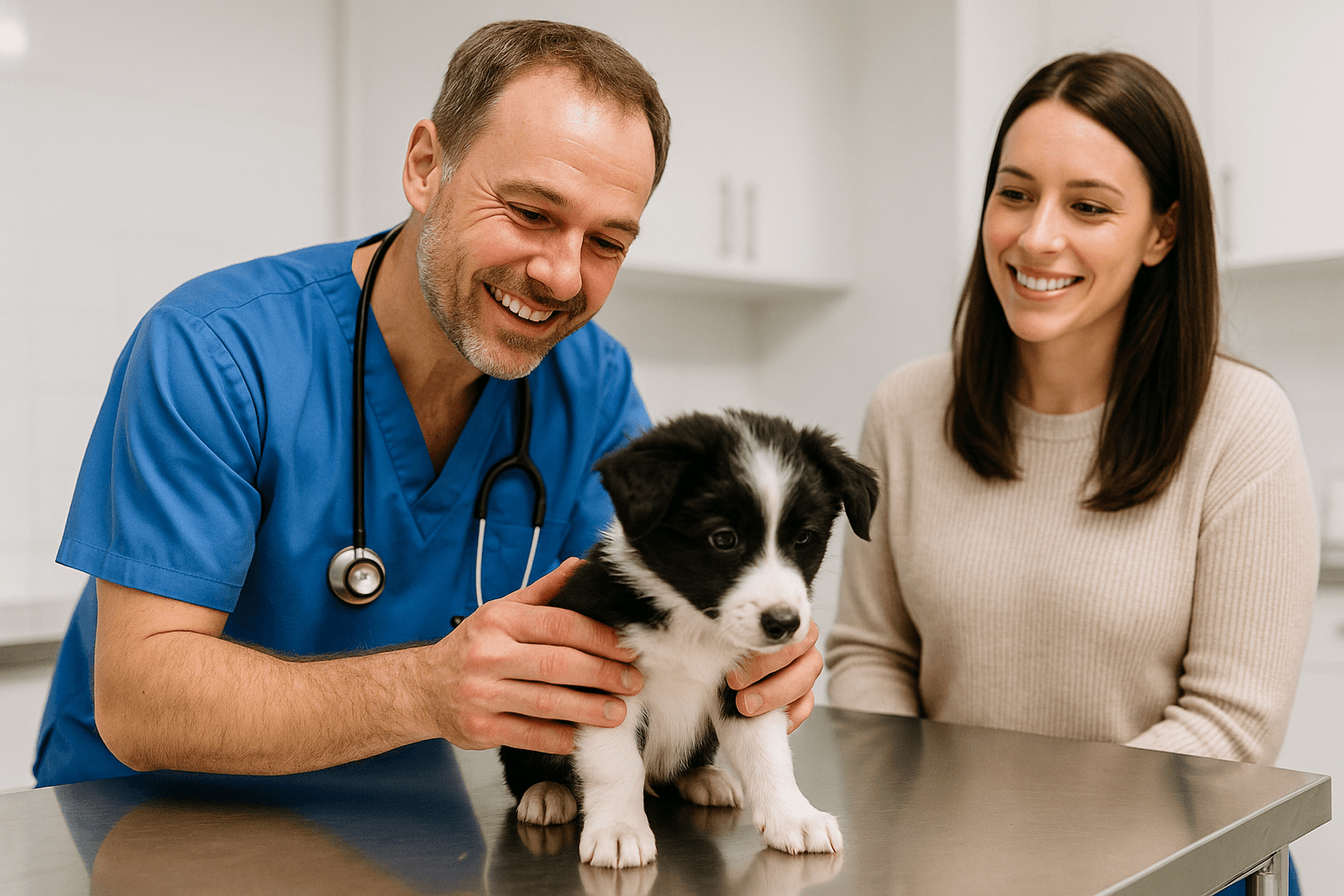
- Conduct a clinical health check before vaccinating (a puppy that is unwell should not be vaccinated)
- Administer the injection, usually into the scruff of the neck
- Record the vaccination in your puppy's vaccination record card
- Advise on the next steps and any temporary restrictions
After vaccination, monitor your puppy for 24 hours. Mild lethargy and a slightly tender injection site are normal. Contact your vet if your puppy shows facial swelling, difficulty breathing, vomiting or severe lethargy within a few hours of vaccination.
Use our Puppy Vaccination Planner to generate a personalised schedule based on your puppy's date of birth. For broader guidance on your puppy's first weeks, see our New Puppy Guide.
Frequently Asked Questions
Can my puppy go outside before the vaccination course is complete?
Your puppy can use your own garden immediately. Avoid public spaces where unvaccinated dogs may have been until 1 to 2 weeks after the final dose. You can carry your puppy in public, visit homes with vaccinated dogs, and attend good puppy classes in the meantime.
What happens if I miss the booster window?
Missing a booster by a few weeks is usually fine. Missing by several months may require your vet to assess whether the primary course needs to be repeated. For leptospirosis specifically, a gap of more than 15 months typically requires restarting. Contact your vet promptly rather than waiting.
Are there side effects to puppy vaccinations?
Mild side effects are common and normal: a small lump at the injection site, mild lethargy for 24 to 48 hours and reduced appetite. Serious allergic reactions are rare but can occur. Stay at the practice for 15 to 20 minutes after the injection so staff can respond if needed.
Is the L4 leptospirosis vaccine safe?
Yes. The L4 vaccine, which covers four leptospirosis serovars rather than the older L2 vaccine's two, was introduced in the UK around 2013 and is widely used. Early concerns about adverse reactions have not been supported by large-scale surveillance data. The BVA considers it safe and recommends its use.
Can I use titre testing instead of annual boosters?
Titre testing is a valid alternative for distemper, hepatitis and parvovirus. It is not a reliable substitute for leptospirosis vaccination. Discuss with your vet whether titre testing is appropriate for your dog's circumstances.
My puppy had vaccines from the breeder. Do I need to start again?
Not necessarily. Bring the vaccination record to your first vet appointment. Your vet will assess whether the vaccines given were appropriate products, given at the correct ages and by a vet, and advise whether the course can be continued or needs to restart.
Frequently Asked Questions
Your puppy can use your own garden immediately. Avoid public spaces where unvaccinated dogs may have been until 1 to 2 weeks after the final dose of the primary course, typically around 12 to 14 weeks. You can carry your puppy in public and visit homes with vaccinated dogs in the meantime.
Missing a booster by a few weeks is usually fine. For leptospirosis, a gap of more than 15 months typically requires restarting the primary course. Contact your vet promptly rather than waiting.
Mild effects are normal: a small lump at the injection site, mild lethargy for 24 to 48 hours and reduced appetite. Serious allergic reactions are rare. Stay at the practice for 15 to 20 minutes after vaccination so staff can respond if needed.
Yes. The L4 vaccine covers four serovars and is widely used across UK practices. Large-scale surveillance data does not support early concerns about adverse reactions. The British Veterinary Association considers it safe and recommends its use.
Titre testing is a valid alternative for distemper, hepatitis and parvovirus but is not a reliable substitute for leptospirosis vaccination. Discuss with your vet whether it is appropriate for your dog.
Not necessarily. Bring the vaccination record to your first vet appointment. Your vet will assess whether the products used, ages and administration were appropriate, and advise whether the course can be continued.
More from Puppy Care

Puppy Socialisation Checklist: The Critical 16-Week Window
The puppy socialisation window runs from 3 to 16 weeks of age. During this period, positive exposure to people, animals, sounds and environments shapes a dog's temperament for life. Missing this window is one of the leading causes of fear-based behavioural problems in adult dogs.
Read guide →
Your Puppy's First Night Home: What to Expect
A puppy's first night home will usually involve some crying as they adjust to being away from their mother and littermates. Place the crate in your bedroom, take a toilet trip immediately before bed, and respond calmly overnight rather than leaving them to cry. Most puppies settle significantly within 3 to 7 nights.
Read guide →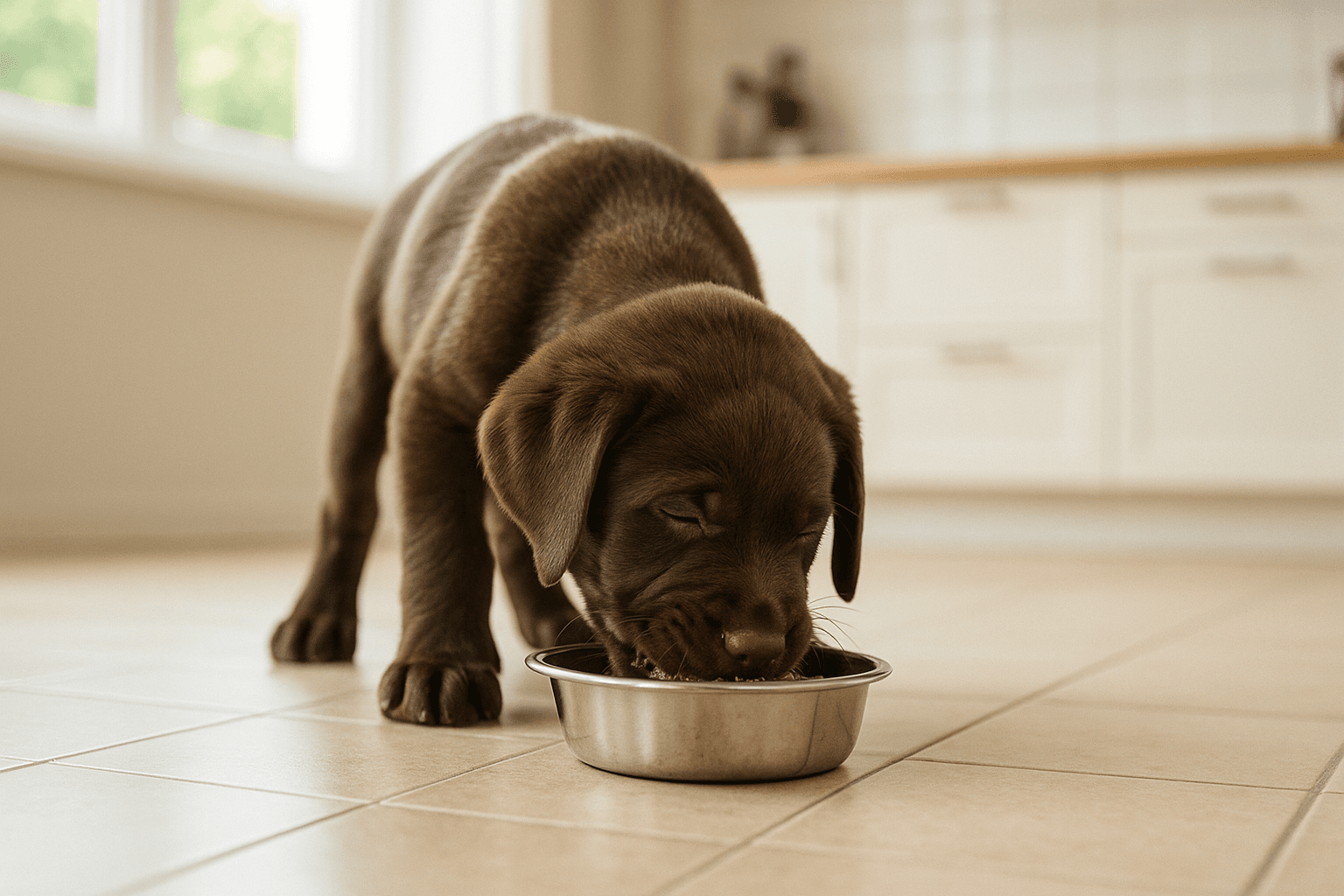
How Much to Feed a Puppy UK: A Complete Feeding Guide
Puppies in the UK should be fed a complete puppy food split across three to four meals daily, with the amount based on expected adult weight and adjusted by body condition. Large-breed puppies need a specific large-breed formula to control growth rate, while small breeds need four meals a day until at least 12 weeks to prevent low blood sugar.
Read guide →