How Much to Feed a Puppy UK: A Complete Feeding Guide
Quick answer
Puppies in the UK should be fed a complete puppy food split across three to four meals daily, with the amount based on expected adult weight and adjusted by body condition. Large-breed puppies need a specific large-breed formula to control growth rate, while small breeds need four meals a day until at least 12 weeks to prevent low blood sugar.
How Much to Feed a Puppy UK: A Complete Feeding Guide
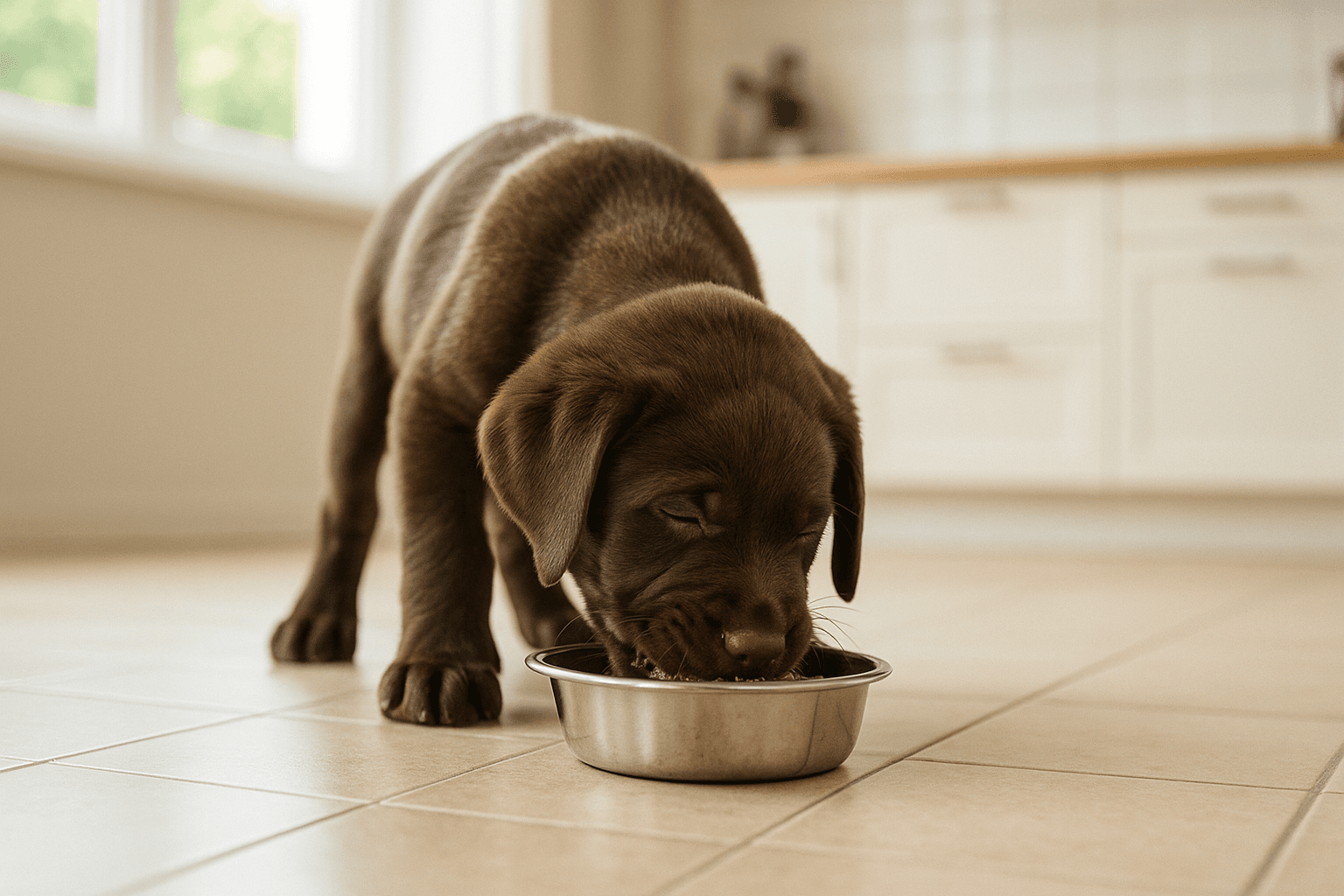
Feeding a puppy the right amount of the right food is one of the most important things you can do for their long-term health. In the UK, most puppies thrive on a complete puppy food fed in three to four meals a day, with amounts adjusted as they grow. This guide covers quantities, feeding schedules, food types and the breed-specific considerations that make a real difference.
Why Puppy Feeding Is Different to Adult Dog Feeding
Puppies grow rapidly, and their nutritional needs are very different to adult dogs. They need more protein, more calcium and more calories per kilogram of body weight than an adult of the same breed. Getting this balance right matters particularly for large and giant breeds, where overfeeding calcium and calories can drive too-rapid growth and increase the risk of skeletal problems such as hip dysplasia and osteochondrosis.
Small breeds have the opposite concern: they are at risk of hypoglycaemia (low blood sugar) if they go too long between meals, which is why very young small-breed puppies need four meals a day rather than three.
Choosing the Right Puppy Food
Always use a food labelled "complete" rather than "complementary". A complete food provides all the nutrients your puppy needs without supplementation. A complementary food is a mixer or topper and should not be fed as the sole diet.
Types of puppy food available in the UK:
Dry kibble: the most widely used format. Convenient, cost-effective and good for dental health. Choose a puppy-specific formula appropriate for your breed size (small breed, medium breed, large breed formulas differ meaningfully in calcium and calorie content).
Wet food: higher moisture content, often more palatable. Usually more expensive per calorie than dry. Can be used as the sole diet if it is a complete food, or mixed with kibble.
Cold-pressed: minimally processed dry food, gentler on the digestive system. Increasingly available in the UK from specialist suppliers. Feeding amounts are typically lower than standard kibble.
Raw (BARF): biologically appropriate raw food. Requires careful nutritional balance. Not recommended for puppies unless you are working with a qualified canine nutritionist. See our Raw Feeding Guide for more detail.
Fresh subscription: cooked fresh food delivered to your door. More expensive but highly palatable and easy to portion.
How Much to Feed: Using the Feeding Guide
The feeding guide on the packaging is your starting point, not your fixed answer. It gives a range based on expected adult weight. You will need to adjust based on your individual puppy's body condition.
Body condition check: run your hands along your puppy's ribcage. You should be able to feel the ribs without pressing hard, but they should not be visible through the skin. A visible waist from above is a good sign. Visible ribs or a protruding spine means your puppy is underweight. A rounded, hard-to-feel ribcage means overweight.
Typical daily food amounts by adult weight target (dry kibble, as a guide only: check your specific product):
| Expected adult weight | Daily dry food (approx) |
|---|---|
| Under 5kg (e.g. Chihuahua, Toy Poodle) | 60 to 100g |
| 5 to 15kg (e.g. Cocker Spaniel, Beagle) | 100 to 200g |
| 15 to 30kg (e.g. Labrador, Springer) | 200 to 350g |
| 30 to 45kg (e.g. German Shepherd, Weimaraner) | 300 to 450g |
| Over 45kg (e.g. Newfoundland, Great Dane) | 400 to 600g+ |
Always split the daily amount across meals. Do not feed the full daily allowance in one sitting.
Feeding Schedule by Age
| Age | Meals per day |
|---|---|
| 8 to 12 weeks | 4 meals |
| 3 to 6 months | 3 meals |
| 6 to 12 months | 2 meals |
| 12 months+ (small breeds from 10 months) | 2 meals |
Large breed puppies should move to adult food later than small breeds. Many vets recommend continuing large-breed puppy food until 12 to 18 months.
Water
Fresh water must always be available. Puppies on dry food need significantly more water than those on wet food. Check the bowl regularly, particularly in warm weather. Puppies often soil their water bowl with food: rinse and refill at each meal.
Treats and Extras
Keep treats to no more than 10% of daily calorie intake. High-value training treats are small: a pea-sized piece of chicken or cheese is sufficient. Account for treats in the daily food total.
Foods to avoid completely: grapes, raisins, onions, garlic, xylitol (found in some peanut butters and sugar-free products), chocolate, macadamia nuts and cooked bones. See our Foods Dogs Cannot Eat guide for the full list.
Switching Foods
If you want to change from the food the breeder or rescue was using, transition over 7 to 10 days:
- Days 1 to 3: 75% old food, 25% new food
- Days 4 to 6: 50% old, 50% new
- Days 7 to 9: 25% old, 75% new
- Day 10: 100% new food
Switching too quickly causes loose stools or vomiting. If your puppy has a sensitive stomach, extend the transition to 14 days.
Breed-Specific Considerations
Large and giant breeds (Labradors, German Shepherds, Bernese Mountain Dogs, Newfoundlands): use a large-breed puppy formula specifically. These have controlled calcium and phosphorus ratios to support slower growth. Do not supplement with calcium or give bones on top of a complete diet: over-supplementation causes the same skeletal problems as deficiency.
Small breeds (Chihuahuas, Yorkshire Terriers, Toy Poodles): feed four times daily until at least 12 weeks. Small breeds have tiny stomachs and fast metabolisms. Use a small-breed puppy formula with smaller kibble size.
Flat-faced breeds (French Bulldogs, Pugs, Bulldogs): many do better on wet food or a small-kibble dry food due to their jaw shape. Monitor for food bowl frustration, which can cause gulping and bloating.
Deep-chested breeds (Great Danes, Weimaraners, Standard Poodles, Dobermanns): at elevated risk of bloat (GDV). Feed smaller meals, avoid exercise immediately before or after feeding, and use a slow-feeder bowl.
The PDSA recommends discussing your puppy's specific nutritional needs with your vet at the first check-up, particularly if you have a breed with known dietary sensitivities. For broader guidance on puppy care in the first weeks, see our New Puppy Guide.
Frequently Asked Questions
How do I know if I am feeding my puppy enough?
Use the body condition check: feel for ribs (easily felt but not visible), check for a visible waist from above, and monitor weight at monthly vet weigh-ins. A puppy losing weight on the current amount needs more food. A puppy gaining excess fat needs less. Body condition is more reliable than the scales alone.
My puppy always seems hungry. Should I feed more?
Not necessarily. Puppies are highly food-motivated and will often eat well past fullness. Use the body condition check rather than appetite as your guide. If your puppy is in good condition and growing steadily, constant hunger is normal behaviour, not a sign of underfeeding.
Can I feed my puppy homemade food?
Home-cooked food can be nutritionally complete if formulated correctly, but it is very difficult to get right without expert input. A canine nutritionist (look for qualifications through the Association for Pet Obesity Prevention or a registered veterinary nutritionist) can formulate a balanced recipe for your puppy's specific needs.
When should I switch from puppy food to adult food?
Small breeds: around 10 to 12 months. Medium breeds: 12 months. Large breeds: 12 to 18 months. Giant breeds: 18 to 24 months. Your vet or the food manufacturer's guidelines are the best reference for your specific breed.
Is grain-free puppy food better?
There is no evidence that grain-free diets are beneficial for most dogs, and the FDA in the USA has investigated a potential link between grain-free diets and dilated cardiomyopathy (DCM) in some breeds. The research is ongoing and does not currently support a blanket recommendation either way. Discuss with your vet if you are considering a grain-free diet.
My puppy won't eat. What should I do?
A puppy that skips one meal but is otherwise bright and energetic is not a concern. A puppy that refuses food for more than 24 hours, or shows lethargy, vomiting or diarrhoea alongside food refusal, needs a vet appointment promptly. Do not leave food down all day: offer the meal for 15 to 20 minutes, then remove it.
Frequently Asked Questions
Use the body condition check: feel for ribs (easily felt but not visible), look for a visible waist from above, and track weight at monthly weigh-ins. Body condition is more reliable than appetite as a guide, since puppies are highly food-motivated and will often eat well past fullness.
Not necessarily. Puppies are highly food-motivated and will often eat past fullness. Use the body condition check rather than appetite as your guide. If your puppy is in good condition and growing steadily, constant hunger is normal behaviour, not underfeeding.
Yes, but it is very difficult to get right without expert input. Home-cooked diets must be nutritionally complete for a growing puppy. Consult a registered veterinary nutritionist or canine nutritionist for a breed-specific formulated recipe.
Small breeds at 10 to 12 months, medium breeds at 12 months, large breeds at 12 to 18 months, giant breeds at 18 to 24 months. Your vet and the food manufacturer's guidelines are the best reference for your specific breed.
There is no evidence that grain-free diets benefit most dogs. Ongoing research has explored a potential link between grain-free diets and dilated cardiomyopathy in some breeds. Discuss with your vet before choosing a grain-free diet.
A single skipped meal in an otherwise bright puppy is not a concern. Food refusal lasting more than 24 hours, or combined with lethargy, vomiting or diarrhoea, needs a vet appointment. Offer meals for 15 to 20 minutes then remove the bowl rather than leaving food down all day.
More from Puppy Care
Puppy Socialisation Checklist: The Critical 16-Week Window
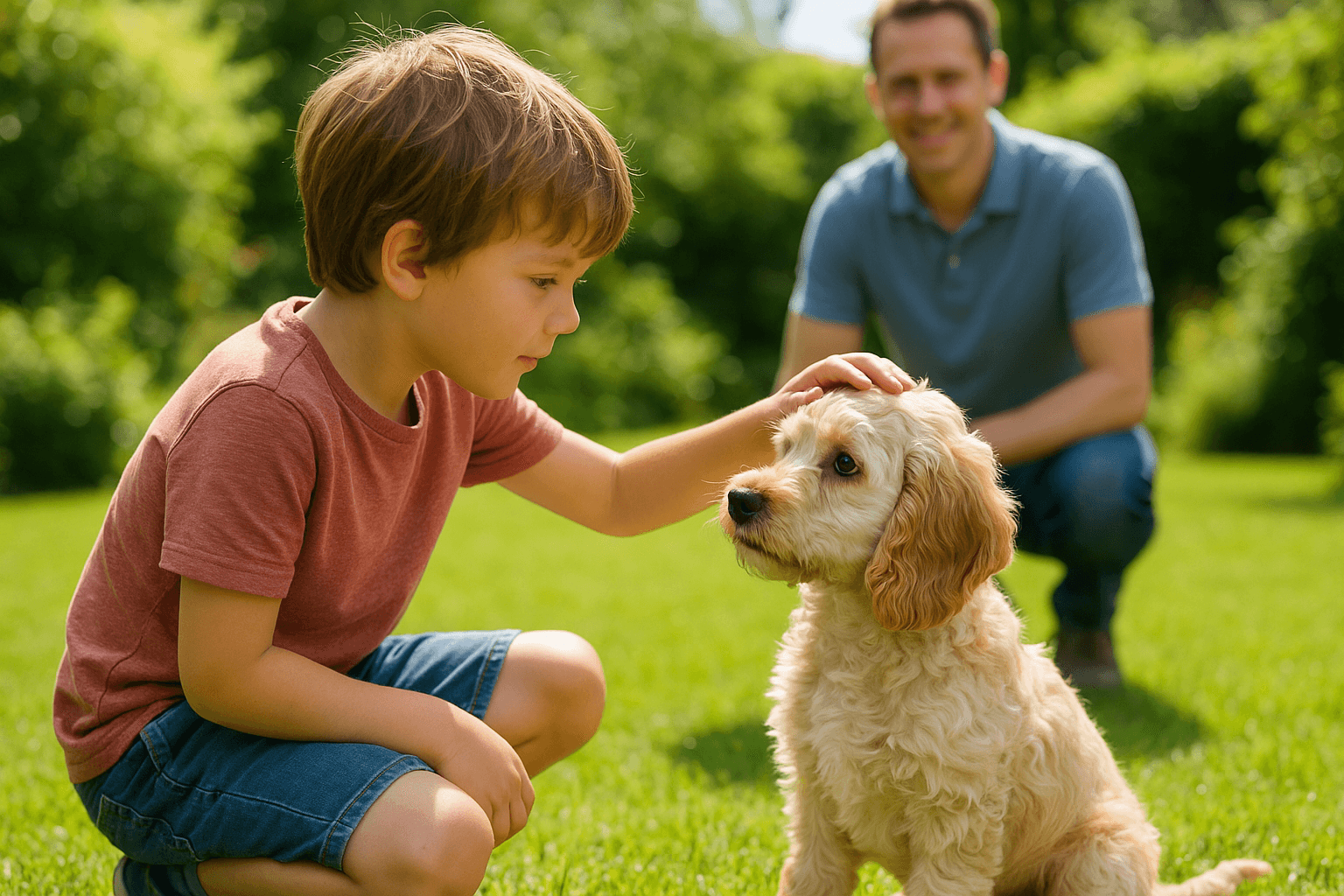
The puppy socialisation window runs from 3 to 16 weeks of age. During this period, positive exposure to people, animals, sounds and environments shapes a dog's temperament for life. Missing this window is one of the leading causes of fear-based behavioural problems in adult dogs.
Read guide →
UK Puppy Vaccination Schedule: What, When and How Much
The UK puppy vaccination primary course starts at 8 weeks and covers parvovirus, distemper, infectious hepatitis and leptospirosis in two doses given 2 to 4 weeks apart. The course costs £60 to £120 at most UK practices, with full protection established 1 to 2 weeks after the final dose.
Read guide →
Your Puppy's First Night Home: What to Expect
A puppy's first night home will usually involve some crying as they adjust to being away from their mother and littermates. Place the crate in your bedroom, take a toilet trip immediately before bed, and respond calmly overnight rather than leaving them to cry. Most puppies settle significantly within 3 to 7 nights.
Read guide →