


How to Leave Your Dog Alone: Step-by-Step Training Guide
Quick answer
Teaching a dog to be left alone starts by building positive associations with short, calm alone periods from puppyhood or the first week in a new home. Start with seconds, not minutes, and always return before the dog shows any signs of anxiety. Gradually increase duration only when the dog is fully comfortable at the current level.
Why Alone-Time Training Matters
Around 50% of UK dogs show separation-related behaviours. The vast majority of cases were preventable. A dog who was gently introduced to alone time from the start -- and who learned that your leaving predicts your return -- rarely develops genuine separation anxiety.
The Starting Framework
Alone-time training works on the same principle as all desensitisation: expose the dog to what they find difficult, but only at an intensity they can cope with. Build from there.
Phase 1: Safe Space Foundation (Weeks 1 to 2)
Before working on alone time, your dog needs a settled resting place they associate with calm and safety.
- Choose a consistent spot: a bed, crate, or defined corner
- Feed meals there. Give long-lasting chews there. Make it the best place in the house.
- Practice short settle cues: ask your dog to go to their bed, reward calm behaviour, gradually increase the time before the reward
- Do this with you present first -- the skill is settling, not being alone
Phase 2: Out-of-Sight Practice (Weeks 2 to 3)
Once your dog settles confidently in their spot with you present, introduce brief out-of-sight moments.
- Leave the room for 5 seconds while your dog is settled, then return
- 10 seconds, 30 seconds, build to several minutes across multiple daily sessions
- Return before any sign of unease. If your dog gets up to follow you, go back a step.
Phase 3: Departure Practice (Week 3 onwards)
Begin practicing actual departures.
- Pick up keys and sit back down (break the departure routine)
- Step outside and return in 10 seconds
- Build to 30 seconds, 1 minute, 5 minutes, and beyond
- Use a camera to monitor. Your dog should not be vocalising or pacing.
Phase 4: Extended Alone Time
Once your dog can be left for 20 to 30 minutes without anxiety, longer periods become much easier to build. The hardest work is in the early phases.
Practical Tips
Give a long-lasting chew before you leave. A stuffed Kong, lick mat, or bully stick gives your dog something to do in the critical first 10 to 15 minutes. Freeze the Kong for extra duration.
Keep departures and arrivals low-key. Drawn-out emotional goodbyes increase pre-departure anxiety. A quiet departure is better for your dog.
Do not return to a barking dog. If your dog vocalises and you return in response, you have trained them that barking brings you home. Wait for a two-second pause in noise before returning.
For Puppies: Start From Day One
The first week with a new puppy is the ideal window to begin alone-time training. Begin Phase 1 immediately. A puppy who learns to settle happily from week one rarely develops separation anxiety.
For Newly Adopted Adults
Film your dog on the first few occasions you leave, even briefly. What you see on camera determines your starting point. Some rescue dogs are completely relaxed alone. Others have deep-seated anxiety requiring a slower approach.
Full treatment guide: How to Treat Dog Separation Anxiety
Frequently Asked Questions
Puppies under 16 weeks should not be left for extended periods. As a general guide, a puppy can be left for roughly one hour per month of age, up to a maximum of four to five hours for adult dogs. Individual dogs vary.
The RSPCA advises that dogs should not routinely be left alone for more than four hours. Many dogs tolerate longer periods, but over-reliance on extended alone time affects wellbeing regardless of whether overt anxiety is present.
An excited greeting is normal. A prolonged, highly aroused response that takes 20 to 30 minutes to settle can indicate pent-up stress from time alone. It is worth reviewing how long your dog is being left.
More from Dog Training
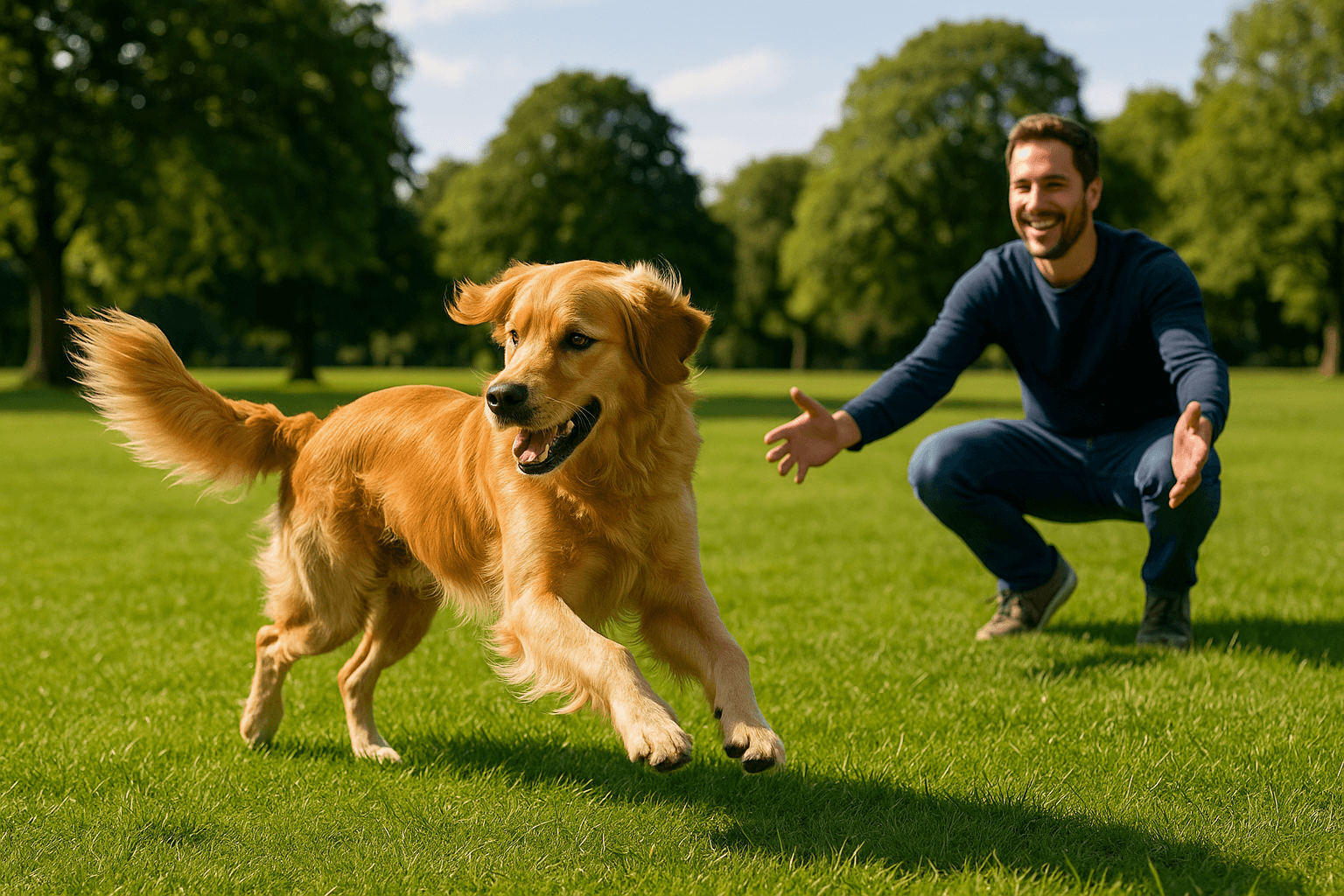
How to Train Recall: The Most Important Skill Your Dog Will Learn
Training a reliable dog recall requires charging the cue indoors first, then building up through a long line to real-world environments gradually. Never call your dog for something they dislike, always reward a return regardless of speed, and use high-value treats like chicken or cheese rather than kibble when competing with outdoor distractions.
Read guide →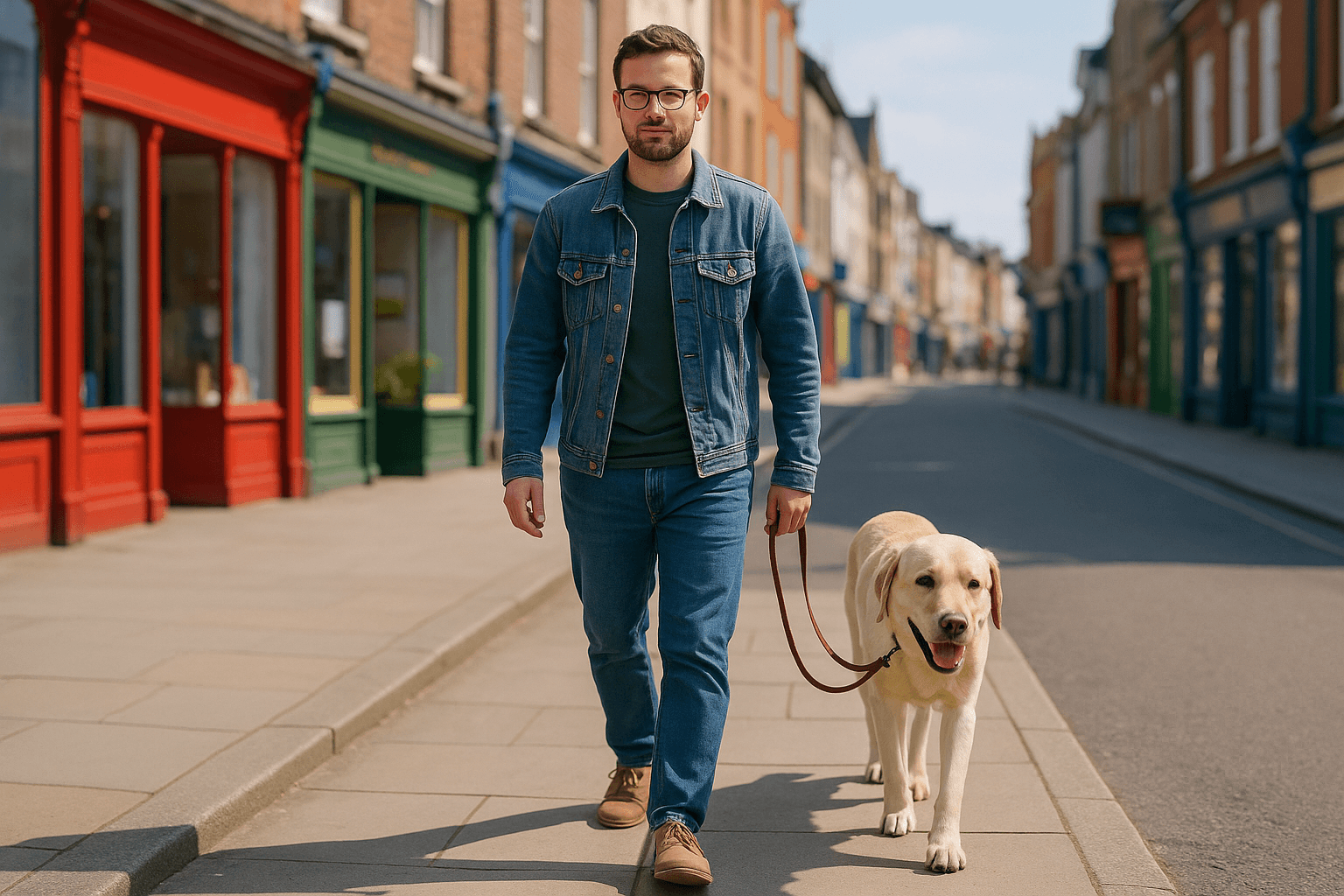
Loose Lead Walking: A Step-by-Step UK Guide
Loose lead walking is trained using the stop-start method: stop the moment the lead tightens, move forward the moment it slackens. A front-clip harness or head collar helps manage pulling while training is underway. Consistent application by everyone who walks the dog is the single most important factor in how quickly the behaviour changes.
Read guide →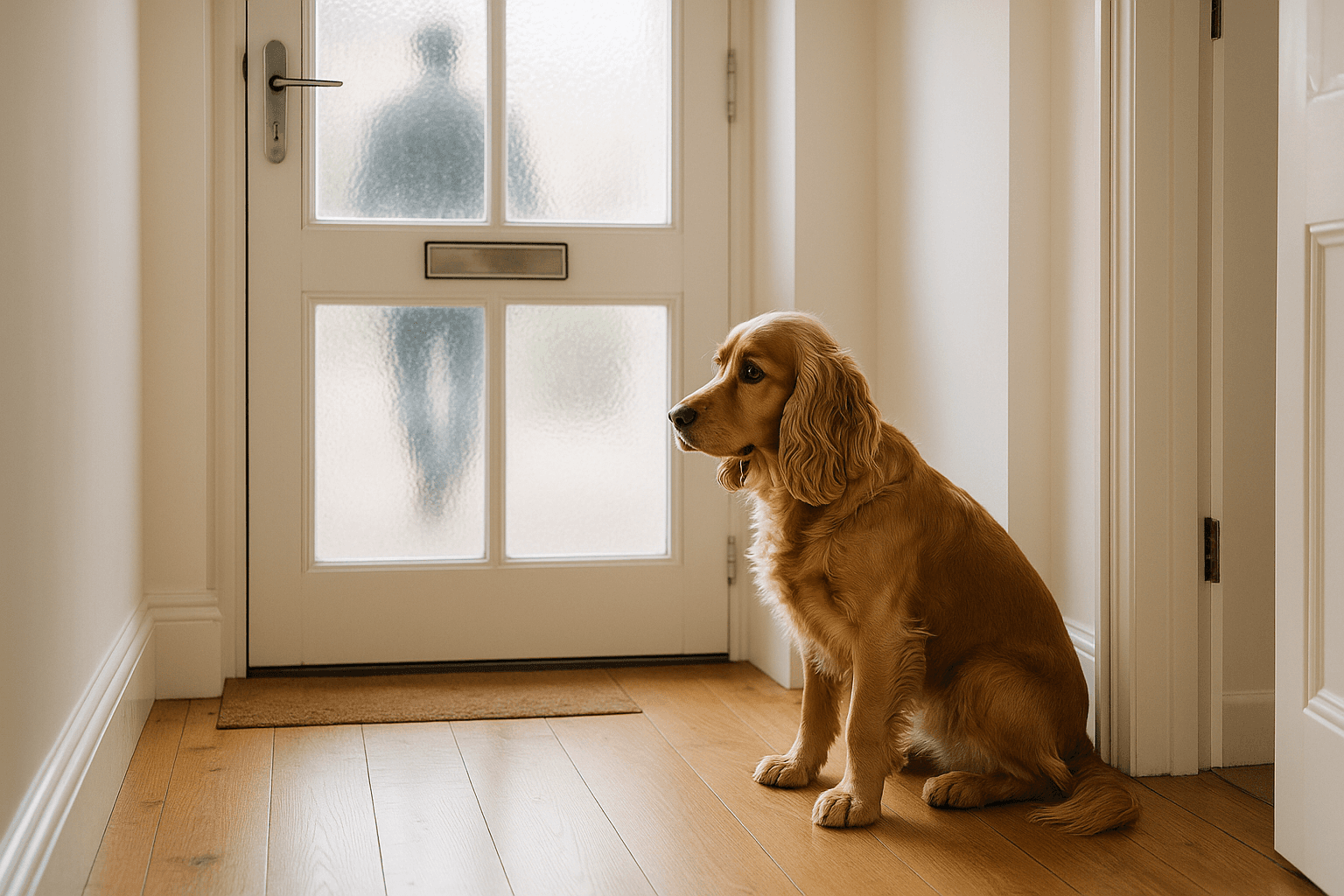
Dog Separation Anxiety: The Complete UK Guide
Separation anxiety is the most common behaviour problem in UK dogs, affecting approximately 50% of dogs according to Dogs Trust research. Signs include barking, destructive behaviour, and toileting when left alone. Treatment combines gradual alone-time training, environmental management, and in some cases calming supplements or veterinary support.
Read guide →