

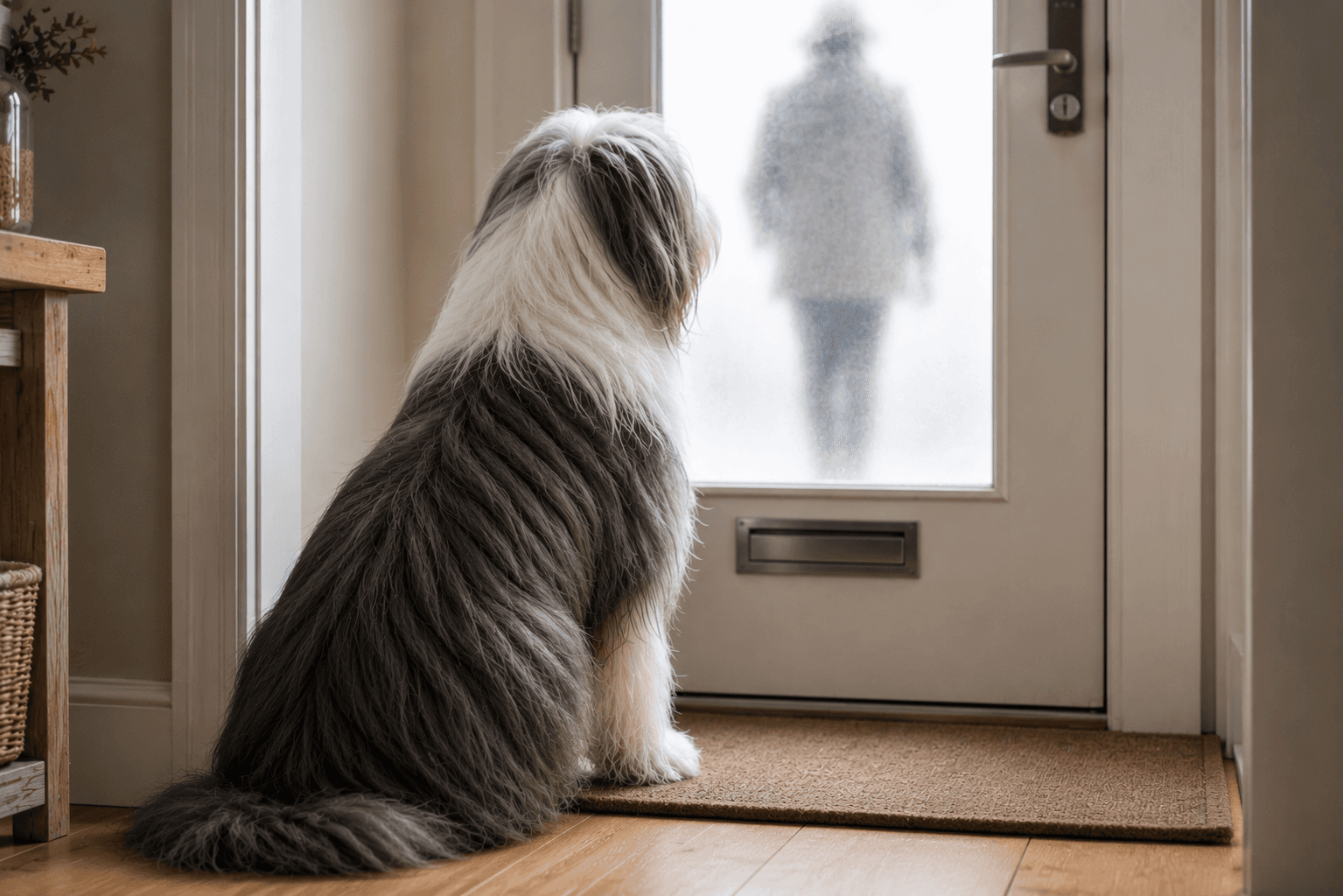
How to Treat Dog Separation Anxiety
Quick answer
Treating dog separation anxiety requires systematic desensitisation -- gradually building up alone time from a level where your dog shows no distress at all, increasing duration in small steps only when they are fully comfortable. Punishment and forced exposure make the problem worse. Severe cases require veterinary or behaviourist support.
The Foundational Principle: Stay Below Threshold
Every element of separation anxiety treatment comes back to one principle: your dog must never experience distress during training sessions. The moment a dog tips into anxiety, they are not learning that alone-time is safe -- they are confirming that it is not. Every experience of panic reinforces the problem.
This is why well-meaning approaches like "just leave them to get used to it" typically make things worse.
Step 1: Manage the Environment First
Before starting a training programme, ensure your dog is not experiencing unmanaged panicked alone time while you work through the process. This may mean asking someone to stay with them, using doggy daycare temporarily, or adjusting your schedule. This is short-term management, not a permanent solution.
Step 2: Find Your Dog's Threshold
Use a camera to identify the maximum time your dog can be alone without showing any anxiety at all. For some dogs, this is 30 minutes. For others, it is 30 seconds. Your starting point is just below this threshold.
Step 3: Build in Micro-Steps
Starting at your dog's threshold, increase alone time in very small increments:
- 10 seconds alone, return before any anxiety
- 20 seconds, 30 seconds, 45 seconds
- 1 minute, 90 seconds, 2 minutes
- Continue building, never jumping ahead
Key rules: return before any anxiety begins; keep arrivals and departures low-key; practice multiple short sessions per day; vary the duration so you occasionally go shorter than your current ceiling.
Step 4: Disrupt Departure Cues
Dogs with established anxiety often begin panicking before you leave because they have learned your routine -- keys, coat, bag, shoes. Disrupt these cues:
- Pick up your keys and sit back down
- Put on your coat and make a cup of tea
- Open the front door and return immediately
The goal is to make leaving cues meaningless -- they no longer reliably predict a long absence.
Step 5: Use Calming Support Alongside Training
Calming products do not treat separation anxiety alone, but they can reduce baseline anxiety and help dogs stay below threshold more easily during training.
Adaptil diffuser -- plug in where your dog rests. Run continuously during the treatment period.
YuMOVE Calming Care -- daily supplement tablet. Requires consistent use over several weeks to build effect.
Full product guide: Best Calming Products for Dog Separation Anxiety
When to Seek Professional Support
Your vet should be the first port of call for severe anxiety. In some cases, short-term medication combined with a behaviour programme produces significantly better outcomes than behaviour modification alone.
Clinical Animal Behaviourist (CAB) -- find an ABTC-accredited behaviourist at abtc.org.uk. Your vet can also refer you.
Dogs Trust Behaviour Support Line -- free support that helped over 8,000 owners in 2024. Visit dogstrust.org.uk.
What Not to Do
Do not punish. Coming home to destruction and reacting with anger increases anxiety and teaches the dog that your return is also something to fear.
Do not flood. Leaving a dog for hours to "get used to it" causes significant suffering and typically worsens the problem.
Do not rely on products alone. Supplements and pheromones support treatment but do not replace a structured training programme.
Frequently Asked Questions
Mild cases can show meaningful improvement in four to eight weeks. Moderate cases typically take three to six months. Severe cases may require longer-term management. Consistency matters more than speed.
Only if the dog views the crate as a safe, positive space already. For an anxious dog with no crate history, forcing them into a crate adds a second stressor. Introduce crating as a separate positive association project first.
CBD products for pets exist in the UK but the evidence base is limited. If you want to explore this route, speak to your vet first and choose a product that complies with UK Veterinary Medicines Regulations.
More from Dog Training
How to Train Recall: The Most Important Skill Your Dog Will Learn
Training a reliable dog recall requires charging the cue indoors first, then building up through a long line to real-world environments gradually. Never call your dog for something they dislike, always reward a return regardless of speed, and use high-value treats like chicken or cheese rather than kibble when competing with outdoor distractions.
Read guide →
Loose Lead Walking: A Step-by-Step UK Guide
Loose lead walking is trained using the stop-start method: stop the moment the lead tightens, move forward the moment it slackens. A front-clip harness or head collar helps manage pulling while training is underway. Consistent application by everyone who walks the dog is the single most important factor in how quickly the behaviour changes.
Read guide →
Dog Separation Anxiety: The Complete UK Guide
Separation anxiety is the most common behaviour problem in UK dogs, affecting approximately 50% of dogs according to Dogs Trust research. Signs include barking, destructive behaviour, and toileting when left alone. Treatment combines gradual alone-time training, environmental management, and in some cases calming supplements or veterinary support.
Read guide →