Puppy Feeding Guide UK: What to Feed and When
Quick answer
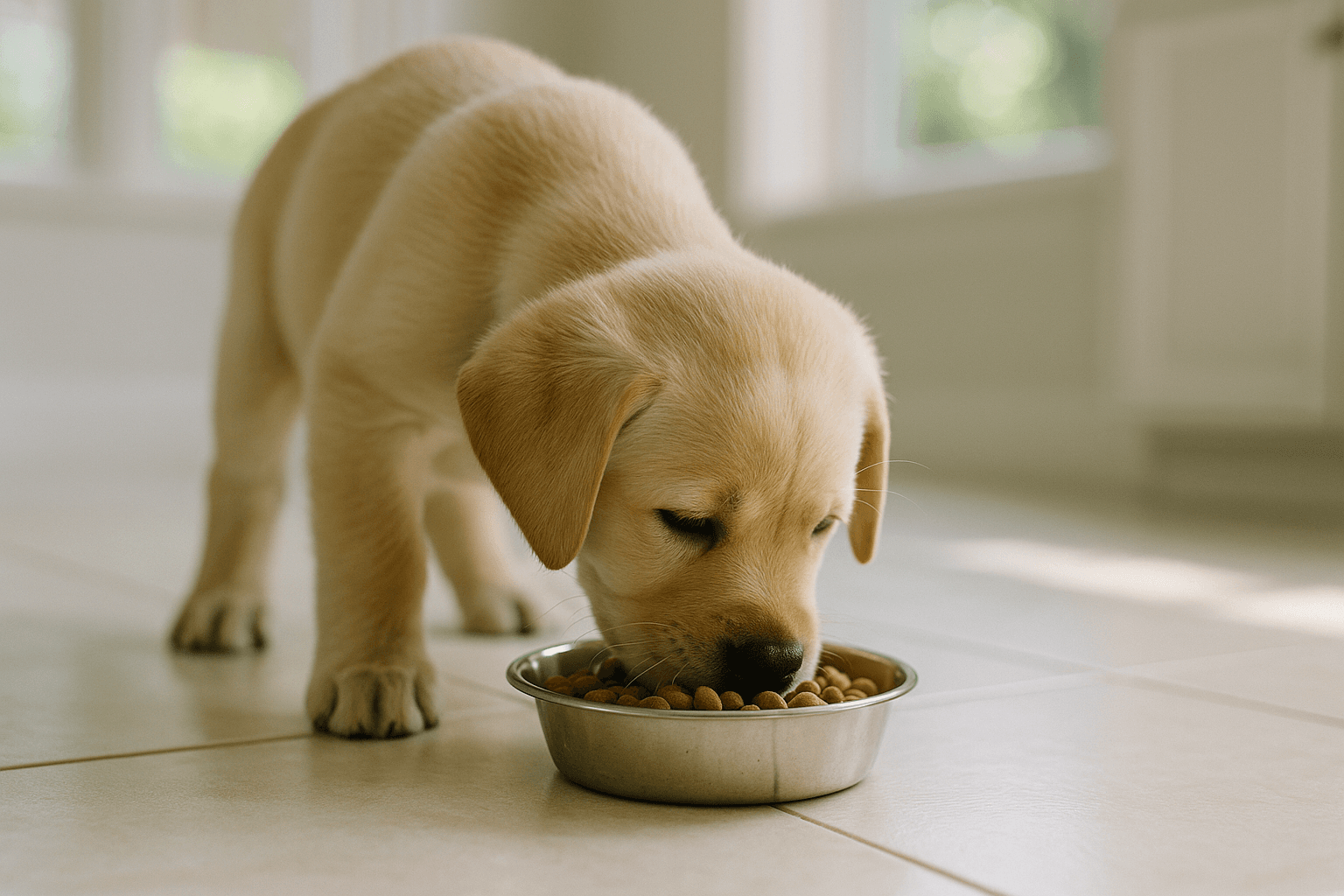
Puppies need puppy-specific food until they reach adulthood -- 12 months for small breeds, up to 24 months for large and giant breeds. They should be fed three to four times per day until six months, then twice daily. Always follow the feeding guide on your puppy food packaging and adjust based on growth and body condition.
Why Puppies Need Puppy Food
Puppy food is formulated to support rapid growth, with higher levels of protein, fat, calcium, and phosphorus than adult food. Feeding an adult food to a growing puppy means they may not receive adequate nutrition for bone and muscle development.
How Often Should You Feed a Puppy?
| Age | Meals per day |
|---|---|
| 8 to 12 weeks | 4 meals |
| 3 to 6 months | 3 meals |
| 6 to 12 months | 2 to 3 meals |
| 12 months+ (small and medium breeds) | 2 meals |
How Much Should You Feed a Puppy?
Follow the feeding guide on your puppy food packaging. Because puppies grow rapidly, adjust the amount every two to four weeks based on their weight. Do not feed to appetite.
For large and giant breeds specifically: do not over-supplement with calcium. Excessive calcium and too-rapid growth are linked to developmental bone disease. Use a large-breed-specific puppy food which controls calcium and phosphorus levels.
Feeding Guide by Breed Size
Small breeds (under 10kg adult weight): Switch to adult food at 9 to 12 months.
Medium breeds (10 to 25kg adult weight): Switch to adult food at 12 months.
Large breeds (25 to 45kg adult weight): Feed large-breed-specific puppy food. Switch to adult food at 12 to 18 months.
Giant breeds (over 45kg adult weight): Feed giant-breed puppy food. Switch to adult food at 18 to 24 months. Consult your vet on transition timing.
What to Feed a New Puppy
Continue feeding whatever the breeder or rescue was using for at least the first week. Moving to a new home is already stressful -- a simultaneous food change significantly increases the risk of digestive upset.
Foods Toxic to Dogs
Keep these away from puppies at all times: grapes and raisins, onions, garlic, leeks and chives, chocolate, xylitol (found in some peanut butters, sweets and chewing gum), macadamia nuts, avocado, cooked bones, alcohol.
Frequently Asked Questions
Raw feeding is possible for puppies but requires careful nutritional balancing and safe food handling. Puppies have developing immune systems and are more vulnerable to bacterial contamination. Use a complete commercial raw food formulated for puppies and discuss it with your vet first.
Check their body condition score first. Puppies are often food-motivated and will show interest in food regardless of whether they need more. If their ribs are easily felt and they have a visible waist, they are likely at a healthy weight.
Yes, in moderation. Treats should make up no more than 10% of daily calorie intake. Use training treats sparingly and account for them in the daily allowance. Avoid rawhide for puppies -- it poses a choking risk and can cause digestive blockage.
A puppy who refuses food for more than 24 hours should be seen by a vet. Do not switch foods immediately to entice eating, as this can establish fussy behaviour. Offer the food, leave it for 15 to 20 minutes, then remove it and try again at the next meal.
More from Dog Nutrition
How Much Should I Feed My Dog?
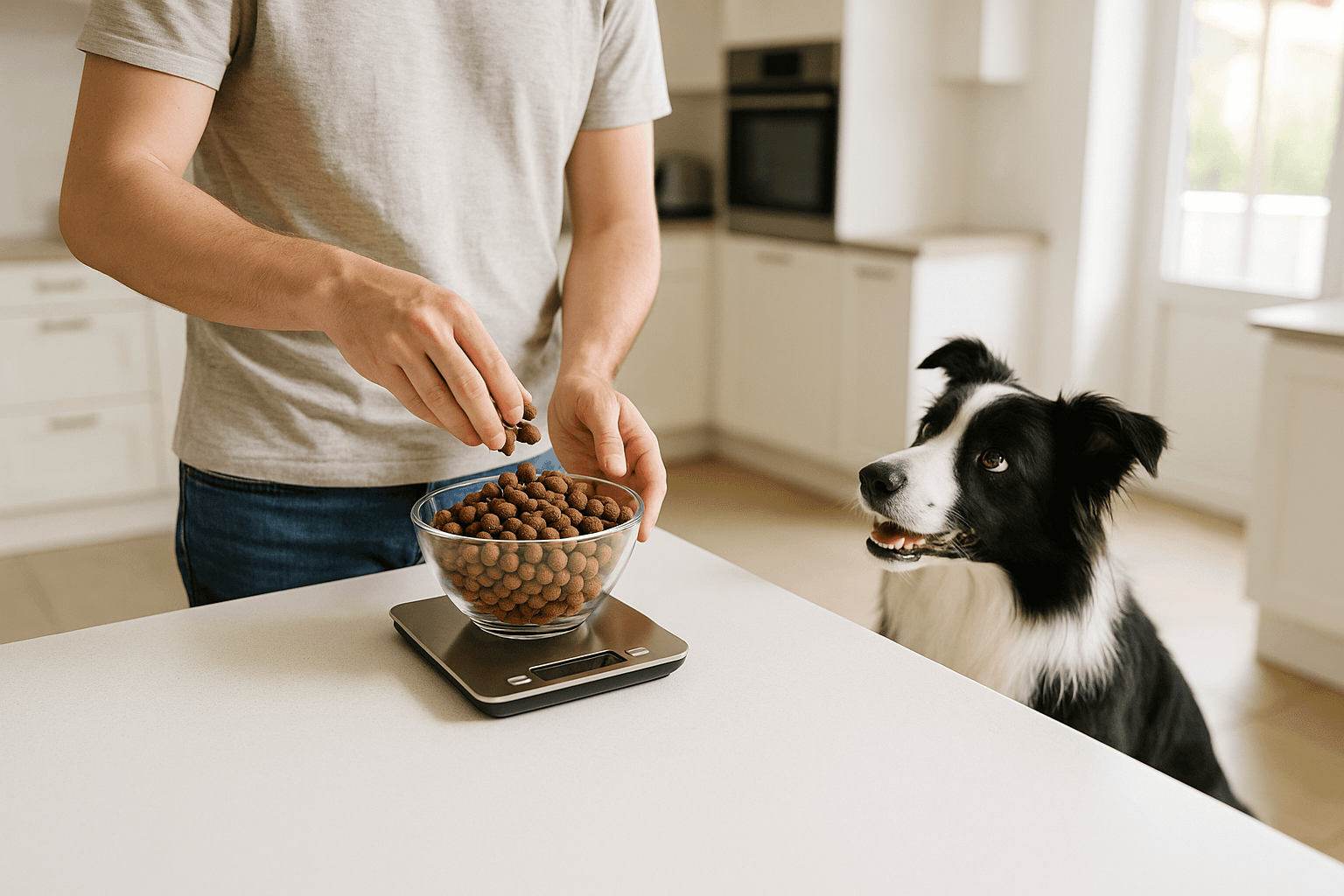
How much to feed your dog depends on their weight, age, activity level, and the type of food you are using. Most adult dogs need two meals per day. Always start with the manufacturer's feeding guide on the packaging, then adjust based on your dog's body condition score -- not by whether they seem hungry.
Read guide →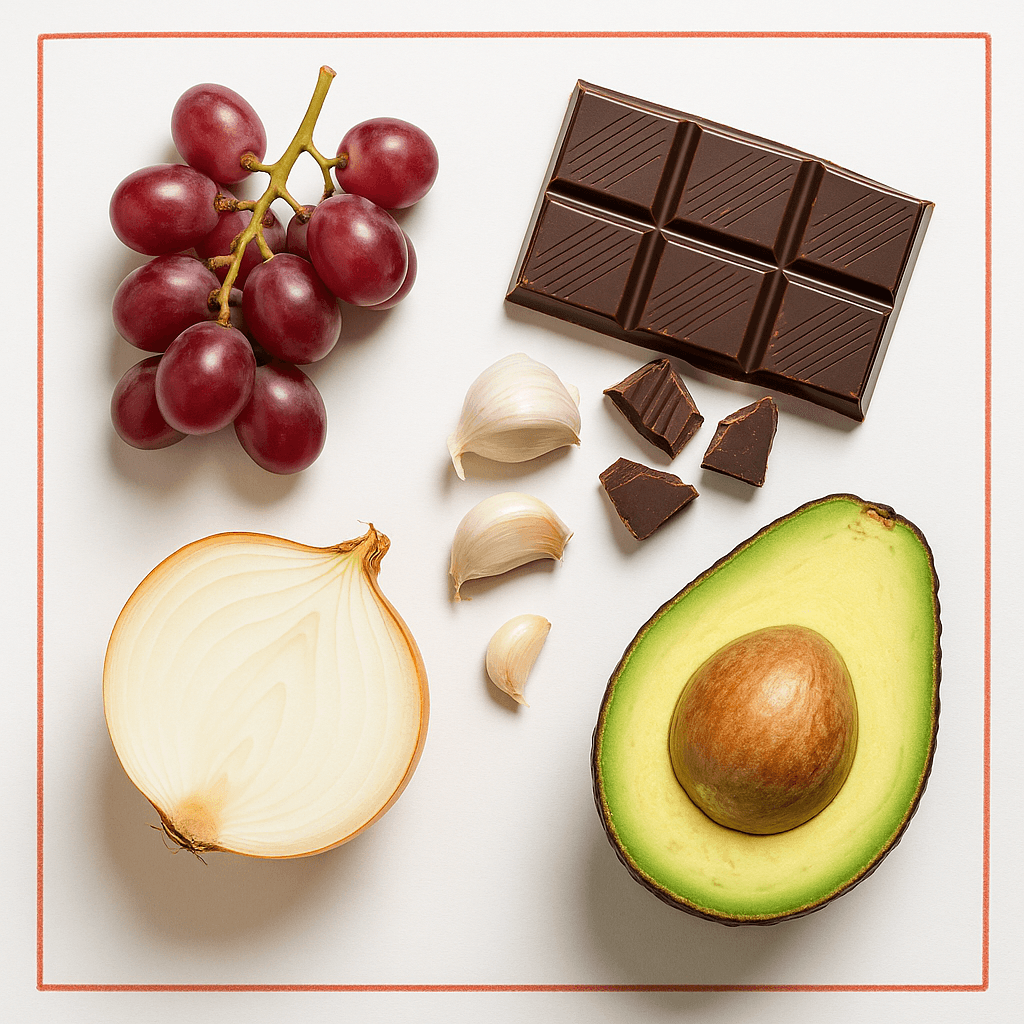
Foods Dogs Cannot Eat: The UK Owner's Safety Guide
The most dangerous foods for dogs in the UK are grapes and raisins (can cause fatal kidney failure), xylitol (in some peanut butters and sugar-free products, causes blood sugar crash and liver failure), chocolate (theobromine toxicity), and alliums including onions and garlic. If your dog eats any of these, call your vet or the Animal Poison Line on 0300 999 0077 immediately without waiting for symptoms.
Read guide →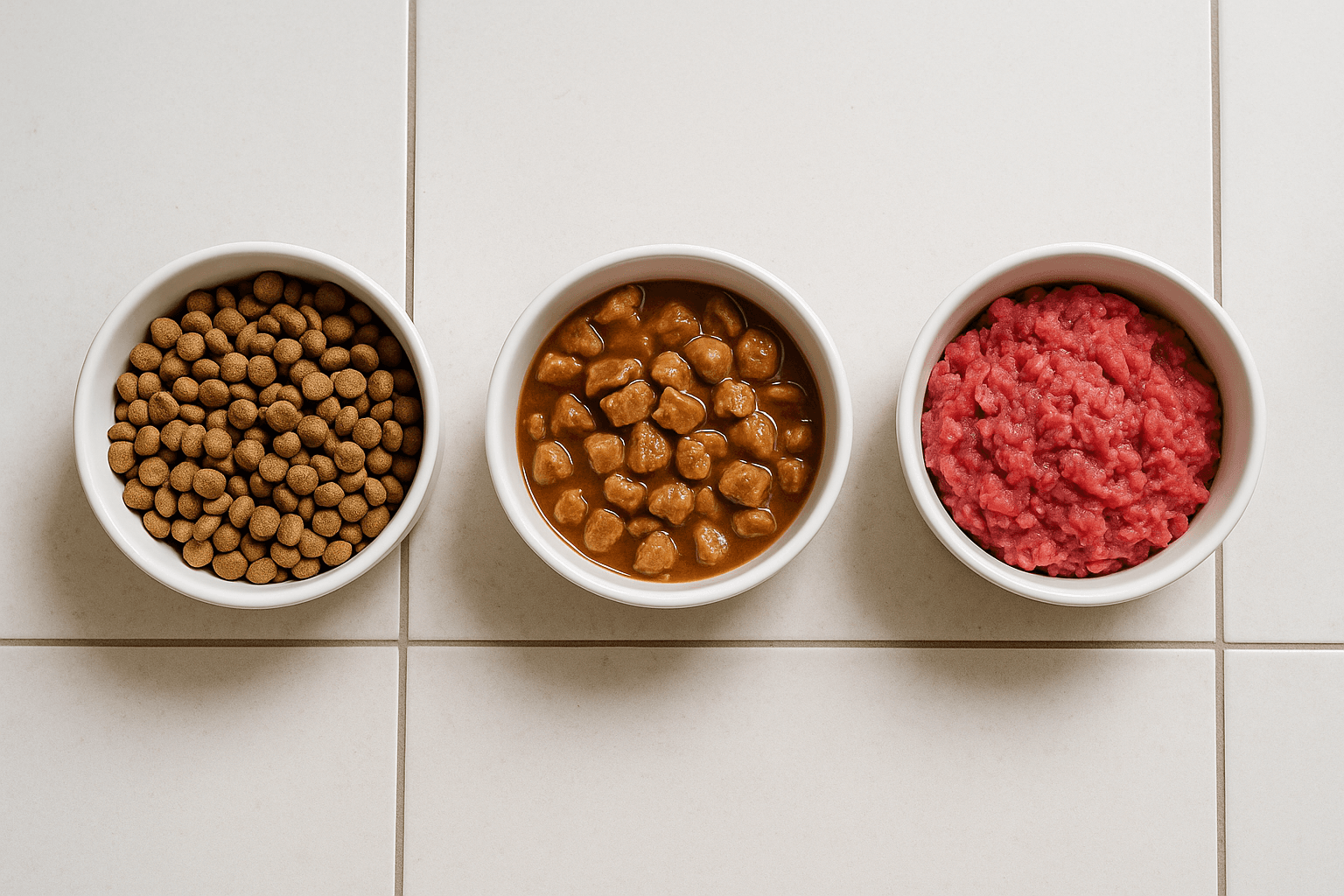
How to Choose Dog Food UK: Ingredients, Labels and Life Stages Explained
The best dog food for your dog depends on their age, breed, health, and your budget. Look for a named meat source as the first ingredient, choose a food labelled "complete" rather than "complementary," and ensure it meets FEDIAF nutritional guidelines. Fresh, air-dried, and raw options are growing in popularity alongside traditional dry and wet food.
Read guide →