

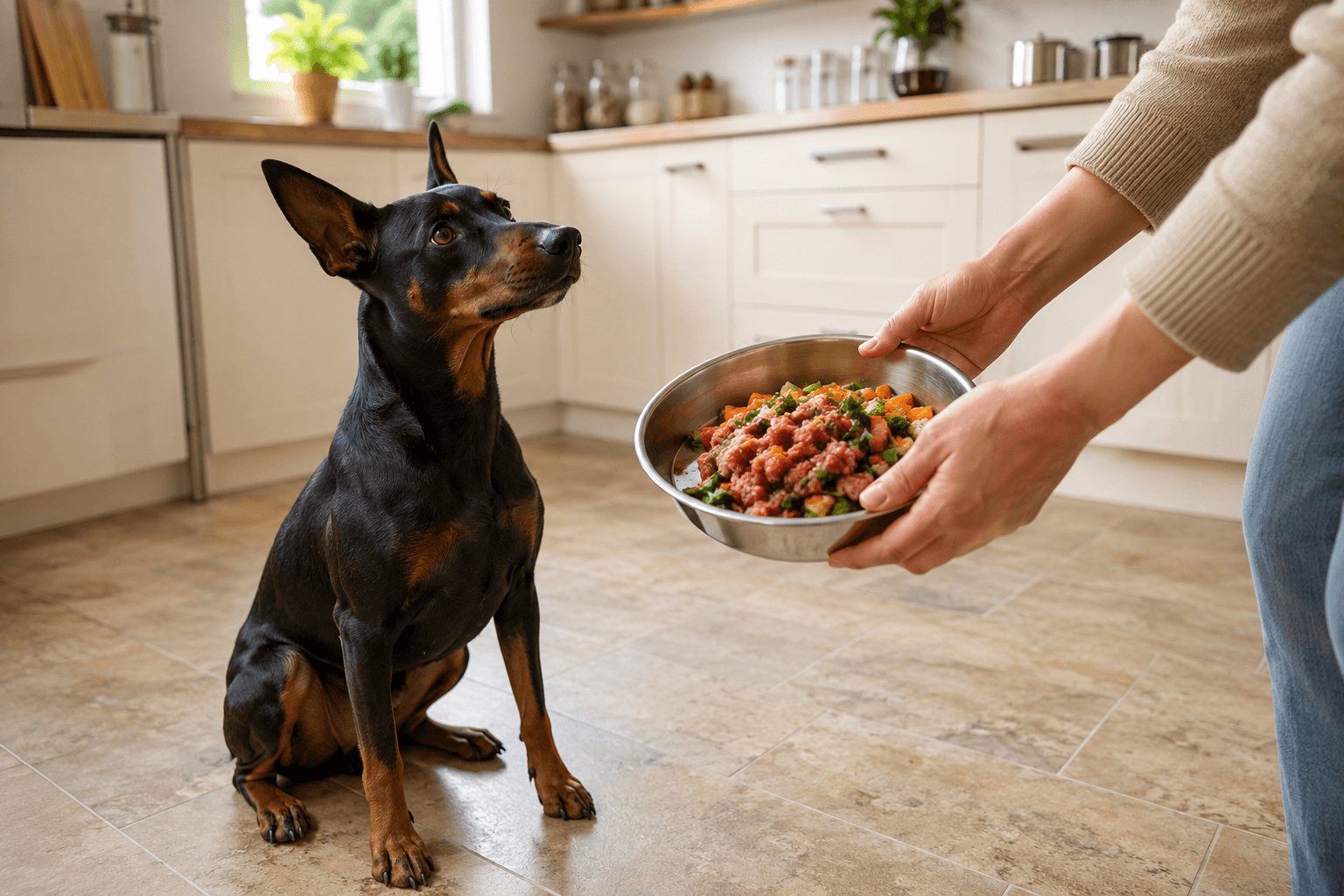
Raw Feeding Dogs in the UK: A Beginner's Guide to BARF
Quick answer
Raw feeding (BARF) in the UK typically follows the PMR ratio: 80% muscle meat, 10% raw meaty bone and 10% organ (at least half of which should be liver). The BVA advises caution due to food safety risks from Salmonella and Campylobacter in raw meat. Raw feeding is not suitable for immunocompromised dogs or households with immunocompromised members, young children or pregnant women.
Raw Feeding Dogs in the UK: A Beginner's Guide to BARF
Raw feeding, often called BARF (Biologically Appropriate Raw Food or Bones and Raw Food), is the practice of feeding dogs uncooked meat, bone, organ and sometimes vegetables rather than processed commercial food. A significant minority of UK dog owners feed raw, and the approach has a committed community. It also carries genuine risks that are worth understanding before starting. This guide covers the fundamentals: what raw feeding involves, the PMR framework, food safety, costs and who it is not suitable for.
What Is Raw Feeding?
Raw feeding means feeding fresh or frozen uncooked animal products as the main or sole diet. The typical components are:
- Muscle meat: the bulk of the diet, providing protein and fat
- Raw meaty bones: a source of calcium, phosphorus and dental cleaning
- Organ meat: highly nutrient-dense, including liver, kidney, spleen and heart
- Vegetables and fruit (optional): used by some feeders for fibre and phytonutrients, though not all raw feeders include them
The key principle is nutritional balance over time rather than in every meal: a raw diet does not need to be perfectly balanced at each meal, but should achieve balance across the week.
The PMR Ratio: A Starting Framework
The Prey Model Raw (PMR) ratio is the most widely used framework for structuring a raw diet. It is based on the approximate composition of whole prey animals:
- 80% muscle meat (including heart, which is classified as muscle meat despite being an organ)
- 10% raw meaty bone (edible bone, not weight-bearing bones from large animals)
- 10% organ (at least 5% of the total should be liver; the remainder can be other secreting organs: kidney, spleen, pancreas)
This is a starting point, not an absolute rule. Individual dogs vary in their requirements based on age, activity level, breed and health status.
Important: the PMR ratio provides a structural framework but does not guarantee a nutritionally complete diet. Mineral balance, vitamin levels and omega-3 to omega-6 ratios require attention beyond the basic framework. For dogs fed raw long-term, a full nutritional analysis by a qualified canine nutritionist is the gold standard.
Getting Started: Practical Steps
Step 1: Choose a protein to start with Begin with a single protein source: chicken is the most accessible and commonly tolerated starting point. Introduce new proteins one at a time, watching for any digestive response.
Step 2: Source your meat Raw dog food is available from specialist UK raw pet food suppliers (sold frozen, in pre-portioned blocks or minces), from butchers (ask for offcuts and offal), and from online suppliers. Pre-made raw complete foods are available from several UK manufacturers and are a convenient starting point that provides better balance than DIY for beginners.
Step 3: Calculate the daily amount A general starting guide: 2 to 3% of the dog's ideal adult body weight per day, split across two meals. A 20kg dog eating 2.5% would receive 500g per day. Adjust based on body condition: a dog losing weight needs more; a dog gaining needs less.
| Dog weight | Starting daily amount (2.5%) |
|---|---|
| 10kg | 250g |
| 20kg | 500g |
| 30kg | 750g |
| 40kg | 1,000g |
Step 4: Transition gradually Switch over 7 to 14 days, gradually increasing the proportion of raw and reducing commercial food. Some dogs tolerate an immediate switch; others need a slow transition. Loose stools during the first few days are normal as the gut adapts.
Food Safety: The Non-Negotiable Risks
The BVA (British Veterinary Association) advises caution with raw feeding due to documented public health risks. This is not a theoretical concern: raw meat carries bacteria including Salmonella, Campylobacter, Listeria and E. coli. Dogs fed raw can shed these bacteria in their faeces, and contaminated surfaces create human exposure risk.
Essential hygiene protocols:
- Use dedicated surfaces, bowls and utensils for raw food: wash these separately with hot water and detergent after every use
- Thaw raw food in the fridge, not at room temperature
- Wash hands thoroughly after handling raw meat and after the dog eats
- Do not allow the dog to lick faces immediately after eating
- Clean food bowls immediately after every meal
- Store raw food frozen and use within recommended periods after thawing
Not suitable for:
- Dogs on immunosuppressant medication or chemotherapy
- Households with immunocompromised members (cancer patients, people on immunosuppressants, young children under 5, elderly people)
- Puppies under 12 weeks (in most cases: discuss with your vet)
If any of these apply, the risk-benefit calculation changes significantly. Commercial complete diets are the safer option.
Bones: What Is Safe and What Is Not
Raw bones are a normal part of a raw diet, but not all bones are appropriate.
Appropriate raw bones:
- Chicken wings, chicken necks, chicken carcasses
- Duck necks
- Lamb ribs, lamb necks
- Rabbit
Avoid:
- Cooked bones of any type: they splinter into sharp fragments
- Weight-bearing bones from large animals (femurs, knuckle bones from cattle): too dense, risk of tooth fractures
- Pork spine: small risk but not always well tolerated
- Fish bones: fine if part of whole raw fish, but small sharp bones from filleted fish can be a risk
Supervise bone feeding, particularly with new feeders. Remove the bone if the dog is attempting to swallow large pieces whole.
Nutritional Completeness: The Gap DIY Raw Feeders Miss
The most common error in DIY raw feeding is inadequate iodine, manganese, vitamin D and vitamin E. These are present at sufficient levels in commercial complete diets but can fall short in a PMR-based DIY diet that relies solely on meat, bone and organ.
Supplements commonly used by experienced raw feeders:
- Fish oil (omega-3 EPA and DHA): supports coat, joints and cardiovascular health
- Kelp or seaweed (iodine source): used in small quantities; excess iodine causes its own problems
- Vitamin D supplement (if using primarily muscle meat and limited organ): discuss dose with a vet or nutritionist
- Eggs: provide biotin, selenium, vitamins A and D; excellent addition to any raw diet
For ongoing raw feeding, an annual review of the diet with a qualified canine nutritionist is a worthwhile investment. Look for a nutritionist with EBVS (European Board of Veterinary Specialisation) or RVN with nutritional training, or a certified companion animal nutritionist.
UK Raw Feeding Costs (2025 to 2026)
Costs vary significantly depending on sourcing:
| Sourcing method | Approximate monthly cost (20kg dog) |
|---|---|
| Pre-made raw complete (frozen minces) | £70 to £120 |
| DIY raw from butcher/wholesale | £40 to £80 |
| Premium raw specialist supplier | £80 to £150 |
Raw feeding is generally more expensive than budget kibble but can be comparable to mid-range kibble costs, particularly with direct butcher sourcing.
Is Raw Feeding Right for Your Dog?
Raw feeding can work well for healthy adult dogs in households without the risk factors noted above. It requires more effort than commercial feeding, attentive hygiene practices, and ideally periodic nutritional review.
If you are drawn to raw feeding but find the DIY aspect daunting, pre-made raw complete foods from UK suppliers provide a more straightforward entry point, with better nutritional assurance than DIY for beginners.
For a comparison with other food types, see our Dog Food UK guide. For guidance on foods to avoid entirely, see our Foods Dogs Cannot Eat guide.
Frequently Asked Questions
Is raw feeding safe for puppies?
It can be, but requires more care than for adult dogs. Growing puppies have precise calcium and phosphorus requirements: imbalance during growth causes skeletal problems. Pre-made raw foods formulated specifically for puppies, reviewed by a veterinary nutritionist, are the safer starting point than DIY raw for puppies. Discuss with your vet before starting raw feeding for a puppy.
Do dogs need vegetables in a raw diet?
Not strictly, if the PMR components are correctly balanced. Dogs are omnivores capable of digesting plant matter, and some raw feeders include vegetables for fibre and phytonutrients. Others feed pure PMR without any plant matter. Neither approach is definitively superior based on current evidence.
Can I mix raw and kibble in the same meal?
Many raw feeders advise against it, arguing that kibble and raw are digested at different rates. The evidence for harm is limited, but some dogs with sensitive digestion do better when kibble and raw are fed in separate meals rather than mixed together. Feeding kibble in the morning and raw in the evening is a common approach for households transitioning slowly.
How do I know if raw feeding is working for my dog?
Positive signs: firm, well-formed stools (raw-fed dogs typically produce significantly less stool than kibble-fed dogs), improved coat condition, clean teeth (if raw bones are included), healthy energy levels and maintained body weight. Concern signs: loose stools that persist beyond the first two weeks, significant weight loss, or any deterioration in coat or energy.
My vet is sceptical of raw feeding. Should I still do it?
Listen to your vet's specific concerns: they may be relevant to your dog's individual health status. The BVA position reflects legitimate public health concerns. If you choose to raw feed despite scepticism, maintain rigorous hygiene and consider sharing your diet plan with your vet for review.
Where do I buy raw dog food in the UK?
Specialist raw pet food suppliers operate across the UK, mostly online with frozen delivery. Some independent pet shops stock raw food. Butchers will often provide offcuts and offal cheaply or free: ask specifically for chicken carcasses, chicken necks and beef offal. The raw feeding community on Facebook (search "raw feeding UK") is a useful source of supplier recommendations specific to your region.
Frequently Asked Questions
It can be, but requires more care than for adult dogs. Growing puppies have precise calcium and phosphorus requirements that are difficult to balance in DIY raw. Pre-made raw foods formulated specifically for puppies are a safer starting point. Discuss with your vet before starting.
Not strictly, if the PMR components are correctly balanced. Dogs can digest plant matter and some feeders include vegetables for fibre and phytonutrients, but pure PMR without plant matter is also practised. Neither approach is definitively superior based on current evidence.
Many feeders advise against it, as raw and kibble digest at different rates. Evidence for harm is limited, but some dogs with sensitive digestion do better with them in separate meals. Feeding kibble in the morning and raw in the evening is a common approach.
Positive signs: firm well-formed stools (raw-fed dogs produce significantly less stool), improved coat, clean teeth if raw bones are included, healthy energy and maintained weight. Concern signs: persistent loose stools beyond two weeks, significant weight loss, or deterioration in coat or energy.
Listen to your vet's specific concerns: they may be relevant to your dog's individual health. The BVA position reflects legitimate public health concerns. If you choose to proceed, maintain rigorous hygiene and consider sharing your diet plan with your vet for review.
Specialist raw pet food suppliers operate online with frozen delivery across the UK. Some independent pet shops stock raw food. Butchers often provide offcuts and offal cheaply: ask for chicken carcasses, necks and beef offal. Raw feeding Facebook groups are useful for regional supplier recommendations.
More from Dog Nutrition
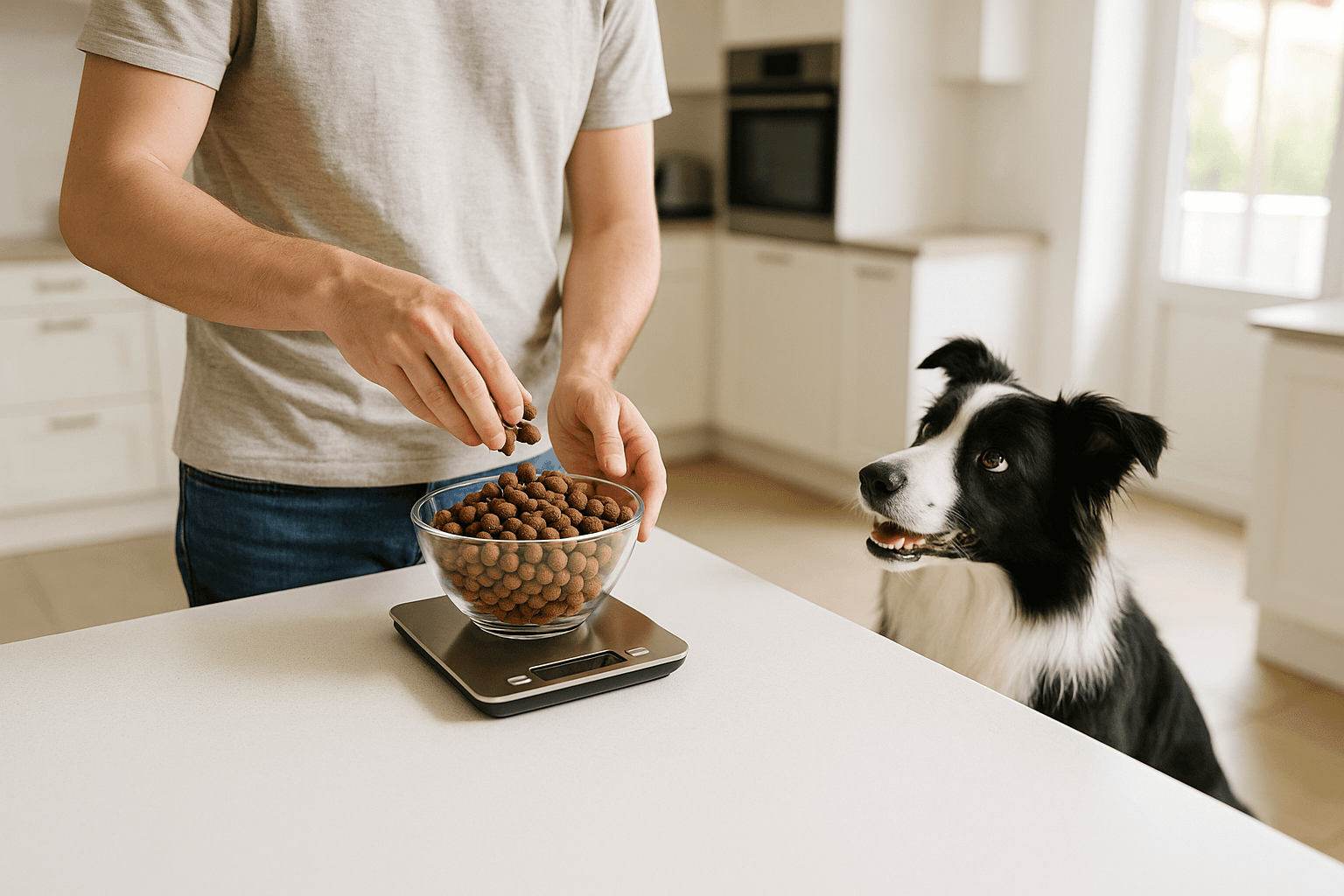
How Much Should I Feed My Dog?
How much to feed your dog depends on their weight, age, activity level, and the type of food you are using. Most adult dogs need two meals per day. Always start with the manufacturer's feeding guide on the packaging, then adjust based on your dog's body condition score -- not by whether they seem hungry.
Read guide →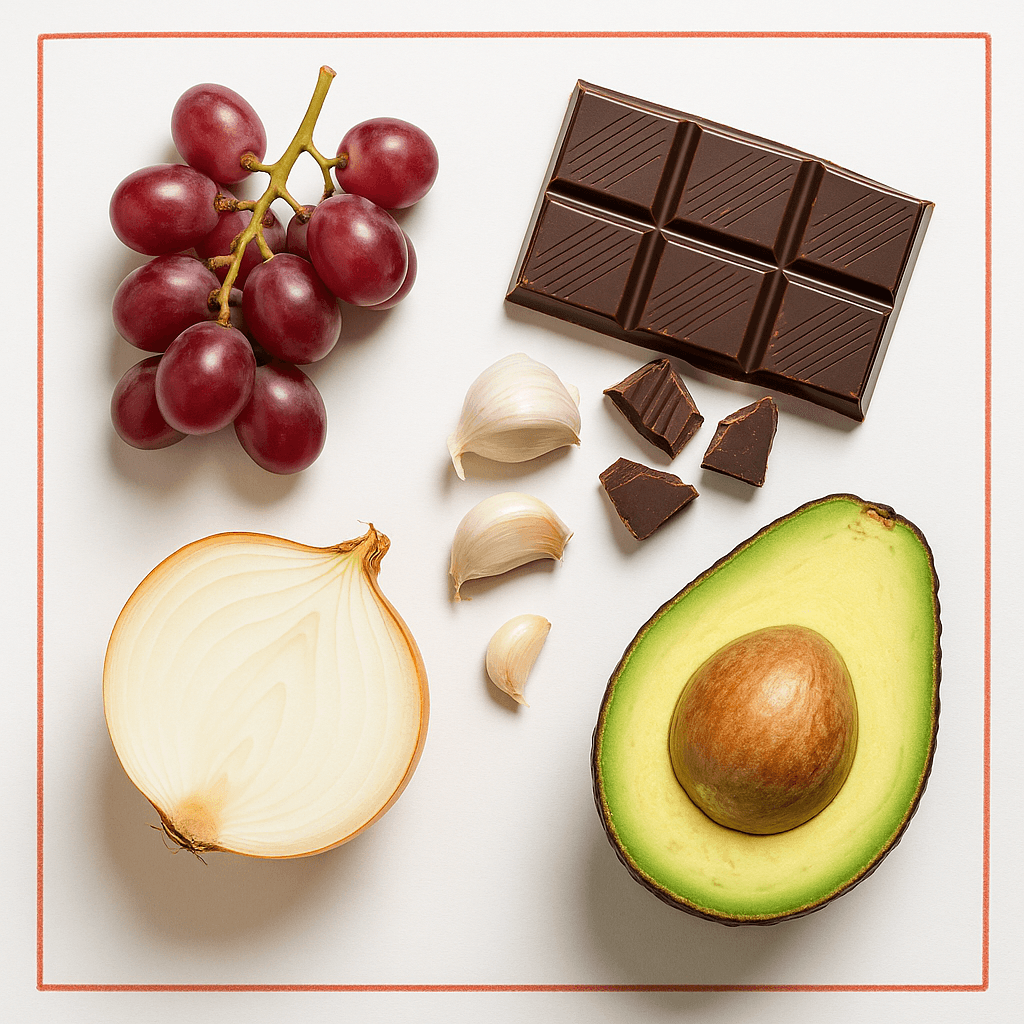
Foods Dogs Cannot Eat: The UK Owner's Safety Guide
The most dangerous foods for dogs in the UK are grapes and raisins (can cause fatal kidney failure), xylitol (in some peanut butters and sugar-free products, causes blood sugar crash and liver failure), chocolate (theobromine toxicity), and alliums including onions and garlic. If your dog eats any of these, call your vet or the Animal Poison Line on 0300 999 0077 immediately without waiting for symptoms.
Read guide →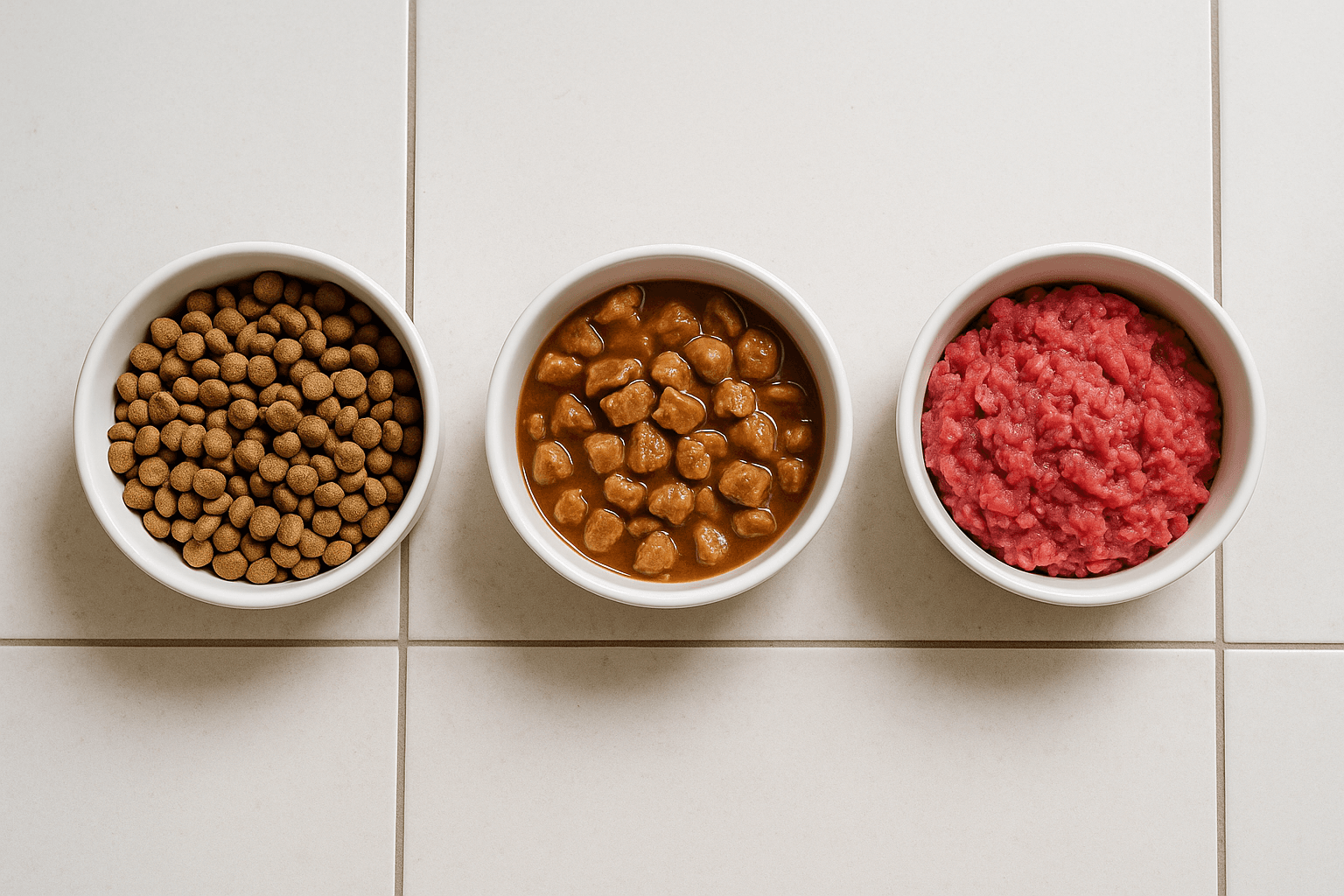
How to Choose Dog Food UK: Ingredients, Labels and Life Stages Explained
The best dog food for your dog depends on their age, breed, health, and your budget. Look for a named meat source as the first ingredient, choose a food labelled "complete" rather than "complementary," and ensure it meets FEDIAF nutritional guidelines. Fresh, air-dried, and raw options are growing in popularity alongside traditional dry and wet food.
Read guide →