How to Read a Dog Food Label UK: A Complete Guide
Quick answer
UK dog food labels must show whether the food is 'complete' (sole diet) or 'complementary' (requires mixing), plus an ingredients list in descending weight order, guaranteed analysis (protein, fat, fibre, moisture) and any additives. FEDIAF and PFMA standards govern UK pet food labelling. The ingredients list and the word 'complete' are the two most important elements to check.
How to Read a Dog Food Label UK: A Complete Guide
Dog food labels contain a surprising amount of useful information, and a surprising amount of information designed to appeal to you rather than to your dog. Learning to read a label properly takes about ten minutes and will make you a significantly better judge of the food you are buying. This guide covers every mandatory element on a UK dog food label, how to interpret it, and the common marketing tactics that obscure rather than reveal.
The Legal Framework
In the UK, pet food labelling is governed by regulations derived from EU law that remained in force after Brexit, maintained through the UK's Animal Feed (Composition, Marketing and Use) Regulations and aligned with FEDIAF (European Pet Food Industry Federation) guidelines. The PFMA (Pet Food Manufacturers' Association) publishes consumer guidance at pfma.org.uk.
These regulations specify what must appear on a label, but they leave significant flexibility in how information is presented. The result is that two products of very different quality can look similar to a casual reader.
Mandatory Label Elements
Every complete dog food sold in the UK must include the following on its label:
1. The word "complete" or "complementary" The most important single word on any pet food label. "Complete" means the food provides all required nutrients as the sole diet. "Complementary" means it does not and must be combined with a complete food. If a food is labelled complementary, it is a mixer, topper or treat: it cannot replace a complete diet.
2. Species The label must state the species the food is intended for: "for dogs" or similar.
3. Net weight or volume How much food is in the package.
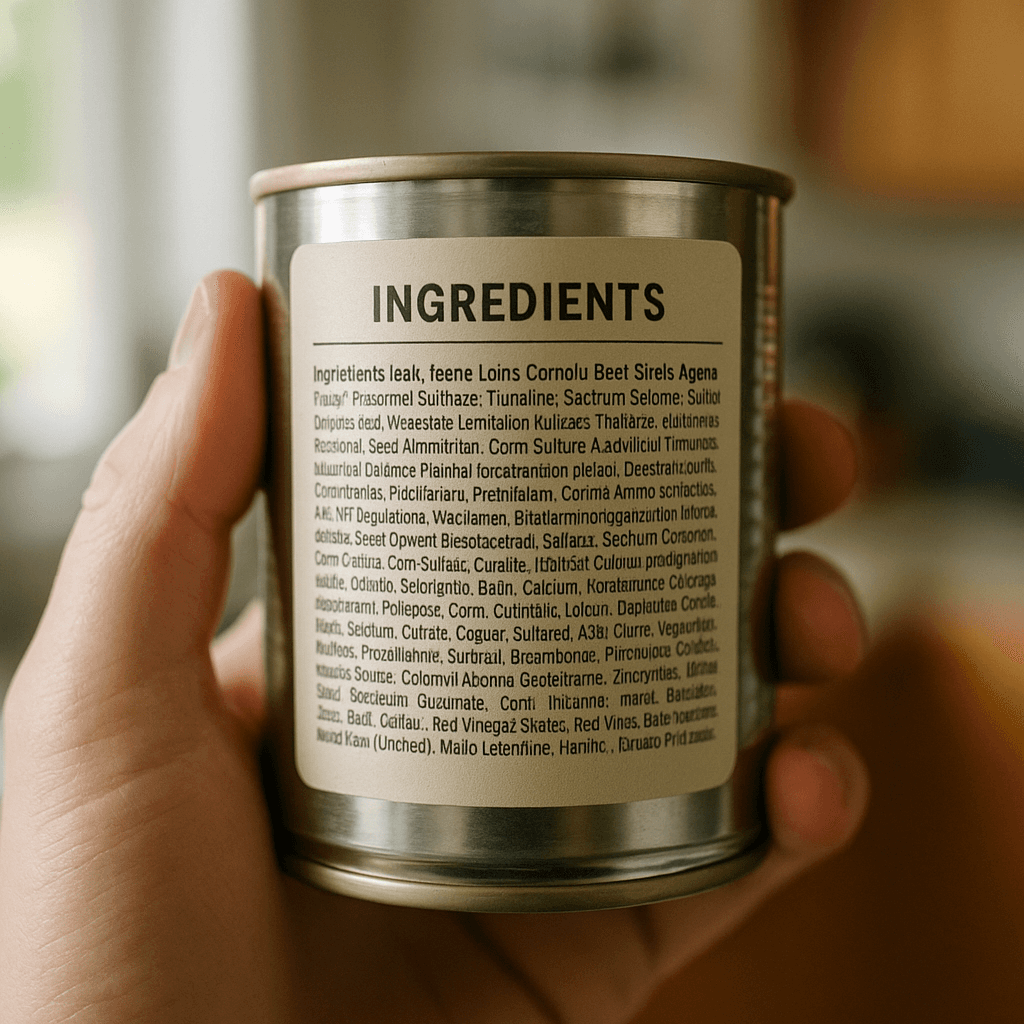
4. Ingredients list Listed in descending order by weight before processing. This is where most of the useful nutritional information lives, and where most of the obscuring tactics appear (see below).
5. Analytical constituents (guaranteed analysis) The minimum or maximum percentages of: crude protein, crude fat, crude fibre and moisture. Some labels also include crude ash (mineral content).
6. Additives Vitamins, minerals, preservatives and any other additives must be listed if present above regulatory thresholds.
7. Best before date and batch number Required for traceability.
8. Name and address of the responsible party The manufacturer or the company placing the product on the market.
9. Feeding guidelines Recommended daily amounts by body weight. Note: these are guidelines and starting points, not precise prescriptions.
How to Read the Ingredients List
The ingredients list is the most informative part of the label and the most frequently misread.
Rule 1: Ingredients are listed by pre-processing weight This means water weight is included. A wet food listing "chicken" first followed by "water" and then grain may contain more grain than chicken on a dry-matter basis. The regulatory framework allows this.
Rule 2: Named ingredients are more informative than generic ones "Chicken" is more informative than "poultry." "Chicken" tells you the species and implies it is a single identifiable ingredient. "Poultry" or "meat and animal derivatives" is a category that can include any species and any part, and can change between batches depending on availability. This is legal and does not necessarily mean poor quality, but it reduces transparency.
Rule 3: Splitting ingredients inflates lower-quality components A classic tactic: instead of listing "wheat" as the second ingredient (after chicken), a manufacturer might list "wheat flour" sixth, "wheat gluten" eighth and "wheat bran" tenth. Individually each appears lower on the list, but combined they may exceed the chicken content. This is called ingredient splitting and is legal but misleading.
Rule 4: Fresh vs dried weight "Fresh chicken" listed first sounds impressive, but fresh chicken is approximately 70% water. After processing, the actual chicken content may be significantly lower than "dried chicken" or "chicken meal" listed further down the list. Dried chicken and chicken meal are more concentrated protein sources than fresh chicken by weight.
Rule 5: The first three to five ingredients matter most The top ingredients by weight dominate the nutritional profile. Focus your analysis here before looking at the rest.
How to Read the Analytical Constituents
The guaranteed analysis provides four core numbers on most UK labels:
Crude protein: the total protein content. Does not distinguish between animal and plant protein, or between whole protein and protein-rich additions like hydrolysed feathers. A high crude protein figure is not automatically a quality indicator.
Crude fat: the total fat content. Fat is the most energy-dense macronutrient: a food higher in fat requires feeding in smaller quantities.
Crude fibre: the insoluble fibre content. Useful for digestion; too high can indicate lower digestibility of other components.
Moisture: critical for comparing wet and dry foods. A wet food with 8% crude protein on the label contains far more protein on a dry-matter basis than the number suggests. To compare wet and dry foods fairly, calculate the dry-matter protein:
Dry-matter protein calculation: Dry-matter protein % = (Crude protein % on label) / (100 - moisture %) x 100
Example: wet food with 8% protein and 80% moisture = 8 / (100-80) x 100 = 40% dry-matter protein, which is high.
Crude ash: the mineral content, sometimes shown. A very high ash figure (above 8 to 9% on dry matter) may indicate lower-quality bone or mineral-rich fillers. A moderate ash figure is normal and expected.
Reading Additive Listings
Additives are listed separately from ingredients, typically after them. Categories include:
Nutritional additives: vitamins and minerals added to meet complete food requirements. All complete foods must add these: their presence is not a negative sign.
Technological additives: preservatives, antioxidants and stabilisers. Natural preservatives (tocopherols/vitamin E, rosemary extract) are preferable to synthetic ones (BHA, BHT, ethoxyquin). Ethoxyquin in particular has a contested safety record.
Sensory additives: colourants and flavourings. Artificial colourants serve no nutritional purpose in dog food and are worth avoiding. The bright colours in some dog foods are entirely for the owner's benefit, not the dog's.
Common Marketing Terms and What They Mean (and Do Not Mean)
"Natural": no agreed legal definition in UK pet food labelling. Largely meaningless without further context.
"Grain-free": removes grains but may substitute with lentils, peas or potatoes, which are also high-starch. The ongoing FDA research linking grain-free diets to DCM (dilated cardiomyopathy) in some breeds means this is not a neutral choice.
"Hypoallergenic": no agreed legal definition. Usually means the product avoids some common allergens (often wheat and dairy), but true novel protein hypoallergenic diets for dogs with confirmed allergies are prescription products.
"Human-grade": not a regulated term in UK pet food labelling. Informative when true but difficult to verify from the label alone.
"High protein": relative to what? A 30% protein dry food is broadly standard for adult dogs. "High protein" marketing tells you little without the actual percentage.
"No artificial additives": the absence of artificial additives is a positive quality signal, but check the preservatives: natural alternatives (tocopherols) can still be effective.
For guidance on choosing between food types, see our Dog Food UK guide. For puppy feeding specifics, see our Puppy Feeding Guide.
Frequently Asked Questions
What does "crude protein" actually mean?
Crude protein measures total nitrogen in the food and converts it to an estimated protein figure. It does not distinguish between high-quality animal protein, plant protein, and low-quality protein-rich additives. Two foods with the same crude protein figure can have very different actual protein quality.
Why is chicken listed first but the food seems mostly grain?
Ingredient splitting and fresh vs dried weight are the most common causes. Grains may be split into multiple ingredients (wheat flour, wheat gluten, wheat bran) that individually appear lower on the list but collectively outweigh the chicken. Fresh chicken is also weighed before processing when it contains 70% water: after cooking, the actual chicken content is much lower.
What is crude ash and should I be concerned if it is high?
Crude ash is the mineral residue after burning the food. In pet food, it reflects the bone and mineral content. Moderate ash (6 to 8% on a dry-matter basis) is normal. Very high ash figures may indicate significant bone meal content or mineral-rich fillers.
How do I compare a wet food and a dry food fairly?
Calculate dry-matter protein for each using the formula: protein % / (100 - moisture %) x 100. This removes the distorting effect of water content and allows a like-for-like comparison.
Is it a red flag if a food contains "meat and animal derivatives"?
Not automatically. This category allows the manufacturer to use available protein sources, which can include good-quality material. It does reduce transparency compared to named ingredients. Premium manufacturers typically use named proteins; budget manufacturers are more likely to use generic categories. It is a transparency issue rather than automatically a quality issue.
What should I prioritise when reading a label?
In order: (1) "complete" designation, (2) named meat as the first or primary ingredient, (3) absence of artificial colourants and synthetic preservatives, (4) crude protein and fat percentages appropriate for your dog's life stage. Everything else is secondary.
Frequently Asked Questions
Crude protein measures total nitrogen and converts it to an estimated protein figure. It does not distinguish between high-quality animal protein, plant protein and low-quality protein-rich additives. Two foods with the same crude protein figure can have very different actual protein quality.
Ingredient splitting and fresh vs dried weight are the most common causes. Grains may be split into multiple ingredients that individually appear lower but collectively outweigh the chicken. Fresh chicken also contains 70% water before processing, so the dry content is much lower than the listing implies.
Crude ash is the mineral residue after burning, reflecting bone and mineral content. Moderate ash (6 to 8% dry matter) is normal. Very high figures may indicate significant bone meal content or mineral-rich fillers.
Calculate dry-matter protein: protein % divided by (100 minus moisture %) multiplied by 100. This removes the distorting effect of water content and allows a like-for-like comparison between wet and dry foods.
Not automatically. It reduces transparency compared to named ingredients but does not necessarily mean poor quality. Premium manufacturers tend to use named proteins; the category label is a transparency issue rather than automatically a quality indicator.
In order: the 'complete' designation, named meat as the first or primary ingredient, absence of artificial colourants and synthetic preservatives, then crude protein and fat percentages appropriate for your dog's life stage.
More from Dog Nutrition
How Much Should I Feed My Dog?
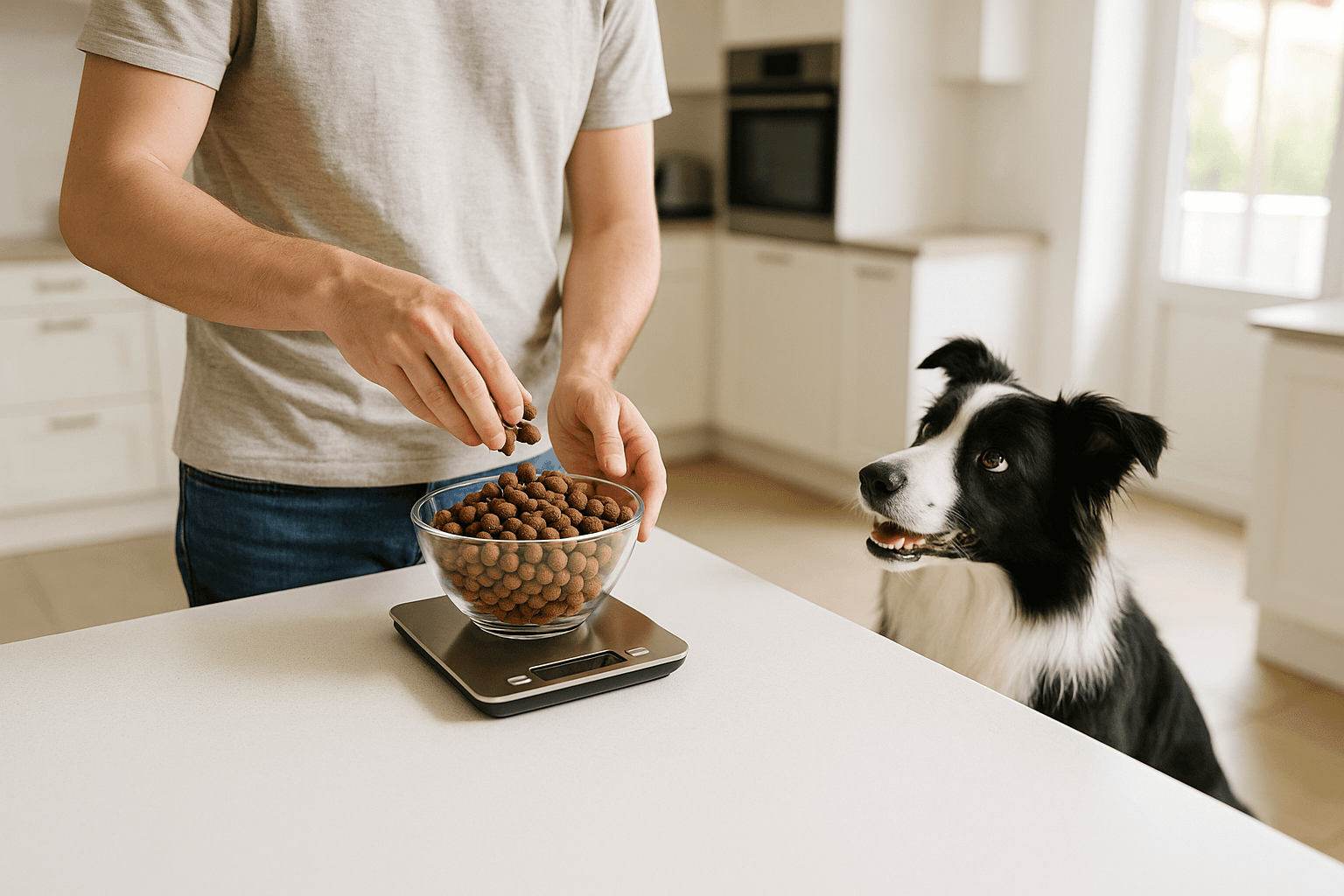
How much to feed your dog depends on their weight, age, activity level, and the type of food you are using. Most adult dogs need two meals per day. Always start with the manufacturer's feeding guide on the packaging, then adjust based on your dog's body condition score -- not by whether they seem hungry.
Read guide →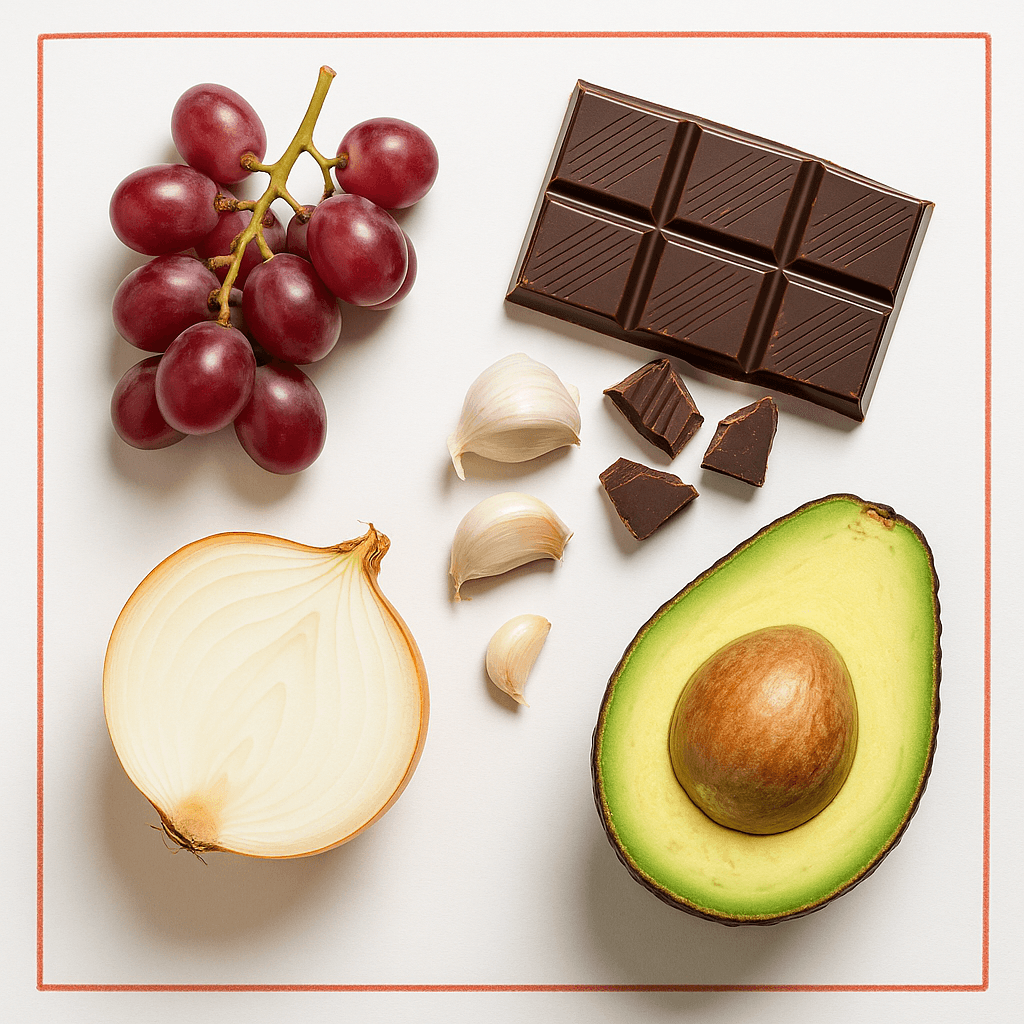
Foods Dogs Cannot Eat: The UK Owner's Safety Guide
The most dangerous foods for dogs in the UK are grapes and raisins (can cause fatal kidney failure), xylitol (in some peanut butters and sugar-free products, causes blood sugar crash and liver failure), chocolate (theobromine toxicity), and alliums including onions and garlic. If your dog eats any of these, call your vet or the Animal Poison Line on 0300 999 0077 immediately without waiting for symptoms.
Read guide →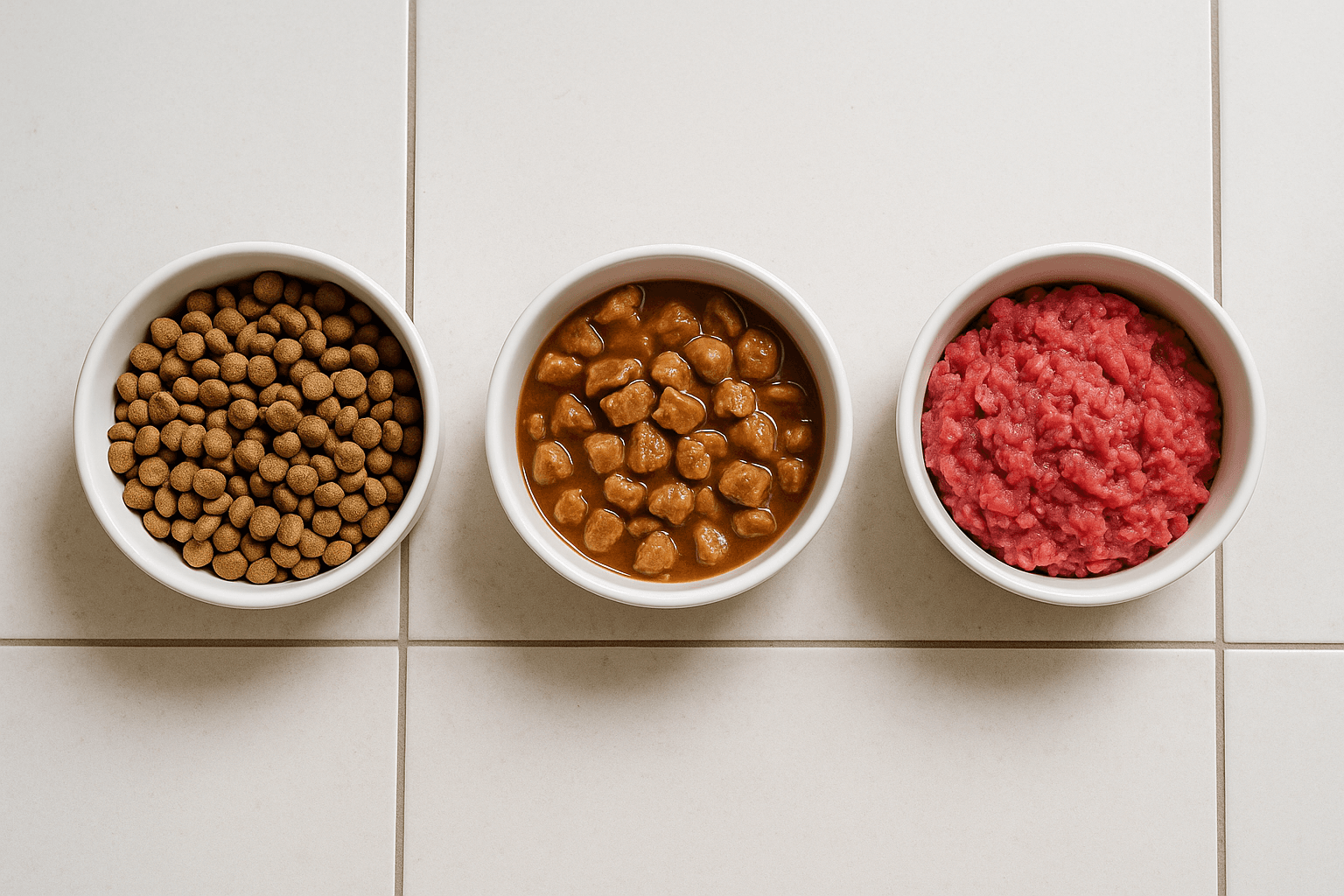
How to Choose Dog Food UK: Ingredients, Labels and Life Stages Explained
The best dog food for your dog depends on their age, breed, health, and your budget. Look for a named meat source as the first ingredient, choose a food labelled "complete" rather than "complementary," and ensure it meets FEDIAF nutritional guidelines. Fresh, air-dried, and raw options are growing in popularity alongside traditional dry and wet food.
Read guide →